
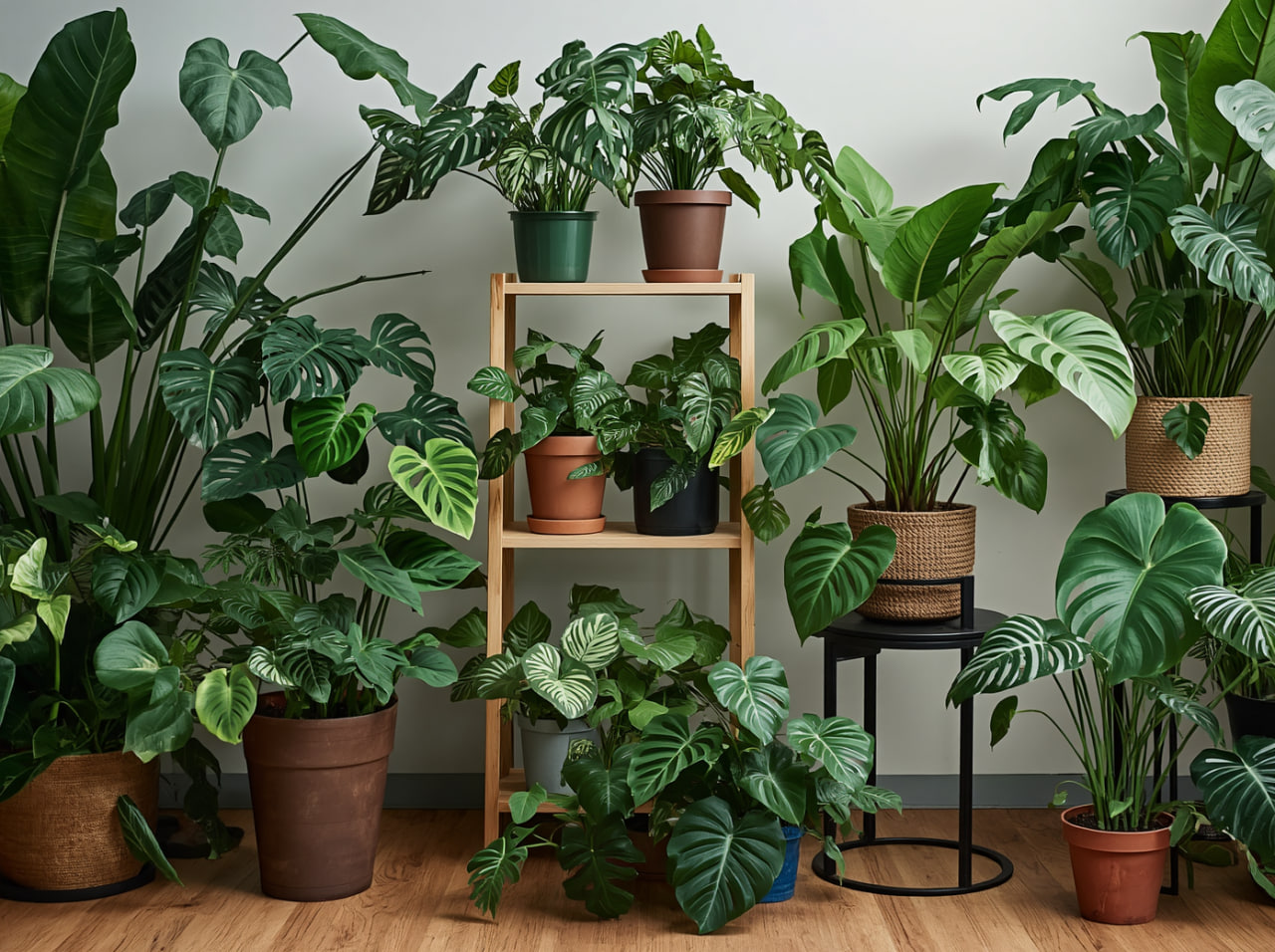
The genus Philodendron is one of the largest and most diverse in the plant kingdom, containing over 450 recognized species ranging from compact desktop plants to enormous climbing vines that reach forest canopies. Their diversity of leaf form, color, texture, and growth habit makes them a collector’s dream, and their generally forgiving nature makes them accessible to beginners.
Philodendron Care Fundamentals
Light
Most philodendrons prefer bright to medium indirect light and will generally tolerate lower light conditions better than many other houseplants. Direct sun bleaches and scorches the leaves. Variegated forms require more light than solid green varieties to maintain their markings.
Water
Water when the top one to two inches of soil are dry. Philodendrons prefer consistently moist but never waterlogged soil. Most do well watered every seven to ten days in the growing season and every fourteen days in winter.
Humidity
Native to humid tropical environments, philodendrons appreciate humidity of 60 percent or higher, though most tolerate the 40 to 50 percent typical of heated indoor environments.
Soil
Use a well-draining, chunky aroid mix: potting soil combined with perlite and orchid bark in roughly equal proportions.
Toxicity
All philodendrons are toxic to humans, cats, and dogs due to calcium oxalate crystals. They cause oral burning, swelling, and gastrointestinal distress if ingested. Keep away from children and pets.
Trailing and Climbing Philodendrons
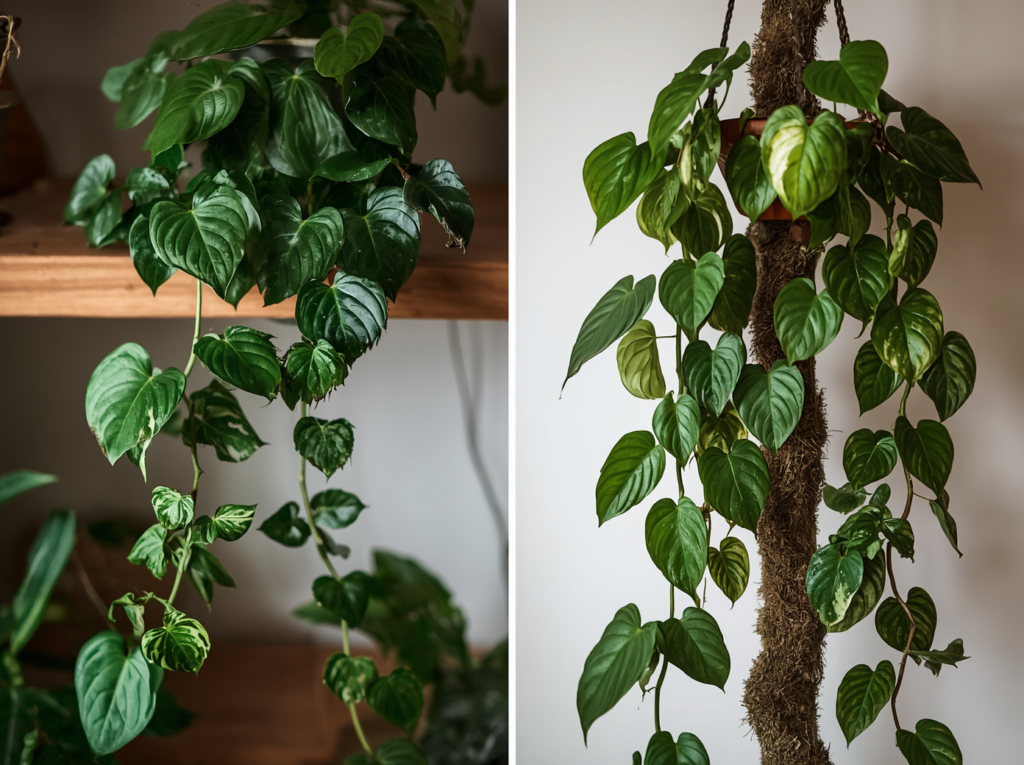
1. Heartleaf Philodendron (Philodendron hederaceum)
The quintessential philodendron, featuring glossy, heart-shaped leaves on trailing or climbing stems. One of the most forgiving houseplants available: tolerates low light, irregular watering, and beginners’ mistakes with remarkable resilience. New leaves emerge in a beautiful bronze-red color before maturing to deep green.
- Light: low to bright indirect — highly adaptable
- Ideal for: hanging baskets, climbing moss poles, shelves
2. Philodendron Brasil
A naturally occurring variegated form of the heartleaf with striking yellow-green variegation running through the center of each leaf, resembling the Brazilian flag colors. Faster-growing than standard heartleaf and more colorful, requiring slightly more light to maintain the variegation.
3. Philodendron Micans (Velvet Leaf)
One of the most texturally stunning philodendrons, with iridescent velvety leaves that shimmer between bronze, dark green, and purple depending on the light angle. Juvenile leaves emerge in rich copper before maturing. Trails beautifully and is increasingly popular among collectors.
4. Philodendron Silver Stripe
A cultivar of P. hederaceum with a distinctive silver stripe running along the center midrib of the leaf, contrasting beautifully with the dark green surrounding leaf. Elegant and less commonly available than Brasil.
5. Philodendron Scandens
Similar to heartleaf but with slightly larger, more pointed leaves. Extremely vigorous climber that will cover a trellis or moss pole rapidly. One of the fastest-growing philodendrons for filling vertical space quickly.
Upright and Self-Heading Philodendrons
6. Philodendron Birkin
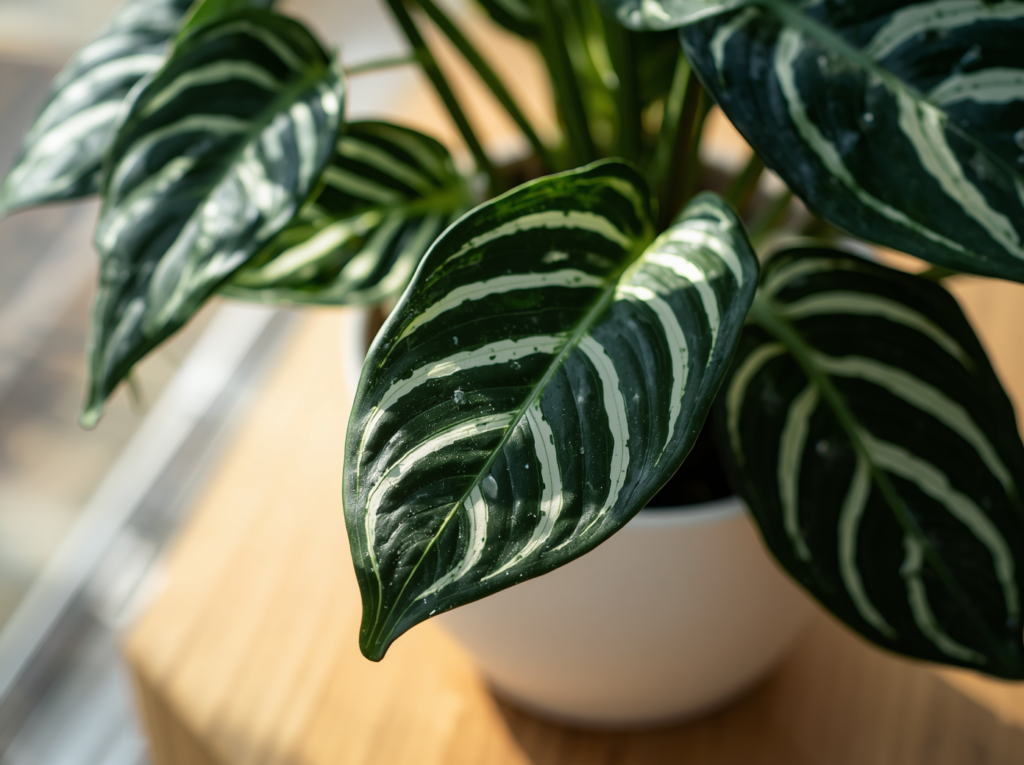
Philodendron Birkin has become one of the most popular houseplants of recent years, with its distinctive fine white pinstripe variegation that develops differently on each leaf. It grows in an upright, self-heading form and stays compact, making it ideal for shelves and tabletops. The variegation can revert to all-green in low light.
7. Philodendron Xanadu
A dramatic, compact self-heading philodendron with deeply lobed, architectural leaves. Grows as a neat, bushy mound up to three feet wide without any climbing habit, making it perfect for floor-level statement plants in bright indoor spaces.
8. Philodendron Congo Red
An upright cultivar with large, oval, glossy leaves that emerge in dramatic burgundy-red before maturing to deep green with reddish undertones. The new leaf coloration is one of the most striking of all philodendrons and a robust, easy-care plant.
9. Philodendron Moonlight
A self-heading cultivar with vivid chartreuse-yellow new leaves that mature to lime green. The intense color of the emerging leaves is remarkable and provides bright, warm tones that stand out beautifully in indoor spaces.
10. Philodendron Imperial Green
Large, glossy, oval leaves in solid deep green on an upright, self-heading plant. One of the most robust and adaptable philodendrons: tolerates low light, inconsistent watering, and low humidity better than most varieties.
Large-Leaf and Collector Philodendrons
11. Philodendron Gloriosum
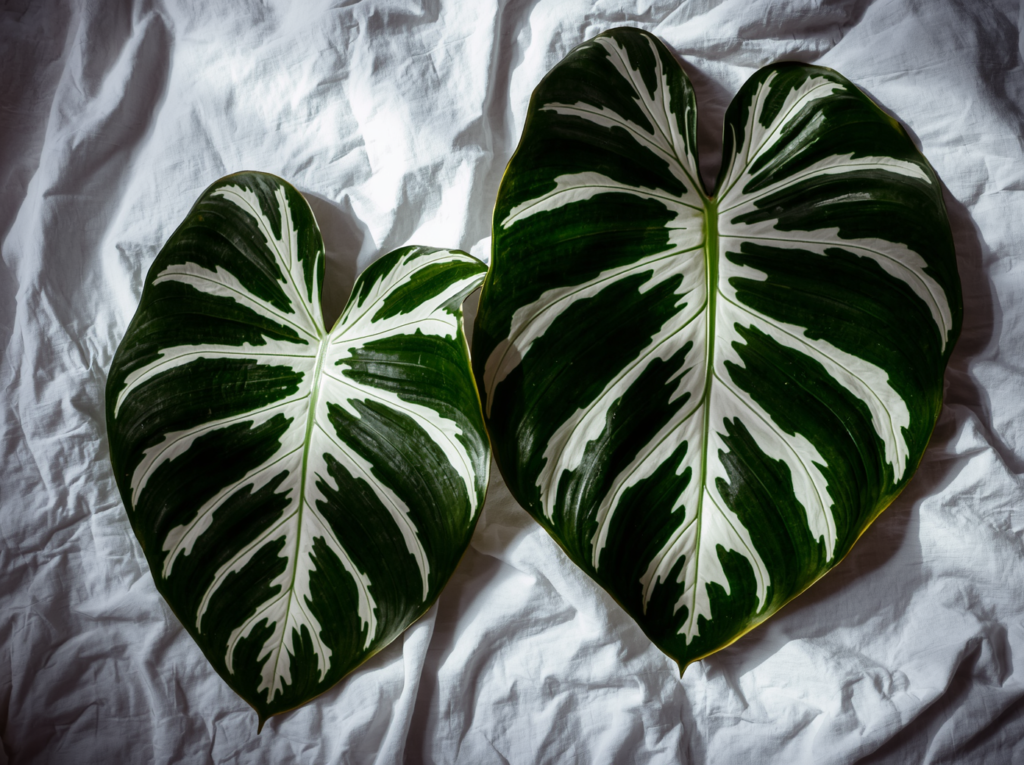
Among the most coveted philodendrons in current collector culture, P. gloriosum produces enormous, velvety, heart-shaped leaves with dramatic white veining that can reach two feet wide on mature plants. It is a creeping terrestrial plant requiring a wide, low planter rather than a moss pole. Slow-growing but magnificently rewarding.
- Humidity: 70 percent or higher for best results
- Growth: slow; produces one to two leaves per month under ideal conditions
12. Philodendron Melanochrysum (Black Gold)
A climbing velvety philodendron with long, narrow, dark green-black leaves that shimmer with an iridescent golden sheen. When young, the leaves are a warm bronze color; as they mature, they elongate dramatically and deepen in color.
13. Philodendron Verrucosum
A highly distinctive collector’s species with heart-shaped leaves covered in fine hairs giving a velvety texture, dark green with lighter veining, and a remarkable salmon-pink or burgundy underside. The petioles are also covered in fine red hairs.
14. Philodendron Florida Ghost
A hybrid with multi-lobed leaves that emerge almost pure white before gradually developing green mottling and eventually maturing to solid green. Each leaf goes through its own color journey, creating a plant where no two leaves are the same color.
15. Philodendron White Princess
A relatively rare variegated climbing philodendron with white and green sectoral variegation. Each new leaf has unpredictable white variegation. It requires higher light than solid green forms to maintain and develop the variegation properly.
Easy Care and Compact Philodendrons
16. Philodendron Atom
An extremely compact cultivar producing small, deeply ruffled leaves in dense mounds. Perfect for desks, small shelves, and tight spaces. One of the most space-efficient philodendrons while still providing excellent texture.
17. Philodendron Prince of Orange
New leaves emerge in vivid orange, gradually transitioning through yellow-green to mature medium green. At any given time, the plant displays leaves in multiple stages of this color transition, creating a multi-toned display.
18. Philodendron Painted Lady
A variegated climbing philodendron with yellow-spotted green leaves. The irregular yellow patches give the appearance of a plant that has been hand-painted. A mid-size climber that performs best on a moss pole.
19. Philodendron Hastatum (Silver Sword)
Juvenile plants have narrow, silvery-blue leaves with a metallic sheen; mature climbing plants develop large, arrow-shaped leaves. The juvenile form is among the most unusually colored philodendrons and is becoming increasingly popular.
20. Philodendron Selloum (Hope)
The giant of compact philodendrons, producing enormous, deeply cut leaves on long petioles from a central trunk. It needs significant space but is stunning as a floor plant in large bright rooms.
Common Philodendron Problems
Yellow Leaves
The most common cause is overwatering. Check roots for signs of rot. If roots are healthy, reduce watering frequency and ensure adequate drainage.
Brown Leaf Tips
Usually indicates low humidity or fluoride sensitivity to tap water. Increase humidity and switch to filtered or rain water if using heavily chlorinated tap water.
Loss of Variegation
Variegated forms need more light than solid green types to maintain their patterns. Move to a brighter position if a variegated philodendron begins producing solid green leaves.