
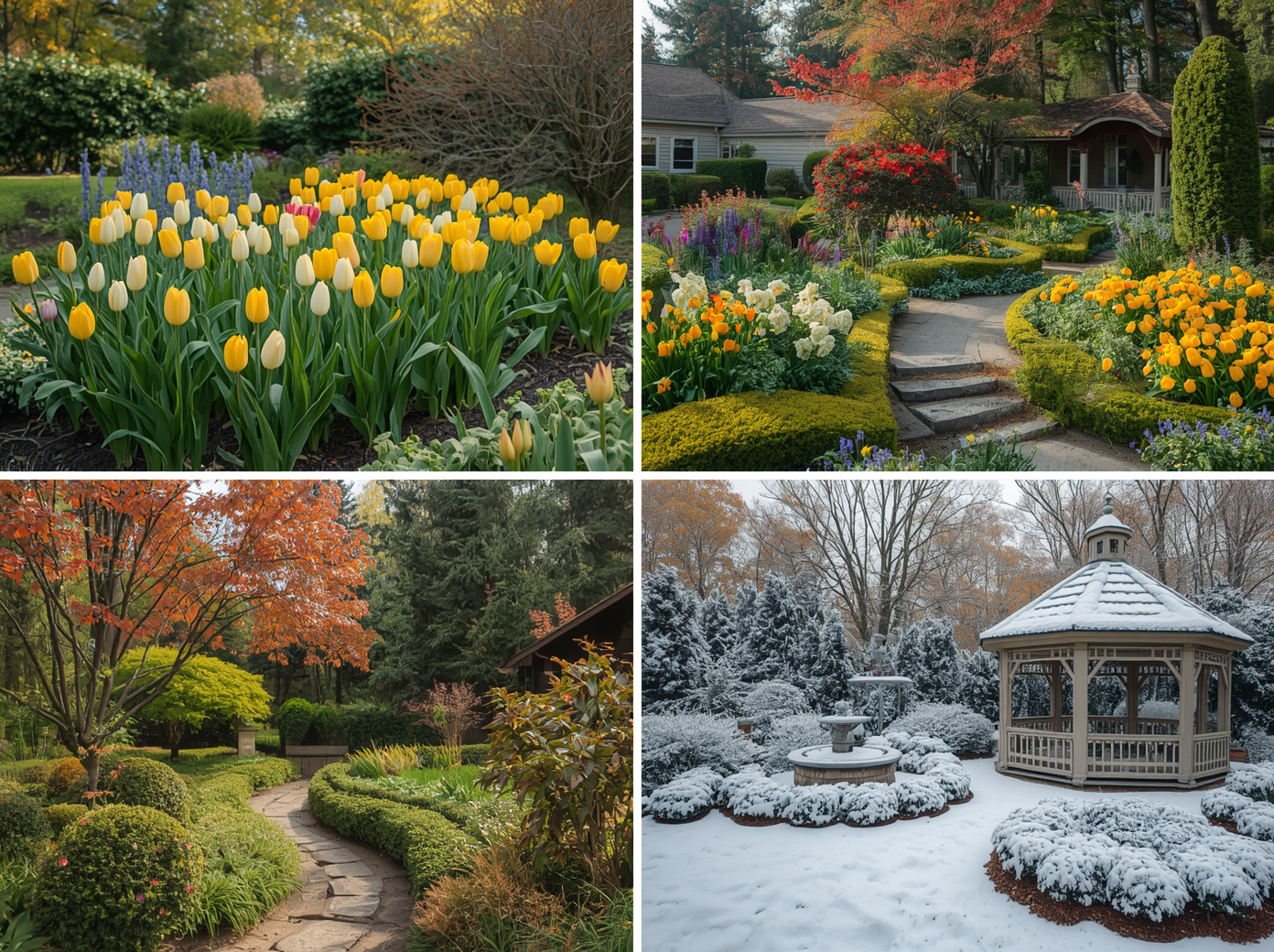
A garden is a living system that never stops changing. Understanding what needs to be done each month is the foundation of successful gardening: acting at the right time makes tasks easier, results better, and the garden healthier. Missing critical windows, on the other hand, means lost opportunities that cannot be recovered until the following year.
This month-by-month calendar provides comprehensive guidance for gardeners in temperate climates (USDA Zones 5 to 8 in North America, or equivalent in Europe and the Southern Hemisphere). Adjust timing based on your specific climate zone.
January and February: The Gardener’s Planning Season

Key Tasks:
- Order seeds from catalogs early; popular varieties sell out quickly
- Plan crop rotations and new planting areas on paper before the season begins
- Inventory existing seeds; test older seeds by germinating a few on damp paper towel
- Clean and sharpen garden tools; oil wooden handles; replace worn parts
- Prune dormant apple and pear trees on frost-free days when temperatures are above freezing
- Check stored tender bulbs (dahlias, gladioli, cannas) for rot; discard any that are soft or moldy
- Feed winter birds; keep bird baths unfrozen
- Order bare-root roses and fruit trees for planting in February and March
In the Greenhouse or Under Lights:
- Start onion, leek, and celeriac seeds indoors in late January or early February
- Start geranium (pelargonium) seeds eight weeks before last frost date
March: The Garden Wakes Up
Key Tasks:
- Sow tomatoes, peppers, and aubergines (eggplants) indoors under grow lights
- Sow broad beans, peas, and salad leaves directly outdoors or under cloches
- Plant bare-root trees, shrubs, and roses as soon as soil is workable
- Apply a thick layer of compost or well-rotted manure to all beds as a mulch and soil improver
- Begin feeding established roses with a balanced fertilizer as new growth emerges
- Divide established perennials (hostas, daylilies, geraniums) as they emerge
- Check for slug and snail damage to emerging bulbs; apply iron phosphate pellets if needed
- Prune late-summer-flowering shrubs such as Buddleia and Caryopteris hard back to a framework
April: The Busiest Month
Key Tasks:
- Harden off indoor seedlings by moving them outside for progressively longer periods each day
- Sow courgettes, squash, and cucumber seeds indoors for planting out after last frost
- Plant potatoes in the ground or in bags when the soil has warmed
- Direct sow hardy annuals: cornflower, larkspur, nigella, and annual poppies
- Apply slug control around susceptible plants; the main slug season begins in earnest
- Feed lawns with a spring lawn fertilizer; treat moss with moss killer if needed
- Prune forsythia and other spring-flowering shrubs immediately after flowering ends
- Plant summer bedding in containers as soon as frost risk passes in your area
May: The Garden Transforms
Key Tasks:
- Plant out tomatoes, peppers, and courgettes after last frost date
- Direct sow beans, beetroot, carrots, and salad leaves outdoors as soil warms
- Plant dahlia tubers and gladiolus corms outdoors after last frost
- Pinch out the growing tips of sweet peas to encourage bushy growth
- Apply a high-potassium liquid feed to roses as flower buds develop
- Divide and replant overcrowded spring bulbs once the leaves have died back
- Install supports (canes, trellis, netting) for climbing plants before they need them
- Begin mowing lawns regularly; do not cut too short (no shorter than two inches)
June: Peak Summer Garden
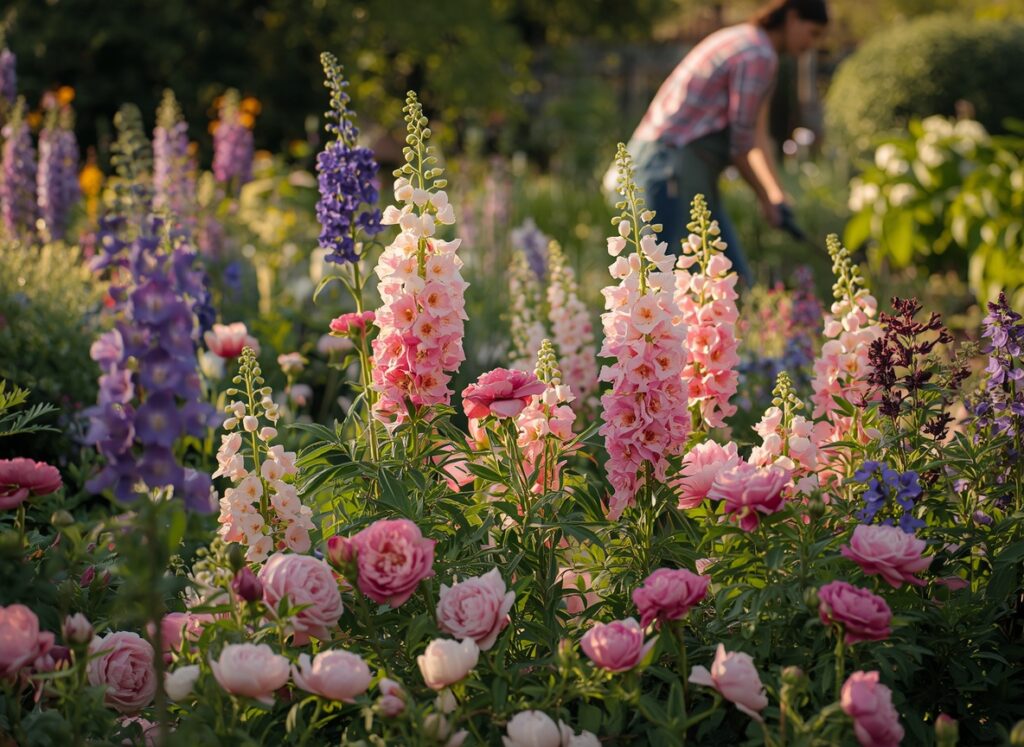
Key Tasks:
- Deadhead roses, geraniums, and other repeat-flowering plants regularly
- Feed containers and hanging baskets with liquid tomato fertilizer every seven to fourteen days
- Water consistently and deeply; summer drought stress reduces flowering significantly
- Earth up potatoes as foliage grows to prevent greening of tubers
- Begin harvesting salad leaves, radishes, and early peas
- Tie in climbing roses and other climbers as new growth extends
- Watch for aphids and treat promptly with insecticidal soap or neem oil
- Collect and freeze or preserve excess harvests from the vegetable garden
July and August: Harvest Season
Key Tasks:
- Harvest vegetables regularly to encourage further production; do not leave crops to over-mature
- Begin succession sowing salad leaves, radishes, and spinach for autumn harvest
- Prune ramblers and once-flowering climbing roses after their single flowering flush
- Take semi-ripe cuttings from shrubs and perennials for autumn propagation
- Order spring bulbs for autumn planting; the best selections sell out early
- Continue deadheading annuals and repeat-flowering perennials
- Water lawns only in severe drought; let them go dormant if necessary as they recover quickly
- Prune wisteria by cutting all new side shoots back to five to six leaves from the base
September and October: Autumn Preparation
Key Tasks:
- Plant spring-flowering bulbs: tulips, daffodils, alliums, hyacinths, and crocuses
- Lift tender bulbs (dahlias, cannas, gladioli) after first frost; clean, dry, and store frost-free
- Plant garlic cloves and overwintering onion sets
- Sow hardy annual sweet peas for overwintering as strong plants for spring
- Apply potassium-rich fertilizer to help woody plants harden off before winter
- Begin planting bare-root hedging, trees, and shrubs as leaves fall
- Clear spent vegetable beds and compost the debris; sow green manures on empty ground
- Plant winter bedding: ornamental kale, pansies, violas, and heathers
November and December: Garden Winter Care
Key Tasks:
- Finish planting bare-root trees, shrubs, and roses before the ground freezes
- Apply a thick mulch of bark chips, compost, or straw around tender perennials for frost protection
- Lift and pot up tender perennials (fuchsias, penstemons, salvias) and bring into a frost-free greenhouse
- Clean out the greenhouse; remove dead plant material; treat for pests and disease with a winter wash
- Plant amaryllis bulbs indoors for Christmas flowering
- Check stored bulbs and tubers monthly for rot or desiccation
- Plan next year’s garden: review what worked, what failed, and what to change
- Celebrate what the garden produced this year; rest, plan, and look forward to spring