
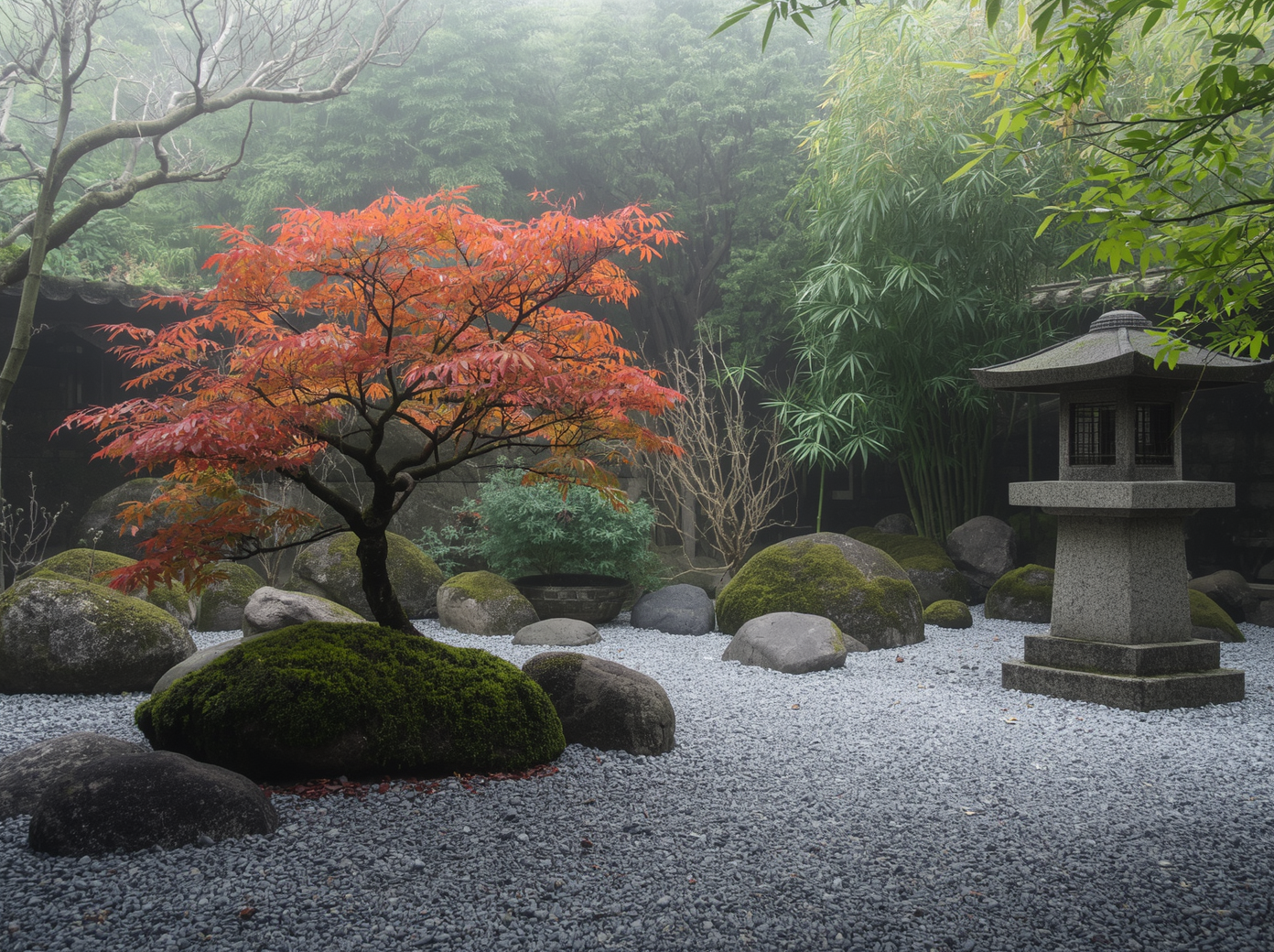
The Japanese garden is one of the most refined and meditative forms of garden art in the world. Developed over centuries through the influences of Shinto philosophy, Buddhism, and the deep Japanese appreciation of nature, these gardens distill the essence of natural landscapes into carefully composed spaces that invite contemplation, provide refuge from the noise of daily life, and age with increasing grace and beauty.
Creating a Japanese-inspired garden at home does not require a large space or substantial budget. The principles that define the style — restraint, asymmetry, the use of symbolic elements, and the contrast of hard and soft, light and shadow — are applicable to any size space, from a full garden to a small patio or even a contained viewing garden in a tray.
The Core Design Principles of Japanese Gardens
Ma: The Art of Meaningful Space
Ma is the Japanese concept of negative space: the idea that empty space is not merely absent content but an active, meaningful element of the design. In Japanese gardens, the raked gravel of a dry garden, the still surface of a pond, and the carefully maintained open areas between plants are as important as the plants and structures themselves.
Wabi-Sabi: Beauty in Imperfection
Wabi-sabi is the appreciation of things that are imperfect, incomplete, and impermanent. In garden design, it manifests as moss-covered stones (where western gardens would use clean stone), weathered lanterns, gnarled pine trees, and a general aesthetic that embraces aging and patina rather than fighting them.
Shakkei: Borrowed Scenery
Shakkei is the technique of incorporating the landscape beyond the garden boundary into the garden composition, visually borrowing distant hills, trees, or mountains as background to the garden itself. In a small urban garden, this might mean strategically framing a large tree in a neighboring garden or an attractive building as a backdrop.
Symbolic Representation of Nature
Japanese gardens compress and symbolize nature rather than literally recreating it. Raked gravel represents ocean waves or rippling water. A carefully placed stone represents a mountain. A clipped, rounded shrub represents a cloud or hillside. Sand patterns represent the movement of wind or water. Understanding this symbolic vocabulary is key to both designing and reading these gardens.
The Main Types of Japanese Garden
Karesansui (Dry Landscape Garden)
The most minimalist Japanese garden style, consisting of carefully raked gravel or sand with placed stones and perhaps a few carefully positioned plants. No water is used; streams and ponds are represented symbolically by raked patterns in the gravel. Extremely manageable in small spaces and requires only the regular raking of the gravel surface.
Tsukiyama (Hill and Pond Garden)
A naturalistic garden style featuring artificial hills, ponds, streams, and islands representing the landscape of Japan. The most elaborate and space-demanding style; suitable for larger gardens.
Chaniwa (Tea Garden)
The garden surrounding a traditional tea house, designed to create a meditative transition between the outer world and the inner space of the tea ceremony. Characterized by stepping stones (roji), stone lanterns, a water basin (tsukubai), and simple, understated planting. Highly adaptable to small spaces.
Essential Japanese Garden Elements
Stone (Ishi)
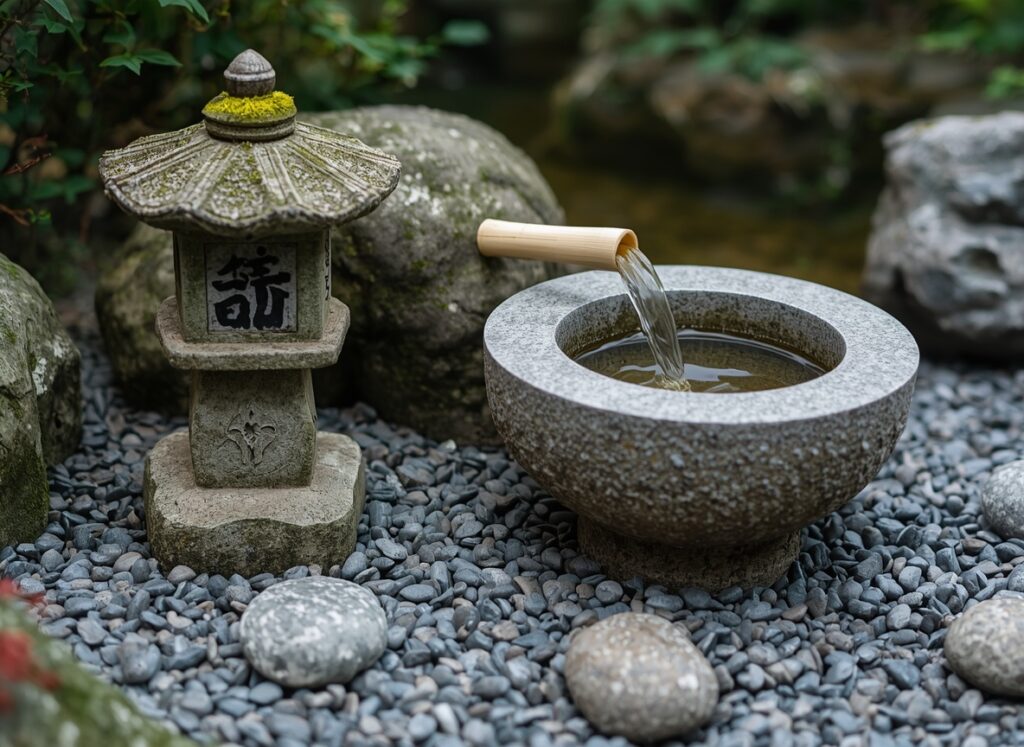
Stones are the structural backbone of Japanese gardens and are chosen and placed with great care. They are used singly as focal points, in groups of three or five (always odd numbers, never even), and as edging for water features and paths. Natural weathered stones with mossy surfaces are preferred over newly cut or polished stone.
Water (Mizu)
Water, whether present physically or represented symbolically, is fundamental to Japanese garden design. Ponds should have irregular, naturalistic shapes rather than geometric forms. Streams should appear to flow naturally. Even in dry gardens, the suggestion of water through raked gravel patterns maintains the presence of this essential element.
Stone Lanterns (Ishidoro)
Traditional stone lanterns serve both as functional lighting and as focal points that anchor compositions. They are placed near water features, along paths, or at garden entrances. Choose naturally weathered, moss-covered stone lanterns rather than bright new ones; aging improves their aesthetic value.
Bamboo Fences and Screens (Take-gaki)
Bamboo fencing creates privacy while maintaining a natural, organic aesthetic consistent with the garden style. Different weave patterns and bamboo types create different levels of privacy and visual texture.
Stepping Stones (Tobi-ishi)
Irregular, flat stepping stones set into moss, gravel, or grass guide the visitor through the garden at a deliberate pace, encouraging mindful movement. Spacing is slightly shorter than a normal walking stride, slowing the walker down.
The Best Plants for Japanese Gardens
Japanese Maple (Acer palmatum)
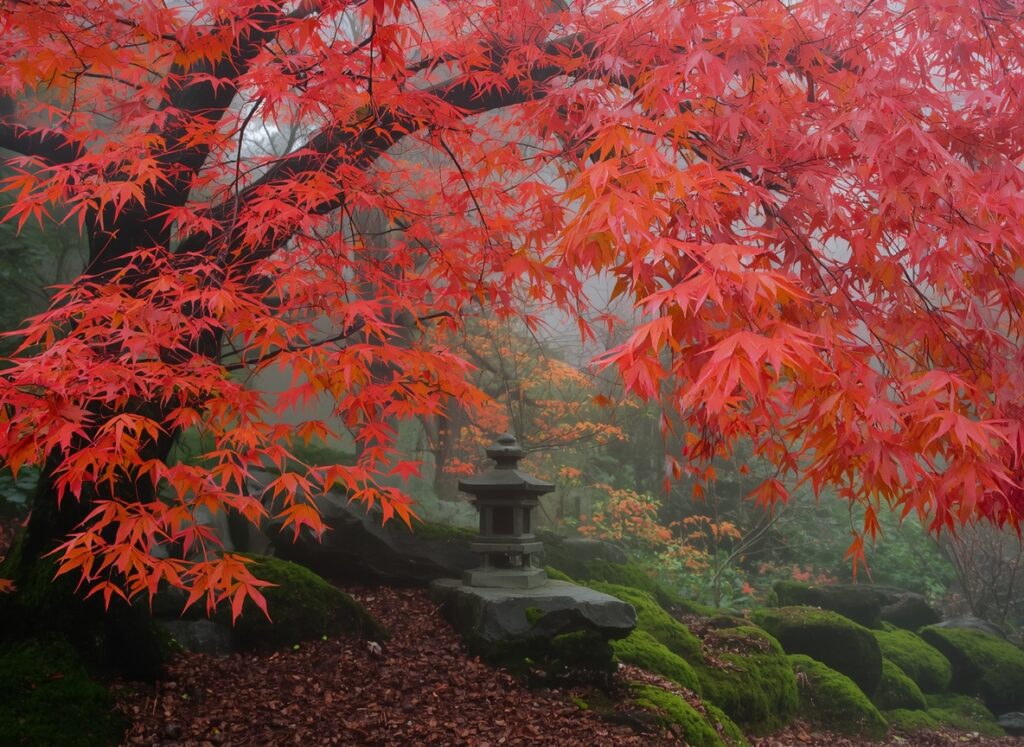
The defining plant of the Japanese garden aesthetic. Japanese maples offer extraordinary seasonal interest: delicate spring foliage, graceful summer leaf canopy, spectacular autumn color in red, orange, and gold, and elegant bare branch structure in winter. They are available in hundreds of cultivars ranging from upright trees to weeping ground-huggers.
- Best varieties: Bloodgood (reliable deep red), Crimson Queen (weeping, lacy red), Sango Kaku (coral bark in winter)
- Care: partial shade (protects delicate leaves from scorch); moist, well-draining, slightly acidic soil; shelter from drying winds
Japanese Black Pine (Pinus thunbergii)
The pine is the most symbolically important tree in Japanese garden design, representing longevity, strength, and endurance. Japanese black pine develops dramatic, gnarled forms with age that are the quintessential Japanese garden tree form. It requires patience but no other plant creates a more authentic Japanese garden atmosphere.
Bamboo (Phyllostachys and Fargesia)
Bamboo creates screens, movement, and the characteristic sound of rustling stems that is deeply associated with Japanese garden atmosphere. Clumping bamboos (Fargesia species) are strongly preferred over running bamboos (Phyllostachys) for all but the largest spaces, as running bamboos can be invasively spreading.
Moss
Moss is fundamental to the Japanese garden aesthetic, covering stones, ground surfaces, and the bases of trees with soft, velvety green that embodies the wabi-sabi principle of beauty in age and imperfection. Encourage moss by maintaining moisture and removing competing grass and weeds.
Ornamental Grasses and Sedges
Japanese forest grass (Hakonechloa macra), black-stemmed sedge (Carex nigra), and various other grasses create soft, flowing texture and movement that contrasts beautifully with hard stone elements.
Azalea and Rhododendron
In Japanese garden design, azaleas are typically clipped into smooth, rounded mounds that represent hills or cloud forms, rather than allowed to grow in their natural open shape. The spring flowering provides seasonal color; the clipped form provides year-round structure.
Wisteria
Wisteria trained over pergolas and structures creates one of the most spectacular spring flowering effects associated with Japanese garden aesthetics. Its cascading purple or white flower racemes are both visually and fragrantly magnificent.