
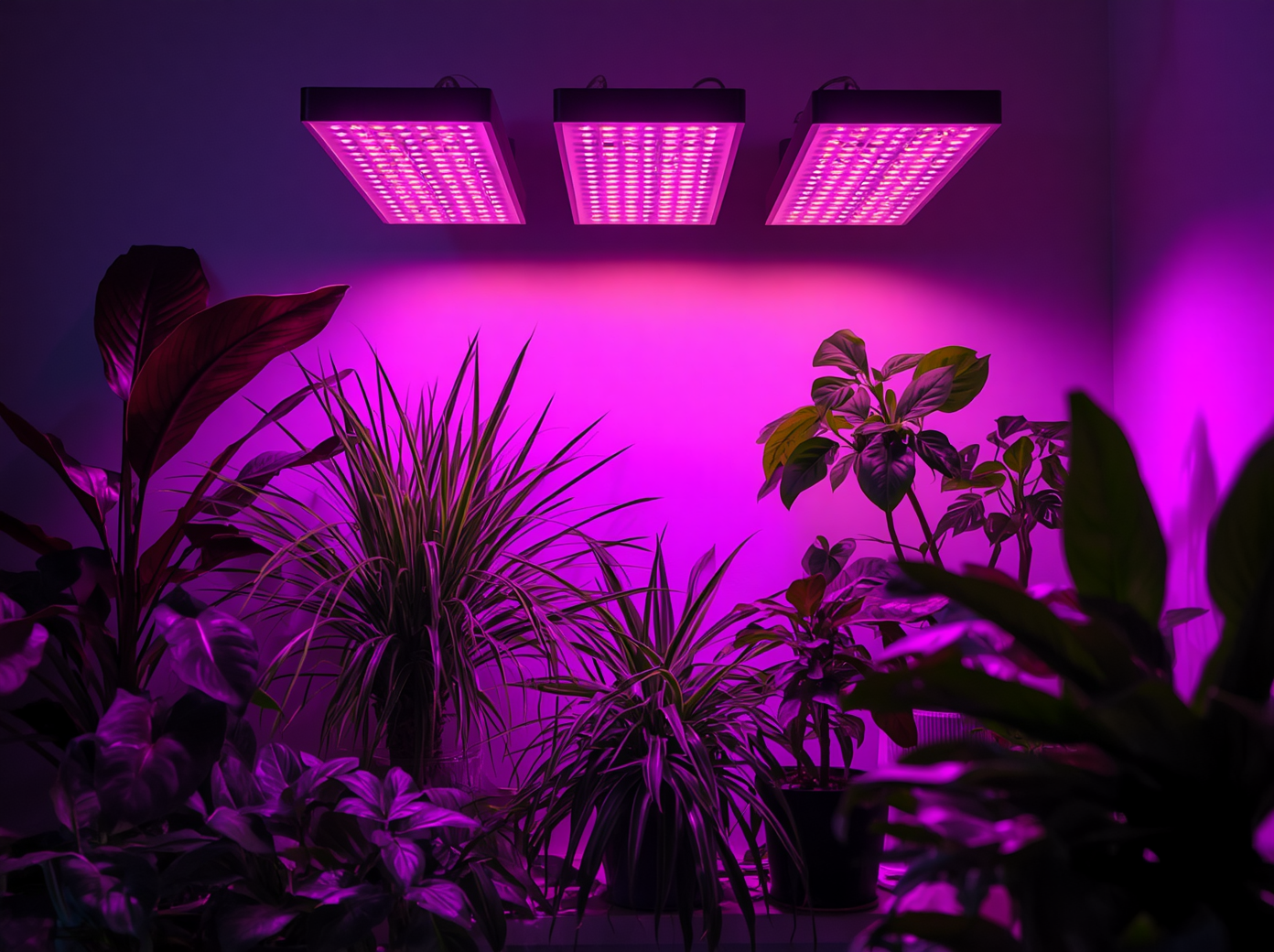
Grow lights have transformed what is possible in indoor plant growing. Previously, the options for houseplants in dark apartments or windowless offices were severely limited to the most shade-tolerant species. Today, affordable full-spectrum LED technology can supplement or entirely replace natural sunlight, enabling the growth of virtually any plant in almost any location.
Whether you want to start seeds in winter, maintain a tropical plant collection through short dark days, create a productive kitchen herb garden, or grow vegetables without a garden, understanding how to choose and use grow lights correctly makes all the difference between struggling plants and vigorous, productive growth.
How Plants Use Light: The Science
Plants use light for photosynthesis, the process of converting light energy into chemical energy (glucose) that powers all biological processes. The pigments involved in photosynthesis, primarily chlorophyll a and b, absorb light most efficiently at specific wavelengths, particularly in the blue range (430 to 450 nanometers) and the red range (640 to 680 nanometers). Green light around 550 nanometers is largely reflected, which is why plants appear green to us.
Blue light drives vegetative growth: leaf production, stem strength, and chlorophyll development. Red light drives flowering, fruiting, and root development. Full-spectrum lights that include both blue and red wavelengths produce balanced growth suitable for all plant types and growth stages.
Types of Grow Lights
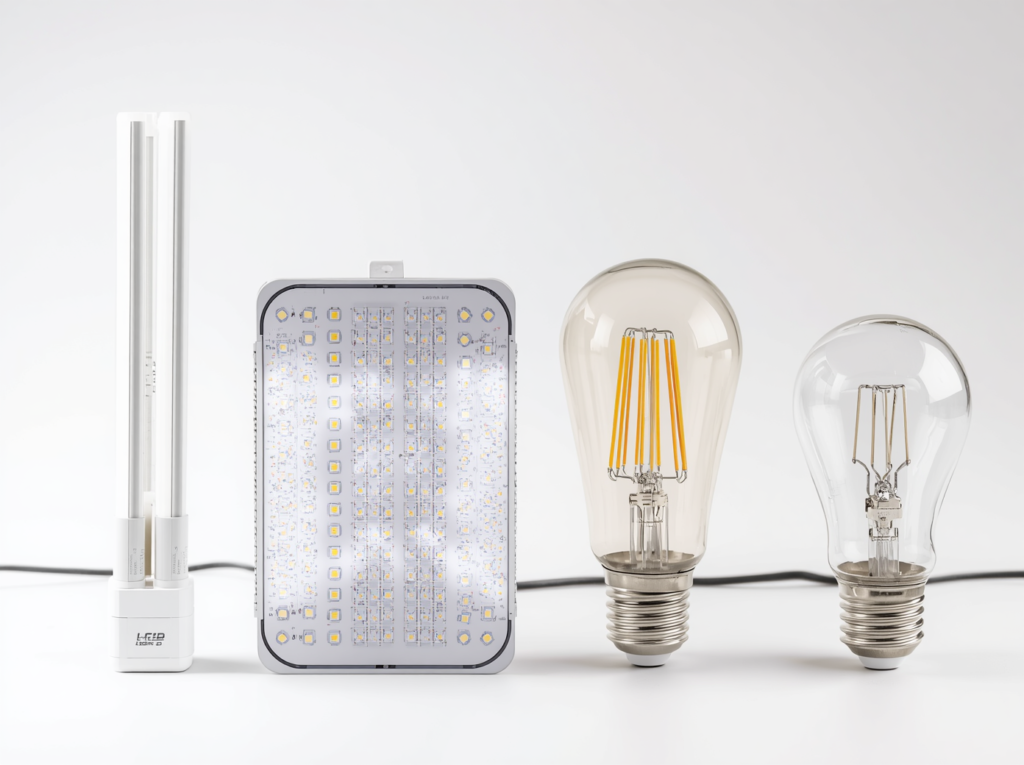
LED (Light Emitting Diode) — Best Overall Choice
Modern full-spectrum LED grow lights are the best choice for most indoor plant applications. They are energy-efficient, using 40 to 60 percent less electricity than equivalent HID lights, produce relatively little heat, have a long lifespan of 50,000 hours or more, and are available at a wide range of price points. Full-spectrum LEDs designed for plants emit the complete range of wavelengths plants need, often appearing as a pinkish-purple glow.
Fluorescent (T5 and T8 Tubes) — Budget-Friendly for Seedlings
T5 fluorescent tubes have been the standard for seed-starting and propagation for decades. They are inexpensive, easy to find, and effective for low-light plants, seedlings, and cuttings. However, they are less powerful than LED alternatives and have a higher running cost over time.
HID (High Intensity Discharge) — Best for Large Areas
HPS (High Pressure Sodium) and MH (Metal Halide) HID lights are the most powerful grow lights available and are used in commercial greenhouse and indoor farming applications. They produce exceptional light intensity but also significant heat requiring ventilation, and are generally overkill for home plant growing.
Incandescent Bulbs — Not Recommended
Standard incandescent bulbs produce too much heat and too little of the right light spectrum to be effective for plant growing. Avoid for all plant-growing applications.
Understanding Light Metrics
Lumens vs. PAR vs. PPFD
Lumens measure light as perceived by the human eye and are not a useful metric for plant growing. For plants, the relevant metric is PPFD (Photosynthetic Photon Flux Density) measured in micromoles per square meter per second, representing the amount of photosynthetically active light reaching the plant surface.
PPFD Requirements by Plant Type:
- Low-light plants (ferns, pothos, peace lily): 50 to 150 micromoles per square meter per second
- Medium-light plants (most tropical houseplants): 150 to 400 micromoles per square meter per second
- High-light plants (succulents, cacti, herbs): 400 to 600 micromoles per square meter per second
- Fruiting vegetables (tomatoes, peppers): 600 to 1,000 micromoles per square meter per second
Daily Light Duration
Most foliage plants do well with 12 to 16 hours of artificial light per day, mimicking natural summer day length. Always provide a dark period; plants need darkness for cellular respiration and hormonal processes.
Choosing the Right Grow Light for Your Needs
For Seedlings and Propagation:
T5 fluorescent or a small LED seedling light placed two to four inches above seedlings is ideal. Seedlings need blue-spectrum light to prevent etiolation (stretching) and relatively low PPFD compared to mature plants.
For Tropical Houseplants:
A full-spectrum LED grow light on a timer providing 12 to 14 hours daily is excellent for maintaining tropical plants in rooms with insufficient natural light. Look for lights with a stated PPFD of 200 to 400 micromoles at the intended placement distance.
For Herbs and Edibles on a Kitchen Counter:
Dedicated LED herb garden systems plug in like a standard lamp and are specifically designed for the 12 to 18-inch growing height of kitchen herbs. They provide appropriate intensity for compact edible growing.
For Vegetables and High-Light Plants:
Full-spectrum LED panels providing 400 to 800 PPFD are needed for productive vegetable growing. Look for panels from reputable brands with clear PPFD specifications. Budget panels often significantly overstate their capabilities.
Grow Light Placement and Distance
The Inverse Square Law
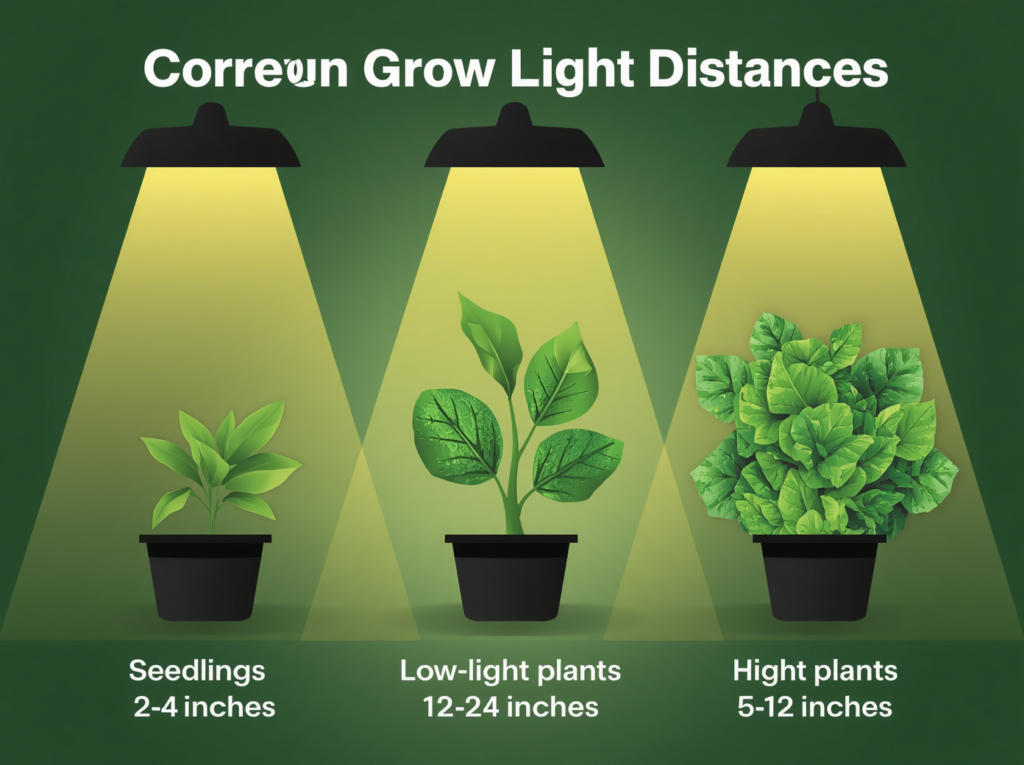
Light intensity decreases dramatically with distance from the source. At double the distance, light intensity is reduced to one quarter. This means even a few inches of difference in placement has significant effects on the light your plants receive.
General Distance Guidelines for LED Grow Lights:
- Seedlings: two to four inches — maximum proximity to prevent etiolation
- Low to medium light tropical plants: twelve to twenty-four inches
- High-light plants (succulents, herbs, fruiting vegetables): six to twelve inches
Signs of Too Much Light:
- Bleached or pale patches on leaves facing the light source
- Leaf edges or tips turning yellow or brown
- Leaves curl upward or fold to reduce light exposure
Signs of Too Little Light:
- Etiolation: stems stretch toward the light source, becoming abnormally long
- Small, pale leaves with slow growth despite adequate watering and feeding
Using Timers and Managing Energy Costs
A plug-in timer is one of the most important accessories for grow light use. Consistent light periods are crucial for plant health, and manual switching is unreliable. Set timers to run lights during daylight hours when possible, as this aligns with the plants’ natural circadian rhythm.
Running costs are an important consideration. A 45-watt LED grow light running 12 hours daily uses approximately 0.54 kWh per day or about 197 kWh per year. At an average electricity cost of $0.15 per kWh, this amounts to approximately $30 per year per light. Modern LEDs are dramatically more efficient than fluorescent or HID alternatives for equivalent light output.