
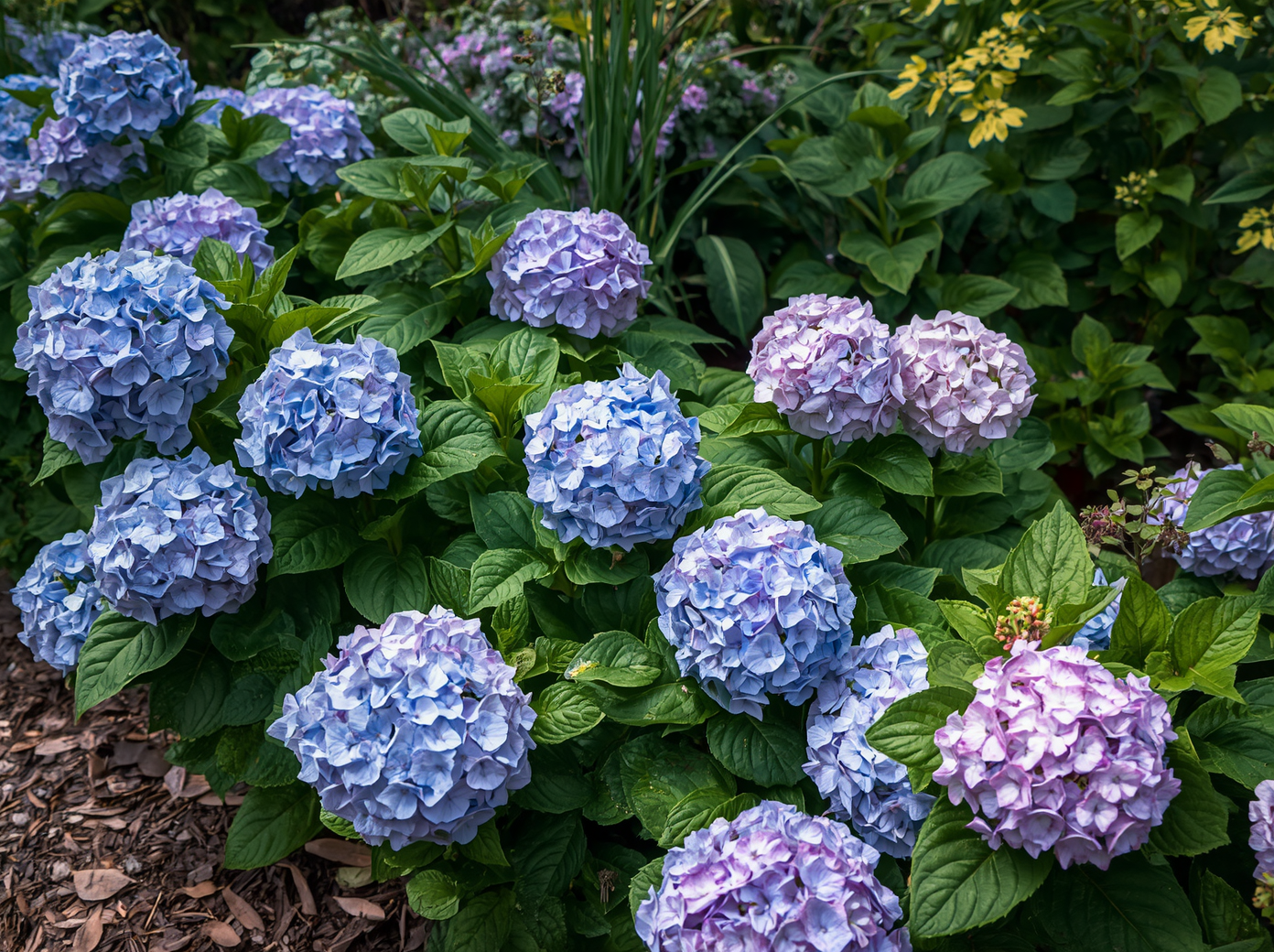
Hydrangeas are among the most spectacular flowering shrubs available for gardens and containers. Their enormous flower heads in blues, pinks, whites, and purples make a dramatic impact in any garden, and they bloom for weeks or months from early summer through autumn. They are also one of the most versatile shrubs: some tolerate deep shade, others thrive in full sun; some remain compact enough for containers, others grow to six feet or more.
Hydrangeas have a somewhat confusing reputation because different species require entirely different pruning approaches, and pruning at the wrong time eliminates the following year’s flowers. This guide demystifies hydrangea growing with clear, species-specific guidance.
Understanding Hydrangea Species: The Essential First Step
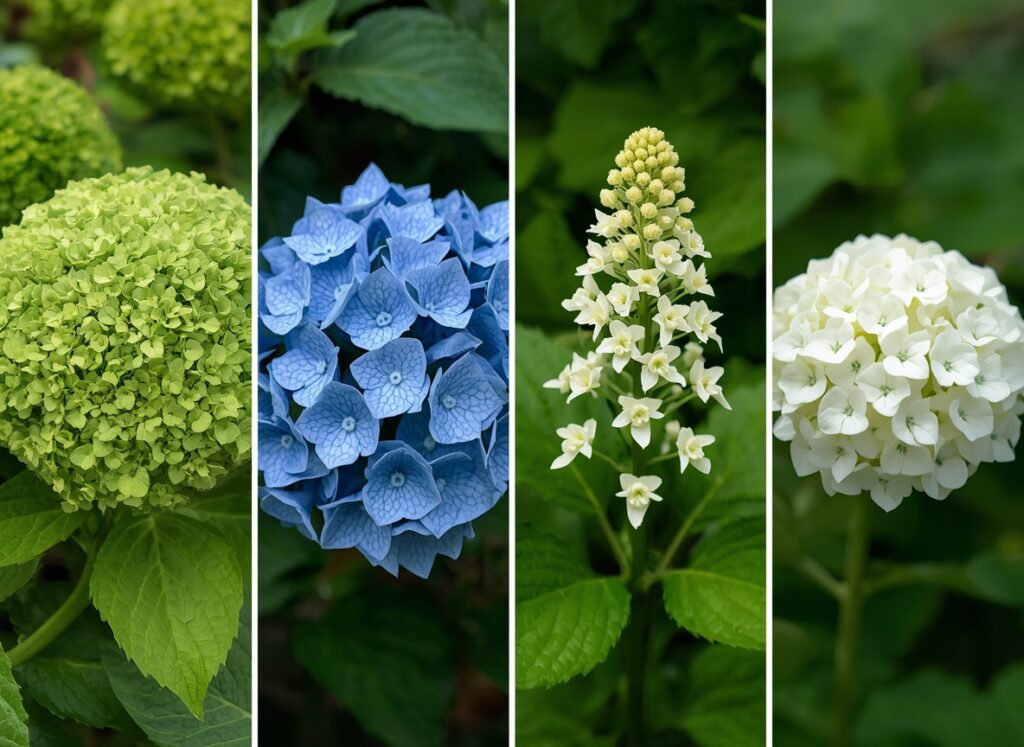
Bigleaf Hydrangea (Hydrangea macrophylla) — The Classic
The most widely grown and recognizable hydrangea, producing the familiar large mophead or lacecap flowers in blue, pink, or purple. It is also the most demanding in terms of pruning knowledge, as it blooms on old wood (stems that grew the previous year). Prune at the wrong time and you lose all flowers for that year.
Bigleaf hydrangeas are the only type that changes flower color based on soil pH. In acidic soil (pH 5.5 or below), aluminum becomes available to the plant and the flowers turn blue. In alkaline soil (pH 6.5 or above), aluminum is locked away and flowers turn pink. White varieties do not change color regardless of soil pH.
Panicle Hydrangea (Hydrangea paniculata) — The Easiest to Grow
Panicle hydrangeas produce cone-shaped flower heads rather than round balls. They bloom on new wood (current year’s growth), meaning they can be pruned hard in early spring without losing flowers. They are the most cold-hardy hydrangeas (surviving temperatures to -30 degrees Fahrenheit), tolerate more sun than other species, and are the most reliably flowering of all hydrangeas. Limelight, Tardiva, and PeeGee are excellent varieties.
Smooth Hydrangea (Hydrangea arborescens) — Annabelle and Its Relatives
Smooth hydrangeas produce enormous, globe-shaped white or pink flower heads and also bloom on new wood, making them easy to prune. Annabelle is the most famous variety, producing pure white heads up to twelve inches across. Incredibly cold-hardy and tolerant of more shade than most hydrangeas.
Oakleaf Hydrangea (Hydrangea quercifolia) — Outstanding Four-Season Interest
Oakleaf hydrangeas are arguably the most ornamentally valuable hydrangea species: conical white flower heads in summer, spectacular autumn leaf color in red and orange, attractive exfoliating cinnamon-colored bark in winter, and dramatic oak-leaf-shaped foliage throughout the season. They bloom on old wood and tolerate significant shade.
Planting Hydrangeas
Choosing the Right Site:
- Most hydrangeas prefer morning sun and afternoon shade in hot climates; full sun is acceptable in cooler climates
- Panicle hydrangeas tolerate the most sun; bigleaf and oakleaf prefer more shade
- Rich, moist, well-draining soil; hydrangeas are thirsty plants and dislike drought
- Shelter from strong, drying winds which damage the large flower heads
- Allow adequate space; most hydrangeas grow to three to six feet wide at maturity
Planting Process:
- Plant in spring or autumn; avoid summer planting in hot climates
- Dig a hole twice the width of the root ball and the same depth
- Incorporate generous amounts of compost or well-rotted manure
- Plant at the same depth as the nursery container
- Water thoroughly after planting and apply a three-inch mulch layer around the base
- Water frequently in the first growing season until established
Pruning Hydrangeas: The Critical Skill
Bigleaf and Oakleaf Hydrangeas (Bloom on Old Wood):
Prune immediately after flowering ends, typically in late summer. Never prune in autumn, winter, or spring as you will remove the flower buds that formed on the current season’s growth and will bloom next year.
- Remove spent flower heads just above the next healthy pair of buds below the flower
- Cut out any completely dead or crossing stems at the base
- Do not cut the plant back hard; this removes all flowering potential
- If the shrub is very old and overcrowded, remove one third of the oldest stems at the base each year over three years to rejuvenate it gradually
Panicle and Smooth Hydrangeas (Bloom on New Wood):
Prune hard in early spring just as the new growth buds begin to swell, typically February to March. These species benefit from harder pruning that encourages the strongest new growth and the largest flower heads.
- Cut back all stems to within two to three buds of the base (approximately twelve inches from the ground)
- Remove any dead or crossing stems entirely
- Pruning hard produces larger flowers on slightly shorter, sturdier stems
Changing Hydrangea Flower Color
Changing the flower color of bigleaf hydrangeas (Hydrangea macrophylla) is one of the most fascinating aspects of growing this species. The color depends entirely on soil pH and the resulting availability of aluminum ions.
To Turn Flowers Blue:
- Lower soil pH to 5.0 to 5.5 by adding sulfur chips, aluminum sulfate, or ericaceous compost
- Apply aluminum sulfate solution to the soil around the plant in early spring and again when buds appear
- Water with rainwater rather than alkaline tap water which raises pH over time
- Blue color takes one to two full growing seasons to develop fully
To Turn Flowers Pink:
- Raise soil pH to 6.5 or above by applying garden lime to the soil in autumn and spring
- Water with hard tap water in alkaline-water areas
- Avoid aluminum sulfate or ericaceous products
Note: white hydrangea varieties (including Annabelle and Limelight) do not change color regardless of soil pH. Only the blue and pink forms of Hydrangea macrophylla respond to pH manipulation.
Hydrangeas in Containers
Many hydrangea varieties grow successfully in containers, making them excellent for patios, balconies, and small gardens. Container hydrangeas need more frequent watering than garden-grown plants (potentially daily in summer heat) and annual feeding with a slow-release fertilizer in spring.
- Choose compact varieties specifically bred for containers: Incrediball, Little Lime, or Let’s Dance varieties
- Use a large container of at least fifteen gallons to provide adequate root space and moisture reserves
- Use ericaceous compost for blue varieties and standard compost for pink or white varieties
- Repot every two to three years in spring as the plant becomes root-bound