
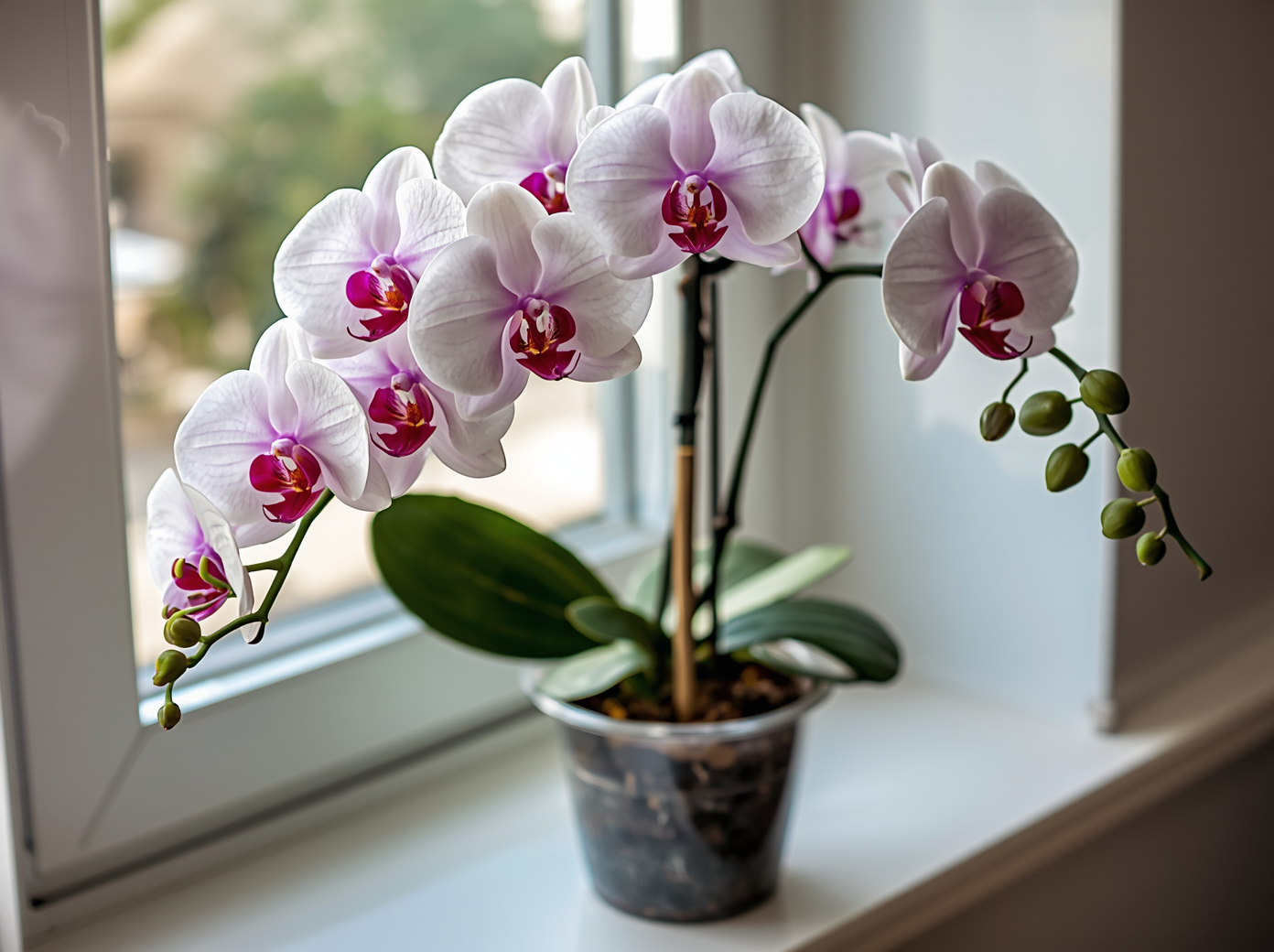
Orchids have an undeserved reputation for being impossibly difficult. In reality, Phalaenopsis orchids, by far the most commonly grown and sold orchid, are remarkably adaptable to indoor conditions and, once you understand their specific needs, are easier to care for than many popular houseplants.
The key to orchid success is understanding that orchids are not like typical houseplants. They do not grow in soil; they do not want to stay moist; and they need a temperature drop to trigger reblooming. Once you internalize these differences, caring for orchids becomes completely intuitive.
Understanding Phalaenopsis Orchids
Phalaenopsis, commonly called moth orchids, are epiphytes. In nature, they grow attached to tree branches and rocks in tropical Asia and Australia, with their roots exposed to air and dappled light. Their aerial roots absorb moisture and nutrients from humid air and rain, then dry rapidly in the constant air movement of the forest canopy.
This origin explains everything about their care: they need airy, loose growing medium rather than soil; roots need to dry between waterings; they need bright but indirect light filtered by a forest canopy; and the temperature drop between day and night that occurs naturally in their native habitat is what triggers flowering.
Light Requirements
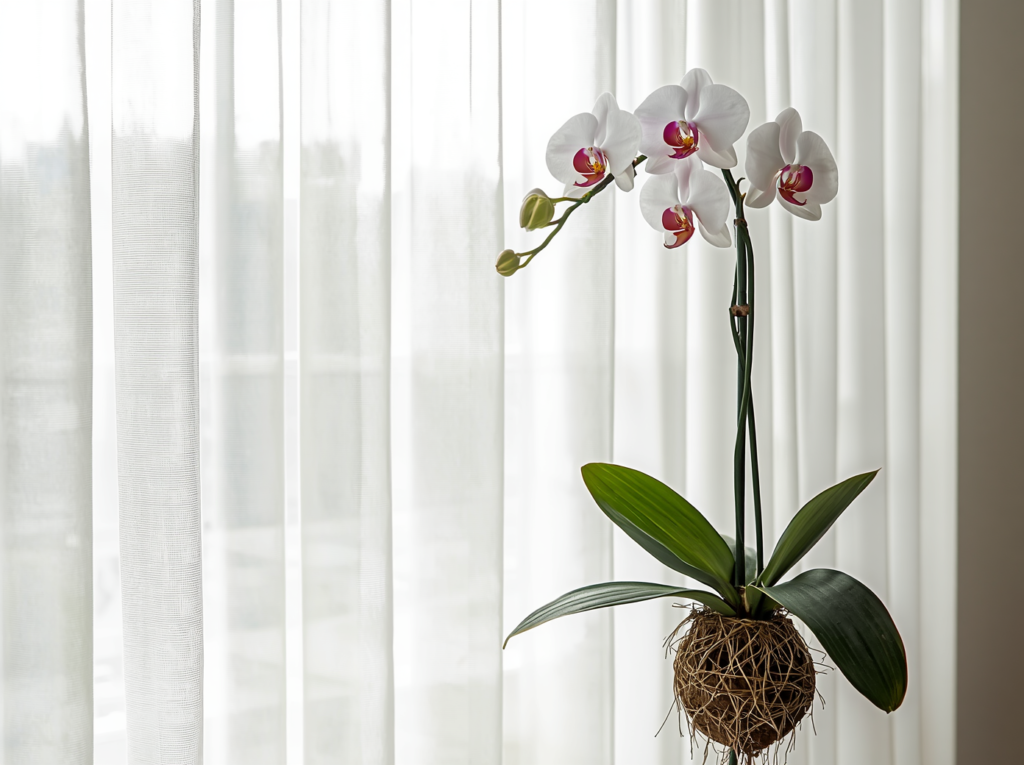
Phalaenopsis need bright, indirect light, similar to the dappled light filtering through a forest canopy. An east or west-facing windowsill is ideal. South-facing windows work with sheer curtains or by positioning the plant two to three feet back from the glass.
Signs of Too Little Light:
- Leaves turn dark green as the plant produces more chlorophyll to capture limited light
- No new growth or very slow growth
- Failure to rebloom despite proper temperature cues
Signs of Too Much Direct Sun:
- Yellow or bleached patches on leaves
- Leaf tips or edges turn brown
- Leaf surface feels warm to the touch
Watering Orchids: The Most Important Skill
Overwatering is the number one killer of orchids. In their natural habitat, orchid roots experience periods of complete drying between rainfall events. Roots sitting in constantly moist medium rot rapidly.
The Weekly Soak Method:
- Step 1: Take the orchid in its clear plastic nursery pot to the sink
- Step 2: Run room-temperature water through the pot for 30 to 60 seconds, saturating the bark medium
- Step 3: Allow to drain completely, several minutes, until no more water drips
- Step 4: Return to its decorative pot only when completely drained
- Step 5: Repeat the following week, or check root color first to verify dryness
Reading Root Color (The Easiest Moisture Check):
Clear plastic pots are standard for orchids precisely because they allow you to see root color. Green roots indicate recently watered, moist roots. Silver-gray roots indicate dry roots that are ready to water. If roots are still green, wait another day or two. This visual check removes all guesswork.
Growing Medium and Potting
Why Not Soil?
Standard potting soil suffocates orchid roots, retains too much moisture, and does not drain adequately. Phalaenopsis need a medium that provides excellent drainage and air circulation around roots.
Suitable Orchid Media:
- Orchid bark (fir bark): most common; drains excellently; provides good anchoring
- Sphagnum moss: retains more moisture; good for beginners as it is more forgiving
- LECA (Lightweight Expanded Clay Aggregate): semi-hydroponic approach; excellent drainage; low risk of root rot
When to Repot:
- Every one to two years when bark degrades and retains too much moisture
- When roots overflow the pot significantly
- Best time: immediately after blooming ends
Humidity, Temperature, and the Blooming Trigger
Humidity:
Phalaenopsis thrive at 50 to 70 percent humidity. Average indoor humidity of 30 to 50 percent is tolerable but lower humidity can cause wrinkled leaves and failed bud development. A humidity tray or small humidifier near the plant helps.
Temperature and the Blooming Trigger:
This is the most important factor for reblooming. Phalaenopsis need a temperature drop of 10 to 15 degrees Fahrenheit between day and night for four to six weeks in fall to initiate flower spike production. Nighttime temperatures of 55 to 65 degrees Fahrenheit trigger blooming.
In practice, moving your orchid near a drafty window in early fall where it experiences cooler nighttime temperatures is often enough to trigger a new spike.
Understanding the Orchid Life Cycle
Phase 1: Vegetative Growth
The orchid grows new leaves, typically one to two per year. Healthy new leaves should be large and bright green, emerging from the center of the leaf fan.
Phase 2: Spike Development
A new flower spike emerges from between the lowest leaves, triggered by the fall temperature drop. Unlike aerial roots which grow straight with rounded tips, spikes are flattened, slightly zig-zag in form, and pointed at the tip. Spikes take two to three months to develop from emergence to full bloom.
Phase 3: Blooming
Phalaenopsis blooms last two to four months, one of the longest flowering periods of any houseplant. During blooming, keep conditions stable as temperature fluctuations and drafts cause bud drop.
Phase 4: Post-Bloom
After flowers fade, you have three options: cut the spike to the base to encourage faster new leaf growth and a new spike next season; cut to just above a node on the spike, which may produce a secondary smaller bloom; or leave the spike on the plant as new blooms may appear on the same spike.
Troubleshooting Common Orchid Problems
Yellowing Leaves
Bottom leaves occasionally yellowing and dropping is normal aging. Rapid yellowing throughout the plant likely indicates overwatering or root rot. Check roots and reduce watering frequency.
Wrinkled or Shriveled Leaves
Indicates dehydration, either from underwatering or root rot where roots cannot deliver water. Check root health first; if roots are healthy, increase watering frequency.
Failure to Rebloom
Almost always due to insufficient temperature drop in fall. Ensure the plant experiences at least four weeks of nighttime temperatures 10 to 15 degrees below daytime temperatures. Also ensure adequate light levels.
Bud Blast (Buds Drop Before Opening)
Caused by sudden temperature change, cold draft, ethylene gas from ripening fruit nearby, or watering stress. Keep conditions stable during bud development and keep the plant away from fruit bowls.