
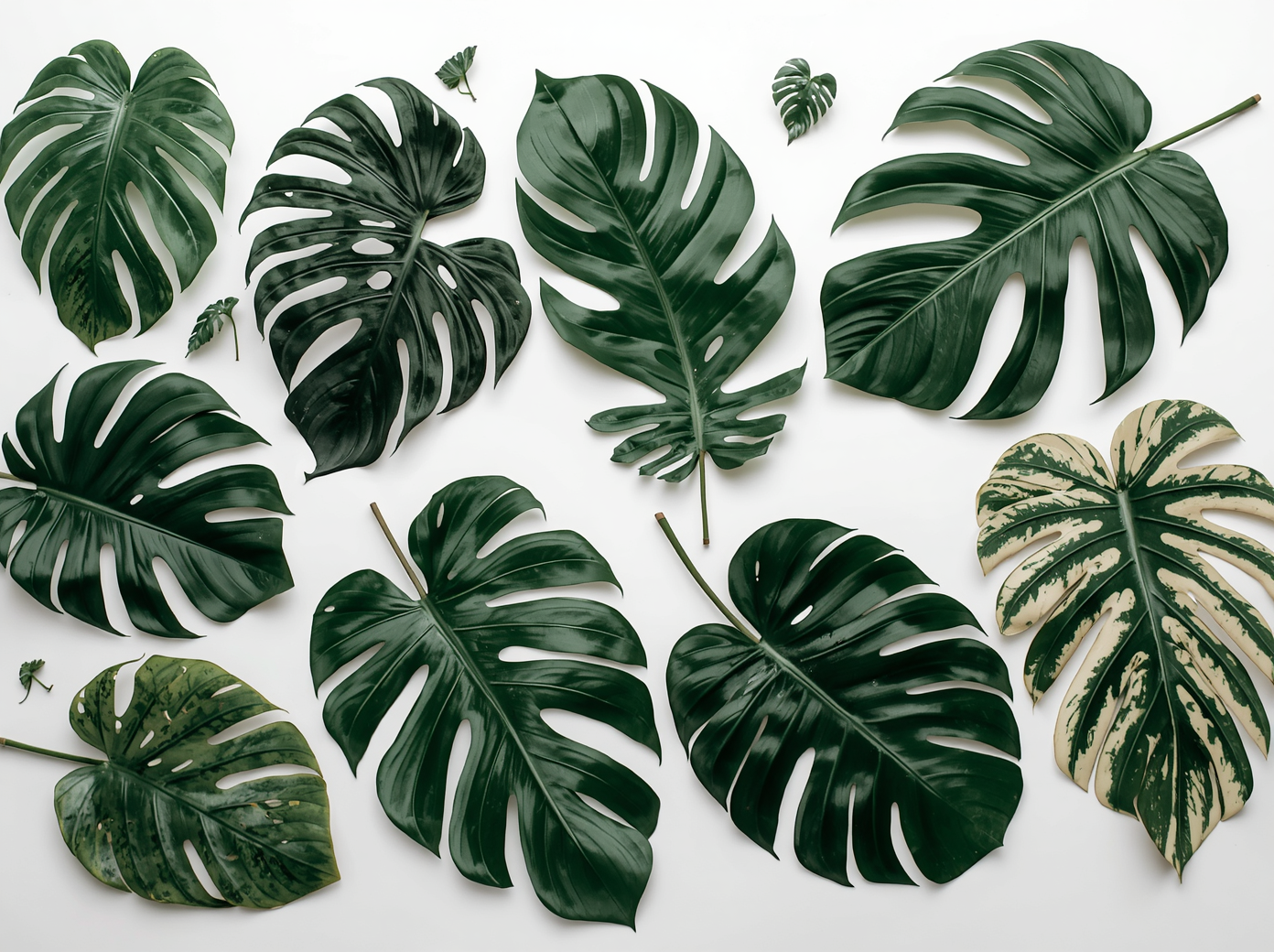
The genus Monstera contains approximately 50 species, and plant collectors have fallen deeply in love with many of them. What began as a mainstream interest in Monstera deliciosa has expanded into a passionate hobby of collecting increasingly rare and spectacular species and cultivars. Prices for rare variegated forms have reached thousands of dollars for a single cutting.
Whether you are a casual plant owner curious about the differences between varieties or an enthusiastic collector building a Monstera collection, this guide covers 15 of the most interesting and widely available species and cultivars.
The Most Common Monsteras
1. Monstera Deliciosa — The Classic
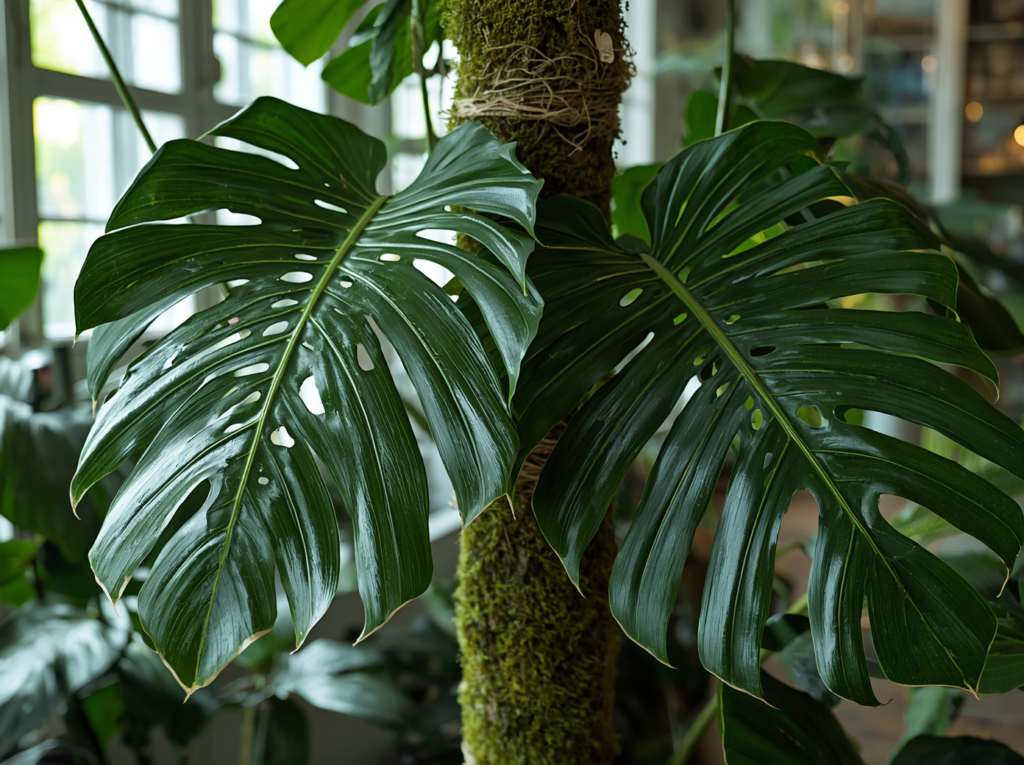
Monstera deliciosa is the plant most people picture when they hear Monstera. With leaves that can reach three feet wide on mature specimens, dramatic split lobes, and oval fenestrations, it is one of the most architecturally impressive houseplants available. The name deliciosa refers to its edible fruit, which tastes like a combination of pineapple and banana, though it takes 12 months or more to ripen and is rarely produced indoors.
- Light: Bright indirect light; four to six hours ideal
- Water: When top two inches dry; roughly weekly in summer
- Humidity: 60 percent or higher preferred; tolerates 40 to 50 percent
- Growth: Can reach ceiling height in three to five years under optimal conditions
2. Monstera Adansonii — Swiss Cheese Vine
M. adansonii is the smaller, faster-growing sister to deliciosa. Its oval leaves are riddled with oval holes but lack the deep side splits of deliciosa. It is a natural climber and trailer, stunning in hanging baskets where it cascades dramatically, or trained up a moss pole. It produces fenestrations faster than deliciosa and has a more delicate, feathery appearance.
- Light: Medium to bright indirect light; tolerates lower light
- Leaf size: 6 to 14 inches, much smaller than deliciosa
- Ideal for: hanging baskets, climbing on trellises, smaller spaces
3. Monstera Deliciosa Borsigiana
Borsigiana was considered a separate species for years but is now recognized as a variety of M. deliciosa. It is distinguished by its smaller leaves, faster growth rate, and a distinctive wave shape in the petiole near the leaf. It is the most common form sold in nurseries and is hardier and easier to grow than true deliciosa.
Variegated Monstera: The High-Value Collectors’ Plants
4. Monstera Deliciosa Albo Variegata
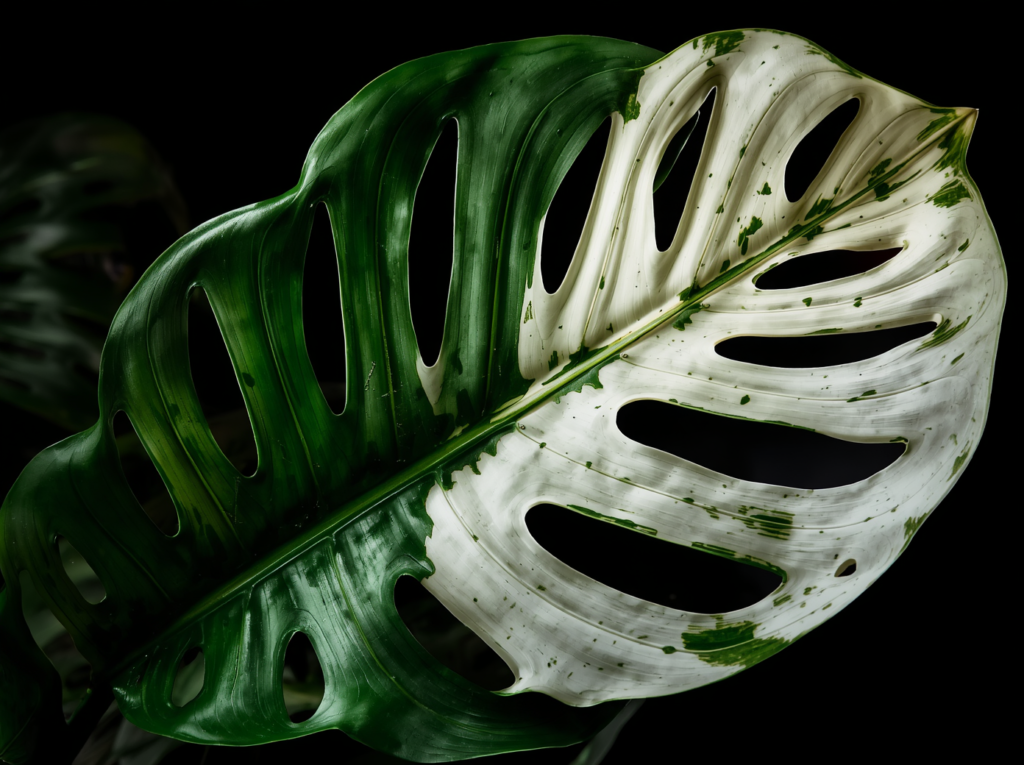
Albo Variegata is arguably the most famous and expensive houseplant in the world. Its leaves display dramatic white variegation ranging from fine white speckling to half-and-half white and green leaves or entirely white leaves. The variegation is caused by a natural mutation that prevents chlorophyll production in affected cells.
Because the variegation is chimeric, resulting from a genetic mutation in stem cells rather than a stable genetic change, it cannot be reproduced from seed and is unstable. The same plant can produce solid green leaves, heavily variegated leaves, or fully white leaves on different stems. Prices for rooted cuttings range from $50 to several hundred dollars.
5. Monstera Deliciosa Thai Constellation
Thai Constellation offers a more stable, speckled form of variegation with cream and white spots and splashes on green backgrounds, resembling a starfield. Unlike Albo Variegata, it was produced through tissue culture in Thailand and has relatively stable variegation that does not revert to solid green.
- Variegation: cream and yellow-white speckles and splashes throughout each leaf
- Stability: more stable than Albo; less likely to produce solid green or pure white leaves
- Price range: more accessible than Albo; typically $50 to $200 for a rooted plant
6. Monstera Deliciosa Mint Variegata
A rarer and newer variegation type, Mint produces leaves with mint green variegation, with lighter green sections within the darker green leaf. More subtle than the white variegations but striking in its own quiet way. Still very rare and expensive in the collector market.
Rare and Collector Monstera Species
7. Monstera Obliqua
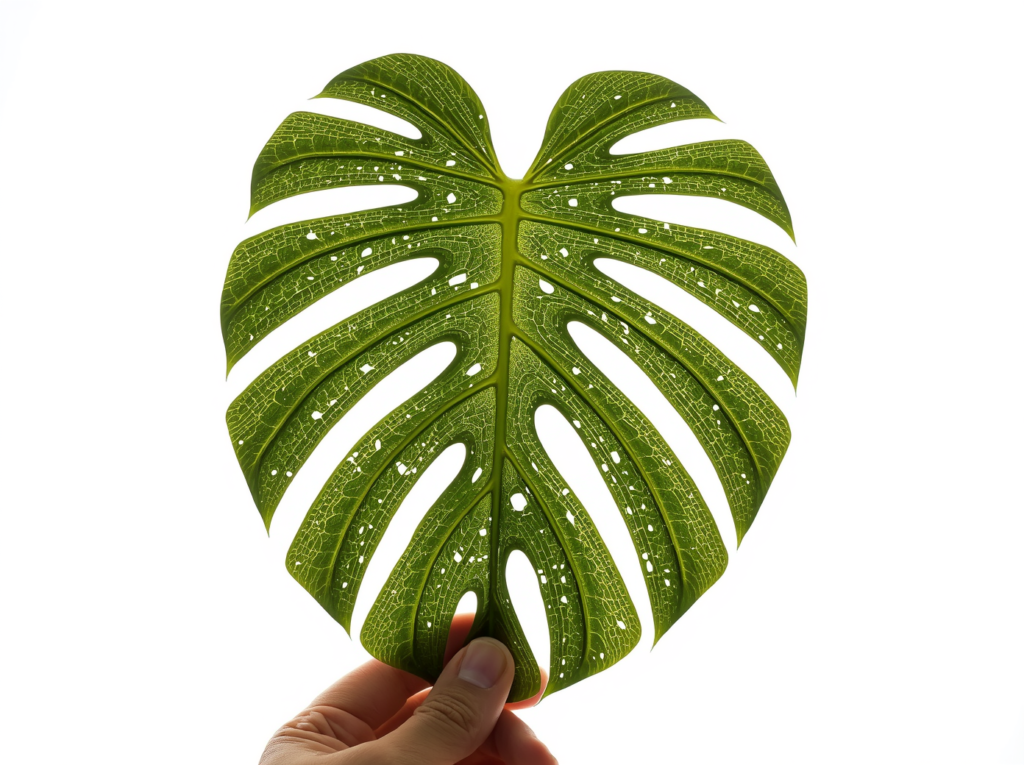
M. obliqua is one of the rarest and most extreme Monstera species, a true collector’s specimen. Its leaves are extraordinarily fenestrated: in some forms, holes make up 90 percent of the leaf area, leaving only a delicate web of green tissue. The leaves are also paper-thin and fragile. True M. obliqua requires very specific high-humidity, warm conditions and is not recommended for beginners.
8. Monstera Standleyana
M. standleyana, also known as Cobra Plant, produces narrow, elongated, glossy leaves without the dramatic fenestrations of other Monsteras. It is more commonly available in variegated forms with cream or yellow streaks on green leaves. It is a fast grower and more compact than deliciosa.
9. Monstera Peru (Monstera Karstenianum)
M. peru has unusually textured, deeply ridged, dark green leaves with a corrugated or quilted appearance unlike any other Monstera. It is rarely fenestrated and stays compact, making it suitable for smaller spaces.
10. Monstera Siltepecana
In its juvenile form, M. siltepecana has silvery, lance-shaped leaves with dark green veins, a completely different appearance than its mature climbing form. As a trailing plant, the silver-green coloring is beautiful and unusual.
Monstera Relatives Often Mistaken for Monsteras
11. Rhaphidophora Tetrasperma (Mini Monstera)
Despite being sold widely as mini Monstera, R. tetrasperma belongs to a completely different genus. However, its small six to eight inch fenestrated leaves are superficially similar to a miniature M. deliciosa, and it has similar care requirements. It grows extremely fast, much faster than true Monsteras, and is generally more affordable.
12. Epipremnum Pinnatum (Dragon Tail)
Another common Monstera lookalike, Epipremnum pinnatum develops fenestrated leaves in its mature form that strongly resemble Monstera adansonii. In its juvenile form, it has plain elongated leaves without holes. With age and adequate light, fenestrations develop dramatically.
13. Scindapsus Pictus (Satin Pothos)
While visually quite different from Monsteras, Scindapsus is often grouped with them in retail settings. Its velvety, silver-mottled dark green leaves make it strikingly beautiful, and it shares similar care requirements.
New and Emerging Varieties
14. Monstera Acacoyaguensis
A recently popularized collector species with beautiful, deeply pinnate leaves that resemble a feather or skeleton leaf. Still rare but increasingly available through specialty sellers. Requires similar care to other Monsteras but may appreciate slightly higher humidity.
15. Monstera Dubia
In its juvenile form, M. dubia produces small, silvery, heart-shaped leaves with dark green veins, almost resembling a Scindapsus. As it climbs and matures, the leaves dramatically change character, becoming large and fenestrated. It is a fascinating plant to observe through its different life stages.
Building a Monstera Collection: Practical Advice
If you are building a Monstera collection, start with easy, affordable species such as M. deliciosa, M. adansonii, and Rhaphidophora tetrasperma and learn their care requirements before investing in expensive rare varieties. Expensive variegated forms are challenging. They need high light, high humidity, careful watering, and consistent conditions to maintain their variegation.
Purchase rare Monsteras only from reputable sellers who can confirm the exact species and provide proof of origin. The rare Monstera market has significant misidentification issues. Trust sellers with clear photography, plant history, and positive community reputation.