
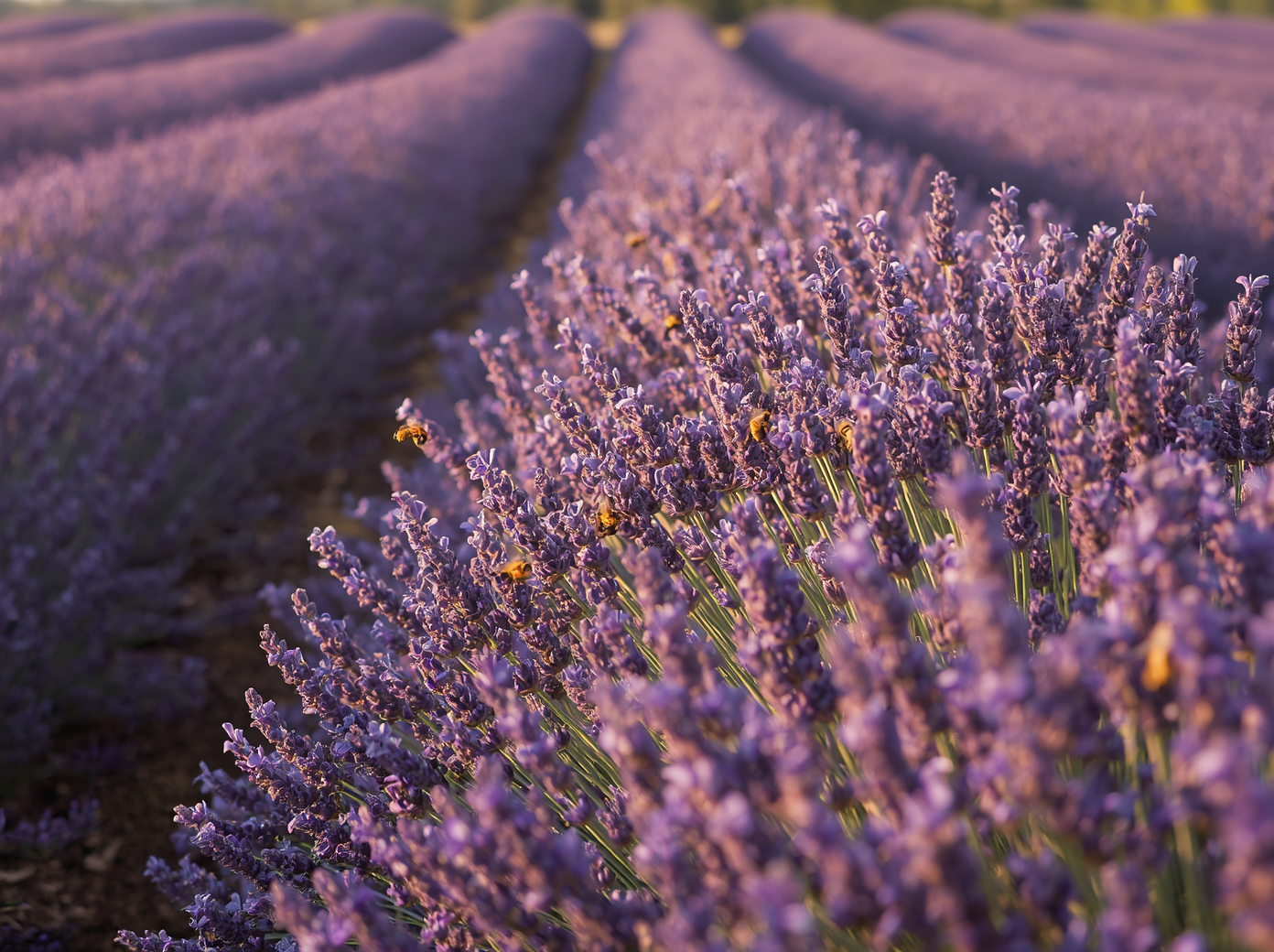
Lavender is one of the most beloved plants in the world, and for good reason. Its silvery foliage, violet flower spikes, and intoxicating fragrance make it a standout in any garden. Beyond beauty, lavender is deeply practical: its dried flowers repel moths in wardrobes, its essential oil is one of the most widely used in aromatherapy, and its flowers are edible, adding a floral note to baked goods, honey, and cocktails.
Despite its reputation for being fussy, lavender is genuinely easy to grow once you understand its one non-negotiable requirement: excellent drainage and full sun. Get these right and lavender asks very little in return.
Understanding Lavender: Origins and Natural Habitat
Lavender (Lavandula) is native to the Mediterranean basin, from Spain and France through to Greece and North Africa. It evolved on rocky, alkaline hillsides with shallow, infertile soil, blazing summer sun, virtually no summer rain, and cold, dry winters. This origin profile explains its care requirements perfectly: it thrives on neglect, poor soil, and drought, but suffers in rich, moist, or shaded conditions.
There are over 40 species of lavender and hundreds of cultivars, ranging from compact dwarf varieties perfect for containers to large shrubby plants reaching four feet wide. Choosing the right type for your climate is the first step to success.
Choosing the Right Lavender Variety
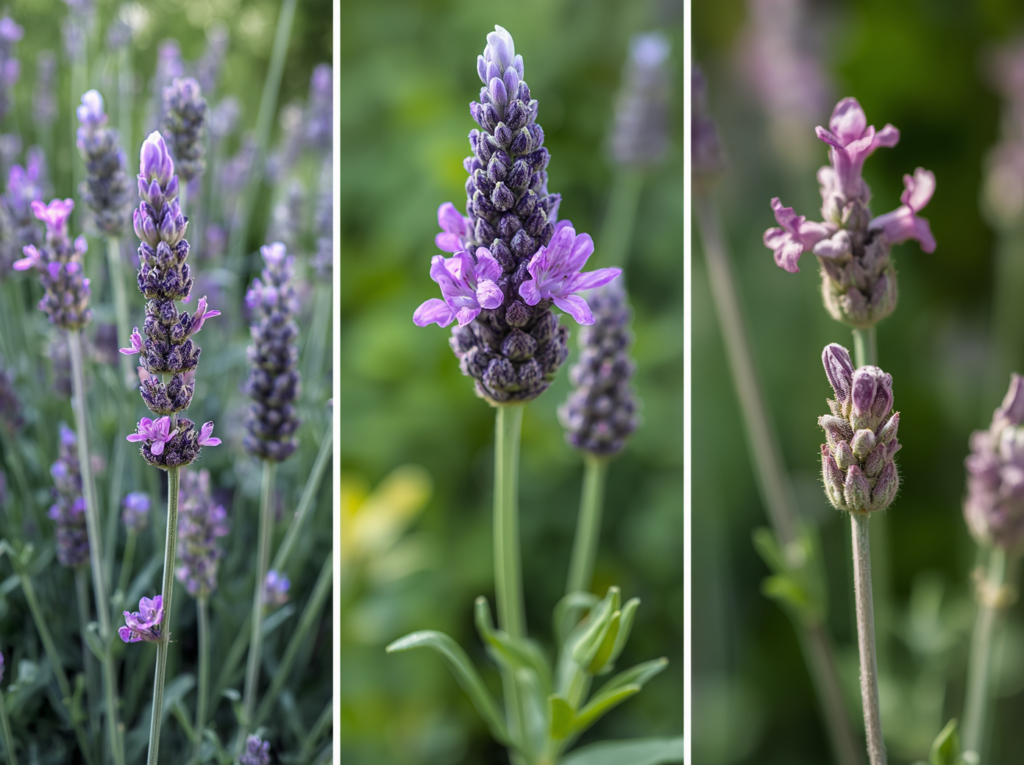
English Lavender (Lavandula angustifolia) — Most Hardy
English lavender is the most cold-tolerant species, hardy to USDA Zone 5 (-20°F / -29°C). It produces the finest fragrance and the best oil quality. Key cultivars include Hidcote (compact, deep purple, excellent for edging), Vera (traditional, excellent for drying), Munstead (compact, early blooming, reliable), and Alba (white-flowered, unusual and striking).
French Lavender (Lavandula stoechas) — Distinctive Appearance
French lavender is recognizable by its distinctive rabbit-ear bracts atop each flower head. It blooms earlier and more prolifically than English lavender but is less cold-hardy (Zone 7, -10°F / -23°C). Excellent for containers brought indoors in colder climates.
Lavandin (Lavandula x intermedia) — Most Productive
A hybrid between English and spike lavender, lavandins are the largest-growing lavenders and produce the most oil. Grosso and Provence are the main commercial oil-production varieties. They are hardier than French lavender but less hardy than English, suited to Zone 5-8.
The Perfect Growing Conditions for Lavender
Sunlight: Non-Negotiable
Lavender requires a minimum of six hours of direct sun daily, and eight or more hours is better. In less than six hours of sun, lavender becomes leggy, produces fewer flowers, and is far more susceptible to root rot and fungal diseases. Never plant lavender in shade.
Soil: Drainage Is Everything
If there is one thing that kills lavender, it is waterlogged soil. Lavender roots are extremely intolerant of standing water. The soil must drain freely after rain or irrigation. In heavy clay soils, amend generously with grit, coarse sand, or perlite, or better yet, build a raised bed. The pH should be slightly alkaline, around 6.5 to 7.5.
DIY Lavender Soil Mix for Containers:
- 60 percent general-purpose compost or potting mix
- 30 percent coarse horticultural grit or perlite
- 10 percent lime chips or crushed chalk to raise pH slightly
Planting Lavender: Step-by-Step
In the Garden:
- Choose the sunniest, most freely-draining spot available
- If soil is heavy, build raised beds or mounds at least 12 inches high filled with gritty mix
- Space plants 18 to 24 inches apart to ensure good air circulation, which prevents fungal disease
- Plant at the same depth as the nursery pot; never plant deeper
- Do not add compost or fertilizer to the planting hole; lavender prefers lean soil
- Water in well and then leave alone; do not water again until the soil is dry
In Containers:
- Use a terracotta pot at least 12 inches in diameter with generous drainage holes
- Add a layer of crocks or gravel at the bottom before filling with gritty mix
- Terracotta is ideal because its porous walls allow moisture to evaporate
- Place in the sunniest position available, ideally on a south-facing patio or balcony
Watering Lavender: Less Is More
Established lavender is extremely drought-tolerant and needs minimal watering. In the first season, water once a week during dry periods to help roots establish. After the first season, water only during extended droughts. In containers, water when the top two inches of soil are completely dry.
The golden rule: when in doubt, do not water. Lavender recovers from drought far better than from overwatering. Brown stems and no recovery after a dry spell indicate root rot, not drought.
Pruning Lavender: The Most Important Maintenance Task
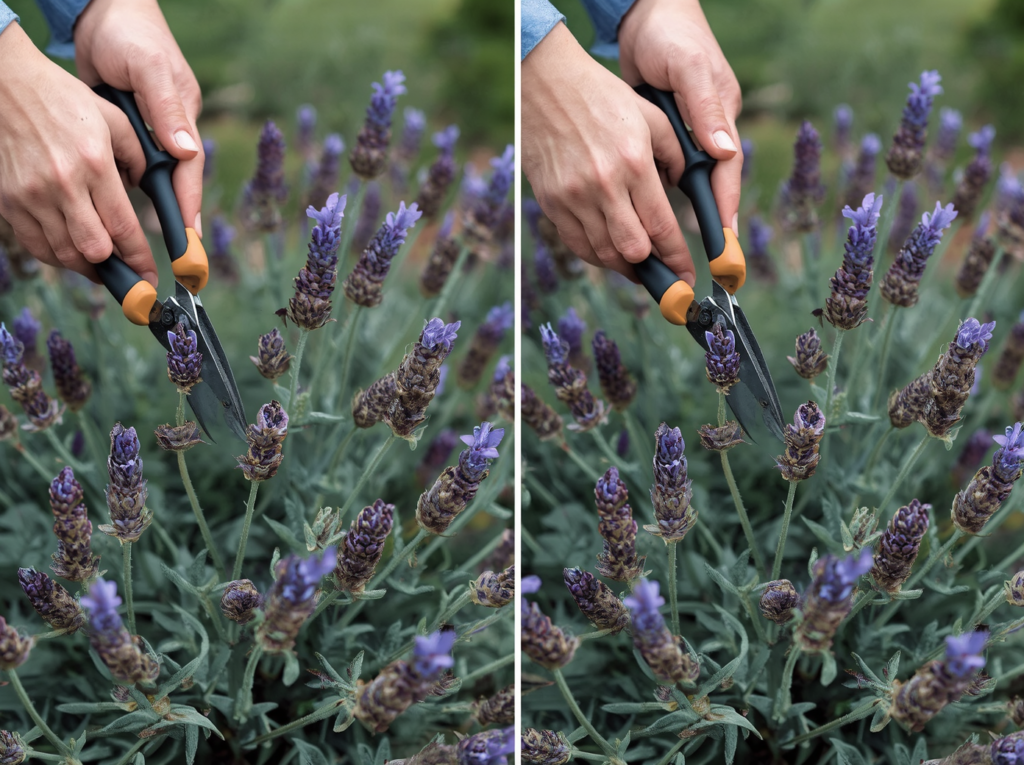
Pruning is the single most important care task for lavender longevity. Without regular pruning, lavender quickly becomes woody, open, and straggly, losing its compact form and flowering performance.
When to Prune:
- After the first flowering flush in late summer, typically August to September
- A lighter tidy-up in spring to remove any winter-damaged tips
How to Prune:
- Use clean, sharp shears
- Cut back by about one third of the current year’s growth
- Cut into the green growth, never into the old woody base; woody stems will not regenerate
- Aim for a neat, rounded mound shape
- Remove all flower stems at the base once flowers have faded
The hard truth about old lavender: plants pruned annually stay compact and productive for ten or more years. Plants never pruned become woody and open after three to five years and are difficult to rejuvenate. If your lavender has become very woody, propagate new plants from cuttings and start fresh.
Harvesting Lavender
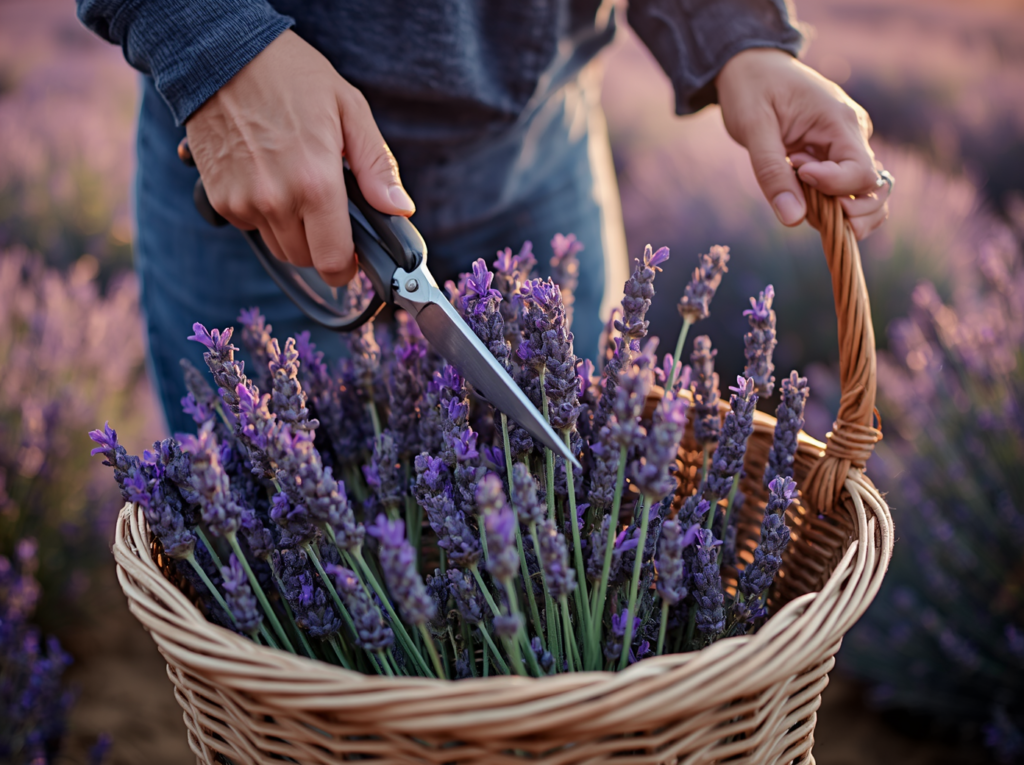
For Fresh Flowers:
Harvest when about half the buds on the spike have opened. Cut stems long, just above the foliage. This is also the optimal time for the strongest fragrance.
For Drying:
Harvest when flowers are just opening, before full bloom. Gather into small bundles and secure with a rubber band. Hang upside down in a warm, dry, dark, well-ventilated location. Dried lavender retains its fragrance for one to two years.
Uses for Harvested Lavender:
- Sachets for drawers and wardrobes to repel moths
- Dried bunches as long-lasting indoor decoration
- Lavender sugar: blend dried flowers into caster sugar for baking
- Infused in honey, syrup, or oil
- Added to bath salts, soaps, and homemade candles
Common Lavender Problems and Solutions
Leggy, Sparse Growth
Caused by insufficient light or lack of pruning. Move to a sunnier position and prune back hard in late summer. If woody stems have taken over, take cuttings and propagate new plants.
Yellowing Leaves
Usually indicates overwatering or waterlogged soil. Check drainage immediately. If root rot has set in, the plant cannot be saved. Improve drainage before replanting.
No Flowers
The most common causes are insufficient sun and over-fertilizing with nitrogen. Cut back on watering, give more sun, and avoid feeding. Lavender flowers best when slightly stressed.
Gray Mold (Botrytis)
Appears as gray fuzzy mold on stems and leaves in cool, damp conditions. Improve air circulation by spacing plants further apart. Remove affected material and spray with copper fungicide.