
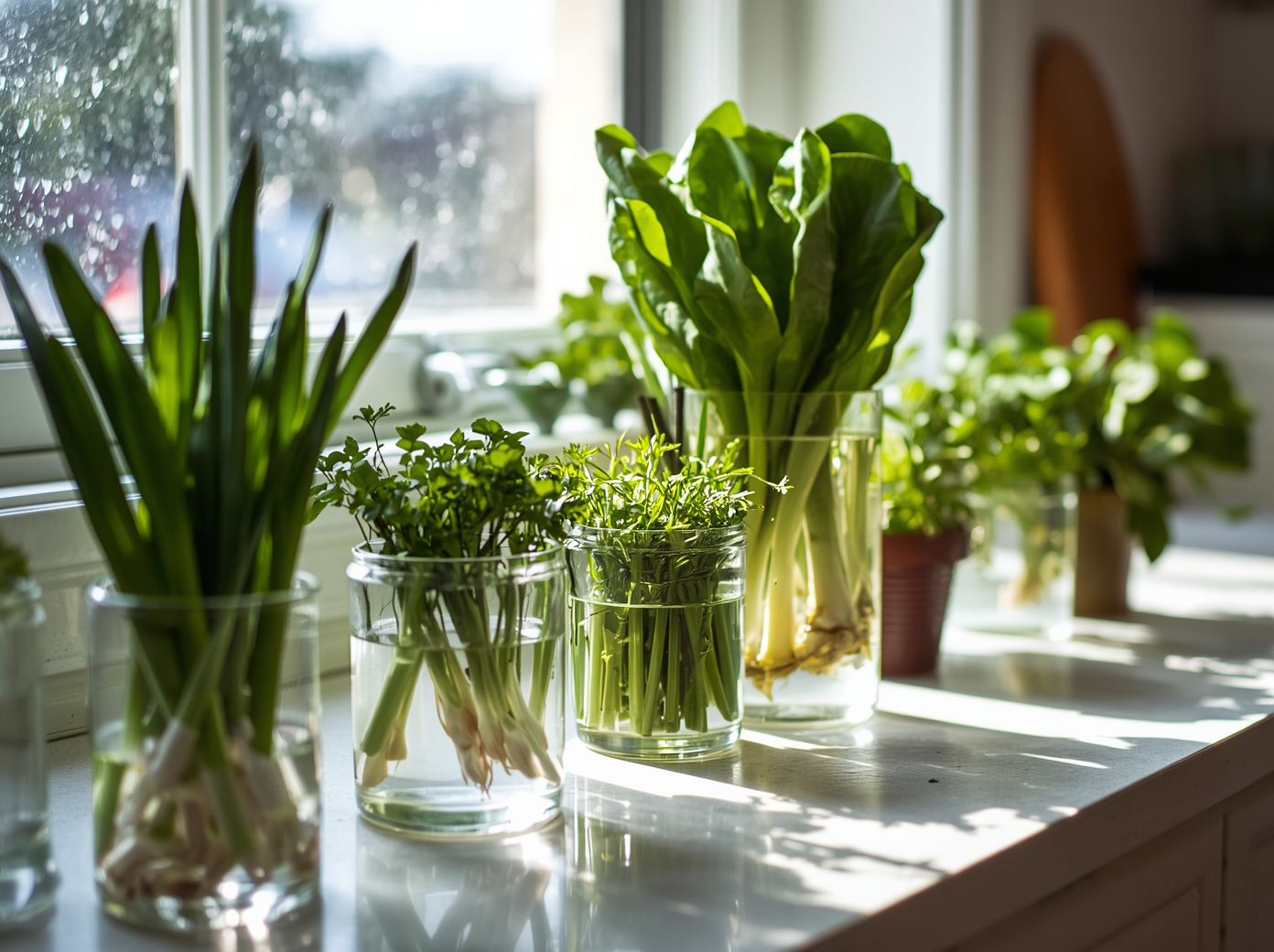
The idea of getting free food and plants from your kitchen waste sounds too good to be true, but it works. Regrowing from kitchen scraps is real, practical, and produces genuine results. Some crops like green onions, lettuce, and herbs regrow in days and can be harvested repeatedly for weeks. Others like avocados, ginger, and pineapple become beautiful houseplants even if you never harvest from them.
This guide covers 15 foods you can regrow from scraps, with realistic expectations about how much you will harvest and exactly how to do it.
Fast Regrowers: Harvest in Days to Weeks
1. Green Onions / Scallions — The Easiest and Fastest
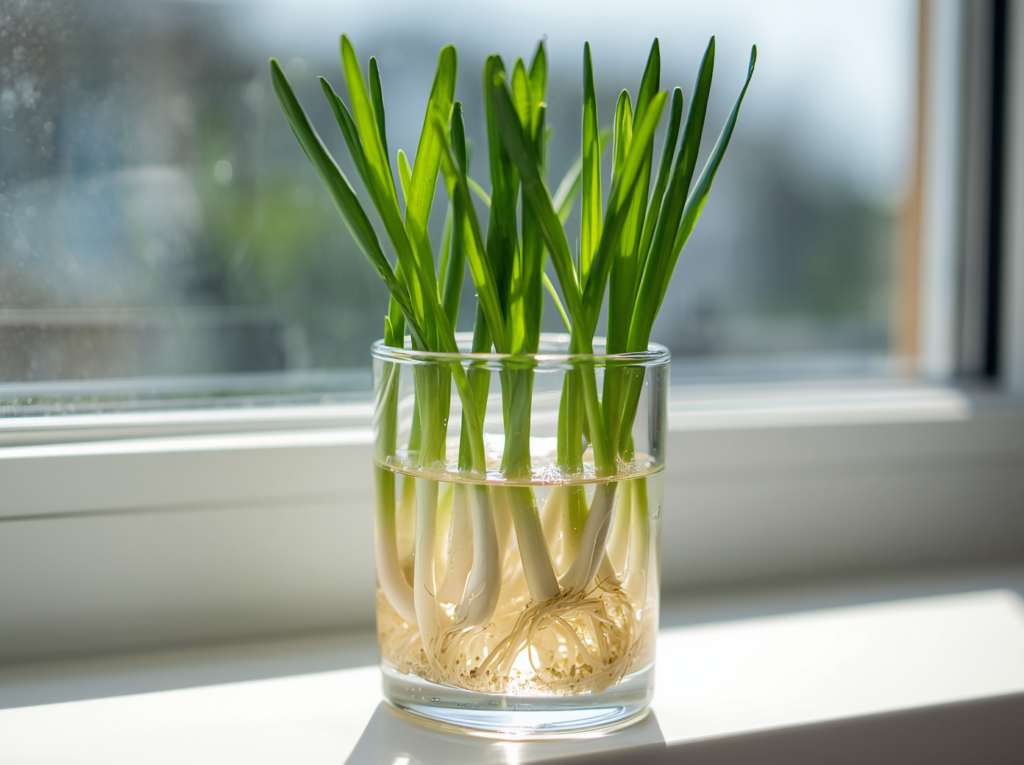
Green onions are the miracle of kitchen scrap growing. Place the root ends in a glass with one inch of water. Within 24 hours, new green shoots emerge. Within three to five days, you can harvest fresh green tops. The roots will continue regrowing for weeks. Simply add water as it depletes and harvest as needed.
- Keep the root end, the bottom one to two inches with the roots intact, when using green onions
- Place in a glass or jar with one inch of clean water, roots down
- Keep on a sunny windowsill; change water every two to three days
- Harvest by cutting the green tops, leaving the white base to continue regrowing
- After two to three regrowth cycles, transplant to soil for longer-term production
2. Lettuce and Other Leafy Greens
Romaine lettuce, butterhead lettuce, and bok choy can all be regrown from their base. The stumpy bottom inch of the head, placed cut-side up in a shallow dish of water, will sprout new leaves within three to five days. This will not produce a full head, but it will give you fresh salad leaves for one to two weeks.
- Cut the head of lettuce, leaving the bottom one to one and a half inches of the stump
- Place in a shallow dish with half an inch of water, cut side up
- Keep in bright indirect light; change water every two days
- New leaves emerge from the center within three to five days
- Harvest outer leaves as they develop; do not take more than one third at once
3. Celery
Celery regrows vigorously from its base. The bottom two inches of a celery bunch placed in water will produce multiple new stalks within a week. After two weeks, transplant to soil for continued production as water-grown celery eventually exhausts its stored nutrients.
- Cut stalks, leaving the base two inches intact with the root base
- Place in a bowl with one inch of water; keep in bright light
- New growth emerges from the center within five to seven days
- After two weeks in water, transplant to a pot with rich potting mix
4. Herbs from Stem Cuttings
Many common herbs can be propagated from stem cuttings in water, effectively regrowing them from grocery store bunches:
- Basil: cut stems just below a node; root in water in one to two weeks; produces full plants
- Mint: same method; roots extremely fast, often within days
- Parsley: root in water; takes two to three weeks; transplant to soil
- Thyme and rosemary: possible but takes longer at three to four weeks; use rooting hormone
- Oregano: roots in water in two to three weeks
5. Bean and Lentil Sprouts
Any dried bean, lentil, or seed intended for eating can be sprouted at home without any soil. Rinse in a jar with a mesh lid, drain, and leave at an angle to allow water to flow out. Rinse twice daily. Sprouts appear in two to five days and are ready when half to one inch long.
Medium-Term Regrowers: Weeks to Months
6. Ginger
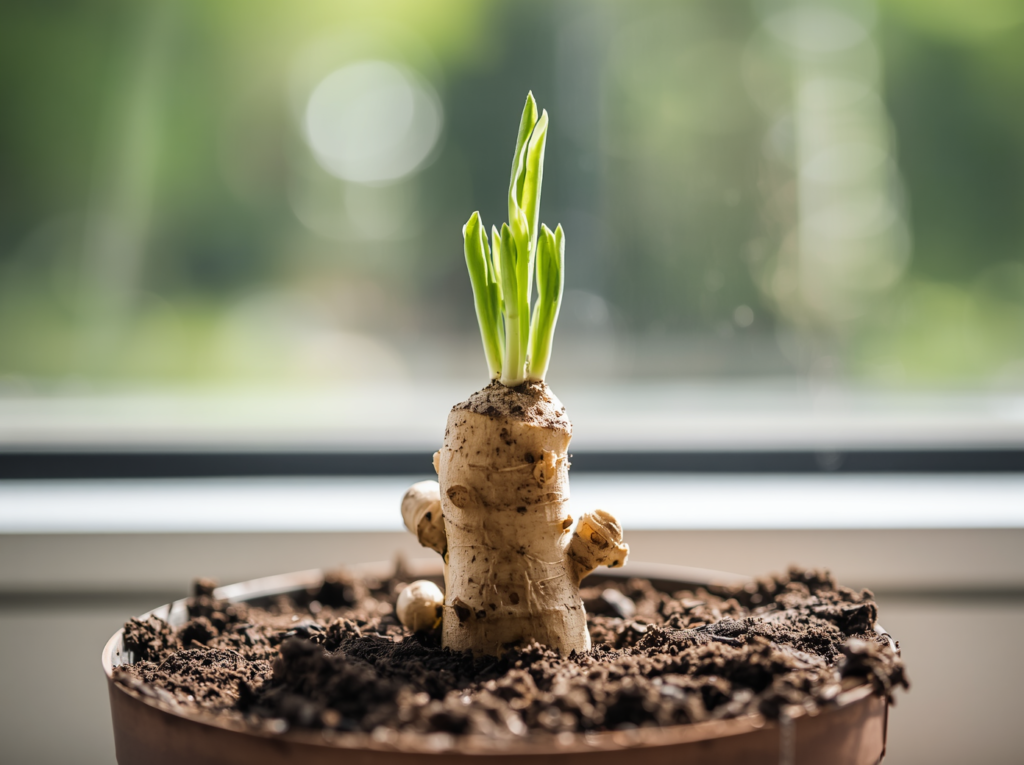
Ginger is one of the most rewarding kitchen scrap plants. A piece of ginger root with visible eyes or buds will grow into a beautiful ornamental plant with elegant bamboo-like stems and, eventually, harvestable ginger rhizomes.
- Choose a piece of ginger with plump, green growth buds called eyes
- Soak in warm water overnight to rehydrate
- Plant one inch deep in rich, well-draining potting mix with the eye facing up
- Keep in a warm spot at 70 degrees Fahrenheit or higher with indirect light
- Green shoots emerge in two to four weeks; the plant grows to two to three feet
- Harvest: after eight to ten months, carefully remove some root while leaving the plant growing
7. Turmeric
Turmeric grows exactly like ginger from rhizome pieces with growth buds. It produces beautiful tropical-looking foliage and the rhizomes slowly multiply underground. After eight to ten months, you can harvest some rhizomes while leaving others to continue growing.
8. Garlic
A single garlic clove planted in a pot will produce garlic greens within one to two weeks. These have a mild garlic flavor excellent in salads, soups, and garnishes. Given a full growing season outdoors, a garlic clove can produce a full bulb.
- Indoors for greens: plant clove pointed end up in three inches of soil; harvest green tops in two to four weeks
- Outdoors for bulbs: plant in fall; harvest the following summer when tops die back
9. Sweet Potato Slips
Suspend a sweet potato in a glass of water using toothpicks, half submerged. Keep in bright light and change water weekly. Slips, which are stems with leaves, emerge in two to four weeks. When slips reach four to six inches, twist off and root in water, then transplant to soil.
Long-Term Projects: Decorative Houseplants from Scraps
10. Avocado
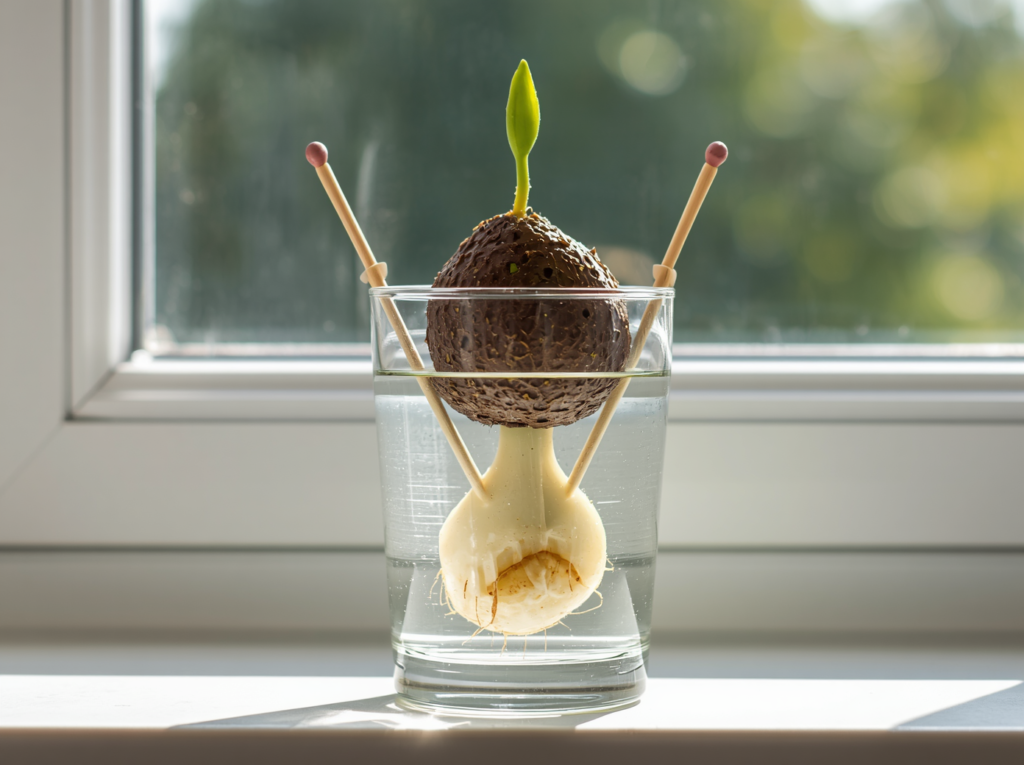
Growing an avocado tree from a pit is one of the most satisfying gardening projects. Realistic expectation: it will become a beautiful houseplant. Producing fruit indoors is possible but takes seven to fifteen years and requires specific conditions.
- Remove pit from avocado; wash gently; allow to dry for two days
- Push three to four toothpicks into the sides of the pit at the equator
- Suspend over a glass of water, pointed end up, with the bottom half submerged
- Keep in a warm, bright spot; change water every few days
- A crack appears in two to eight weeks; taproot emerges from bottom, shoot from top
- When shoot reaches six to seven inches with leaves, transplant to soil
11. Pineapple
The leafy crown of a pineapple, twisted off cleanly and allowed to dry for a day, will root in water and eventually grow into a striking tropical plant. It may even fruit after two to three years, though the fruit will be smaller than the original.
- Twist the crown off; remove the bottom two inches of leaves to expose the stalk
- Allow to dry for one to two days to prevent rot
- Place in water with the stalk submerged; roots appear in three to six weeks
- Transplant to a mix of potting soil and perlite once roots are one to two inches long
12. Mango
The large seed inside a mango pit can be germinated to produce a beautiful tropical tree. Remove the outer husk carefully, plant the inner seed flat in moist potting mix, and wait one to three weeks for germination. The plant grows quickly into an attractive tree with long, shiny leaves.
13. Lemon and Orange Seeds
Citrus seeds germinate readily in moist potting mix and grow into attractive, fragrant plants. Lemon and orange trees are beautiful houseplants even if they never fruit indoors. Blooms are fragrant on young plants, and some dwarf varieties can fruit after three to five years.
- Plant fresh seeds at half-inch depth in moist mix
- Keep warm at 70 degrees Fahrenheit or higher; germination takes two to four weeks
- Provide full sun and fertilize regularly once established
14. Fennel
Fennel bulb bases regrow in water similarly to celery, producing tender new fronds within a week. The feathery fronds have excellent anise flavor for salads and cooking. After two weeks, transplant to soil for continued production.
15. Mushrooms
Regrowing mushrooms from scraps is less reliable than other methods but worth trying. Oyster and shiitake mushroom stems pressed into a substrate of damp straw or coffee grounds in a container can colonize and produce additional flushes of mushrooms. Results vary considerably with conditions including humidity, temperature, and cleanliness.
Tips for Success with Kitchen Scrap Growing
Use the Freshest Scraps
Fresher scraps have more viable cells and stored energy. Use the cut ends immediately rather than letting them sit in the refrigerator. The fresher the base, the faster and more vigorous the regrowth.
Light Is Critical
Place your water glasses and pots on the sunniest available windowsill. Insufficient light produces weak, etiolated growth that disappoints. If your home is dark, a small grow light over your kitchen counter makes a dramatic difference.
Change Water Frequently
Water-based regrowing methods require fresh water every two to three days to prevent bacterial growth that inhibits root development and causes rot. Clean the container each time you change the water.
Transition to Soil for Long-Term Success
Most kitchen scrap plants perform better long-term in soil than in water. Water growing depletes the plant’s stored nutrients; soil provides ongoing nutrition. Transition most plants to soil after two to four weeks once a reasonable root system has developed.
Set Realistic Expectations
Kitchen scrap growing is a supplement to grocery shopping, not a replacement. Green onions give you an ongoing supply of fresh tops. Lettuce gives you a couple of additional salads. Herbs can become full plants. The process is as much about the joy and learning experience as the harvest, and for children especially, it is a magical introduction to how food grows.