
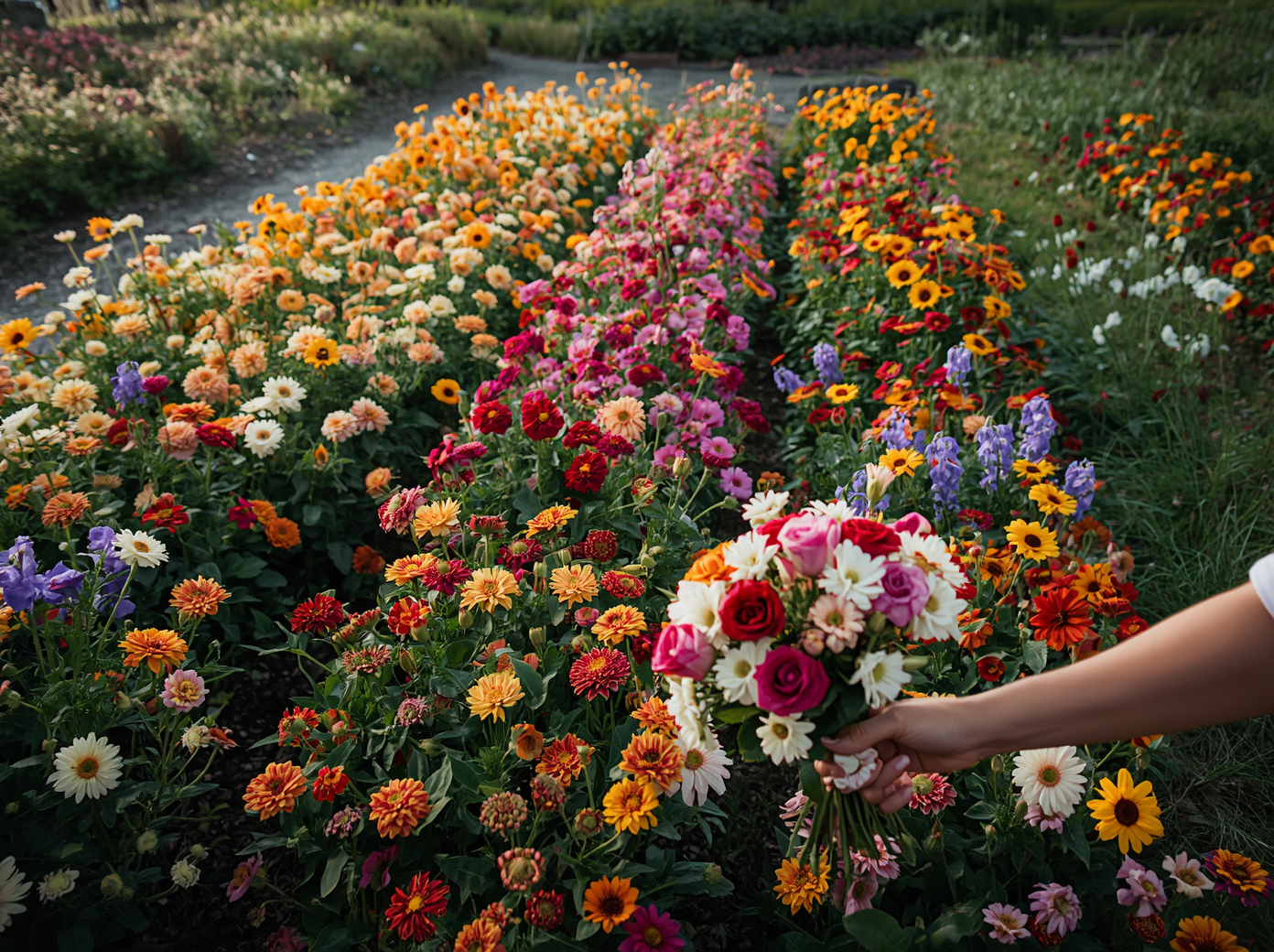
A cutting garden is one of the most joyful forms of gardening: you grow flowers specifically for the pleasure of cutting them and bringing them indoors. There is something deeply satisfying about arranging a vase of flowers you grew yourself from seed, knowing every stem, the variety of each flower, and the care that went into them.
Cut flower growing is also one of the most space-efficient ways to use a garden, as cutting flowers actually stimulates more flowering in most species. The more you cut, the more you get. And the economics are compelling: a single dahlia tuber costing a few dollars can produce hundreds of blooms over a season.
Planning Your Cutting Garden
Location
Cutting gardens need full sun: six hours minimum, eight or more hours ideal. Most of the best cut flowers are sun-loving annuals and perennials that need high light levels to produce strong, long stems and abundant flowers.
Design Philosophy
A cutting garden does not need to be beautiful in the traditional garden design sense, because the plants are grown to be cut. Rows are the most efficient format: easy to manage, easy to harvest, and easy to add succession plantings.
What to Grow: The Three Categories
- Hardy annuals: sown in autumn or early spring; include sweet peas, larkspur, cornflower, nigella
- Half-hardy annuals: sown indoors and planted out after last frost; include zinnias, cosmos, lisianthus
- Tender perennials grown from bulbs: dahlias, gladioli, ranunculus, anemones
The Best Cut Flowers to Grow
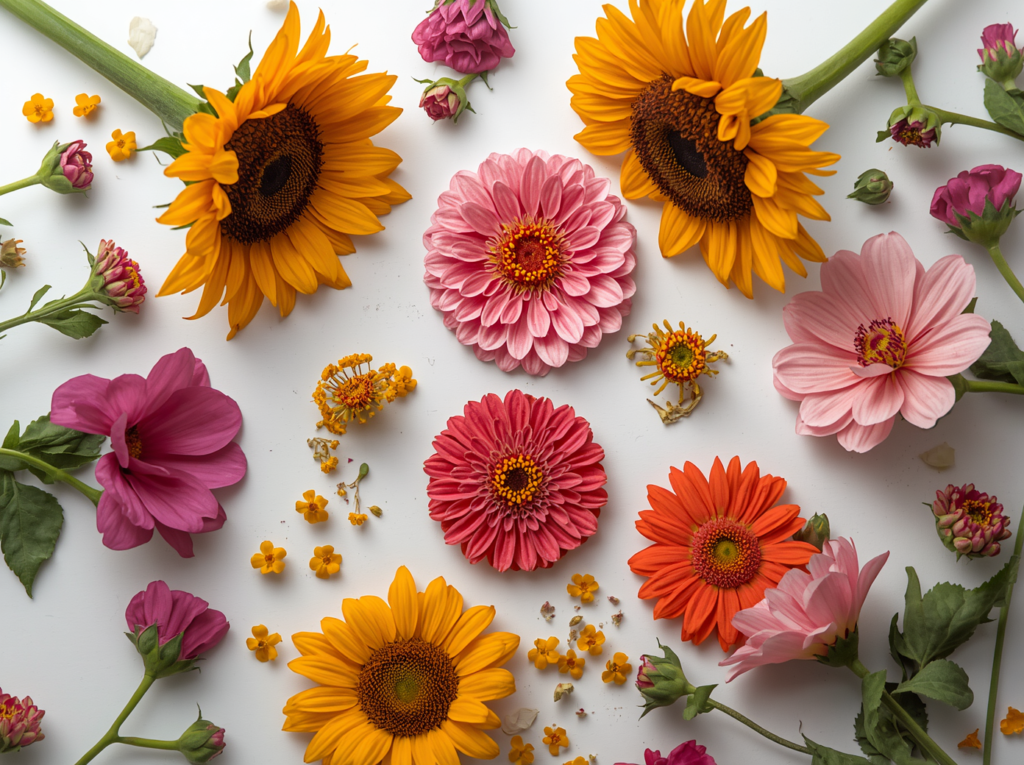
Zinnia — The Most Productive Cut Flower
Zinnias are, by a significant margin, the most productive cut flower for home growers. From seed sown in late spring, a single plant will produce dozens of flowers through summer and autumn, with new stems forming continuously after each harvest. They are heat-tolerant, come in every color, and last beautifully in the vase.
Dahlia — The Queen of the Cutting Garden
Dahlias produce the most spectacular cut flowers available from a home garden. From dinner-plate-sized giants to compact pompons, their variety of form, color, and texture is unmatched. They are tender and grown from tubers planted after the last frost, beginning to flower in midsummer and continuing until the first autumn frost.
Sweet Pea (Lathyrus odoratus) — Fragrance Above All Others
Sweet peas produce exquisitely fragrant flowers in softest pastels. They are cool-season climbers that thrive in spring and early summer before the heat of midsummer causes them to decline. Sow in autumn for early spring flowering, or in late winter under cover for late spring flowers.
Sunflower (Helianthus annuus)
Sunflowers are the simplest cut flower to grow from seed, producing dramatic blooms in gold, yellow, orange, red, and bi-colored forms. Choose branching varieties for cut flowers rather than single-stem types. Branching sunflowers produce multiple stems from a single plant throughout the season.
Cosmos
Cosmos are perhaps the most elegant cut flower for beginners: delicate, ferny foliage and daisy-like flowers on long, wiry stems. They are easy from seed, tolerant of poor soil and mild drought, and produce prolifically from midsummer to frost with minimal care.
Larkspur (Consolida)
Larkspur produces tall spires of densely packed blue, purple, pink, and white flowers in late spring and early summer. It is a hardy annual that can be sown directly in autumn or early spring. The flowers are beautiful fresh and also dry extremely well.
Celosia (Cockscomb)
Celosia produces either brain-like crested flowers or feathery plume-shaped flowers in intense reds, oranges, yellows, and pinks. They are excellent for both fresh and dried arrangements and hold their color beautifully when dried.
Lisianthus (Eustoma)
Often called the poor man’s peony, lisianthus produces rose-like flowers with ruffled petals in white, pink, purple, and bicolors. They are slow-growing from seed but extraordinarily beautiful and long-lasting in the vase. Best purchased as plugs or young plants by beginners.
Harvesting Cut Flowers for Maximum Vase Life
Timing the Harvest
Cutting at the right stage of development is the most important factor in vase life. Flowers cut too early may not open fully; flowers cut too late have already passed their peak.
- Single flowers (zinnias, sunflowers): cut when three quarters to fully open
- Dahlias: cut when flowers are fully open; they do not continue opening after cutting
- Sweet peas: cut when the lowest flower on the stem has just opened
- Larkspur and delphiniums: cut when one quarter to one half of the spike is open
- Ranunculus: cut when the bud is showing color but still tightly closed
The Right Time of Day
Cut flowers in the early morning or evening when temperatures are cool and plants are fully hydrated. Avoid cutting in the heat of midday when stems are somewhat dehydrated. Morning-cut flowers last significantly longer than those cut at midday.
Cutting Technique
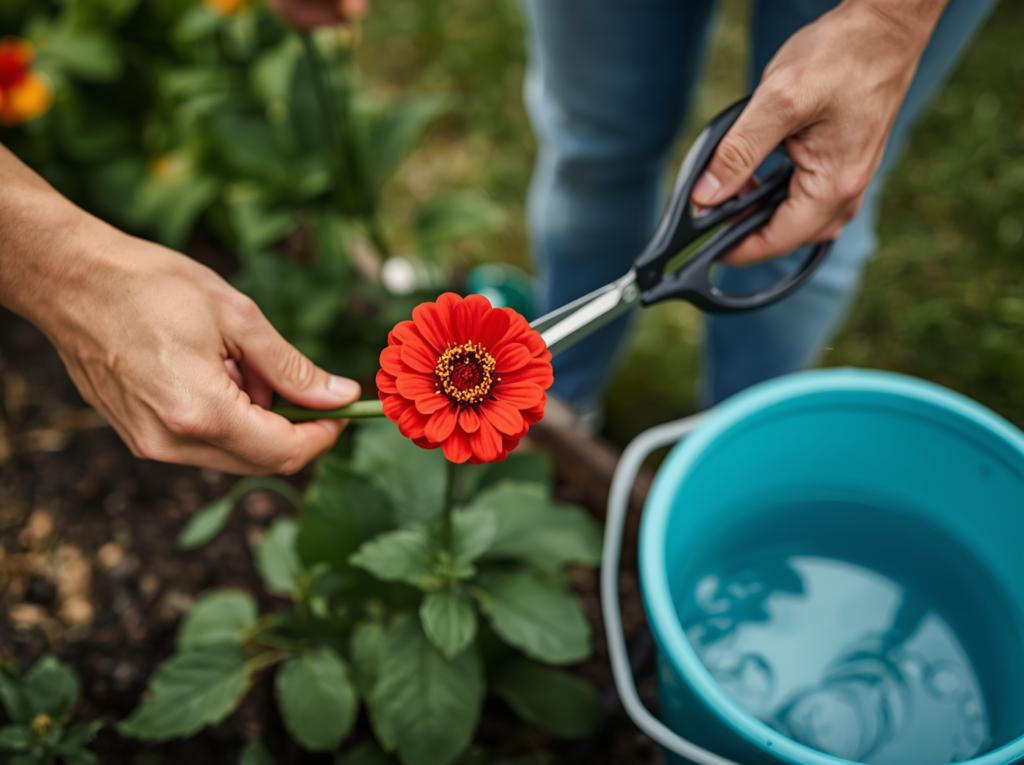
- Use clean, sharp scissors or a floral knife; never crush stems by using blunt tools
- Cut at an angle to maximize the surface area available for water uptake
- Cut to a leaf node (immediately above a leaf) to encourage new branching
- Place immediately into a bucket of room-temperature water
Conditioning Flowers for Maximum Vase Life
The Conditioning Process
Conditioning is the process of allowing freshly cut flowers to hydrate fully before arranging them. Take your bucket of freshly cut flowers to a cool, dark location and leave for two to four hours, or overnight for best results. Properly conditioned flowers last significantly longer in the vase.
Preparing Stems for the Vase:
- Recut stems at an angle under water before transferring to the vase
- Remove all leaves that would sit below the waterline (they decay and breed bacteria)
- Add cut flower food to the water, which contains sugar for energy and biocide to prevent bacterial growth
- Keep flowers away from fruit, which emits ethylene gas that accelerates aging
- Change water and recut stems every two to three days for maximum vase life