
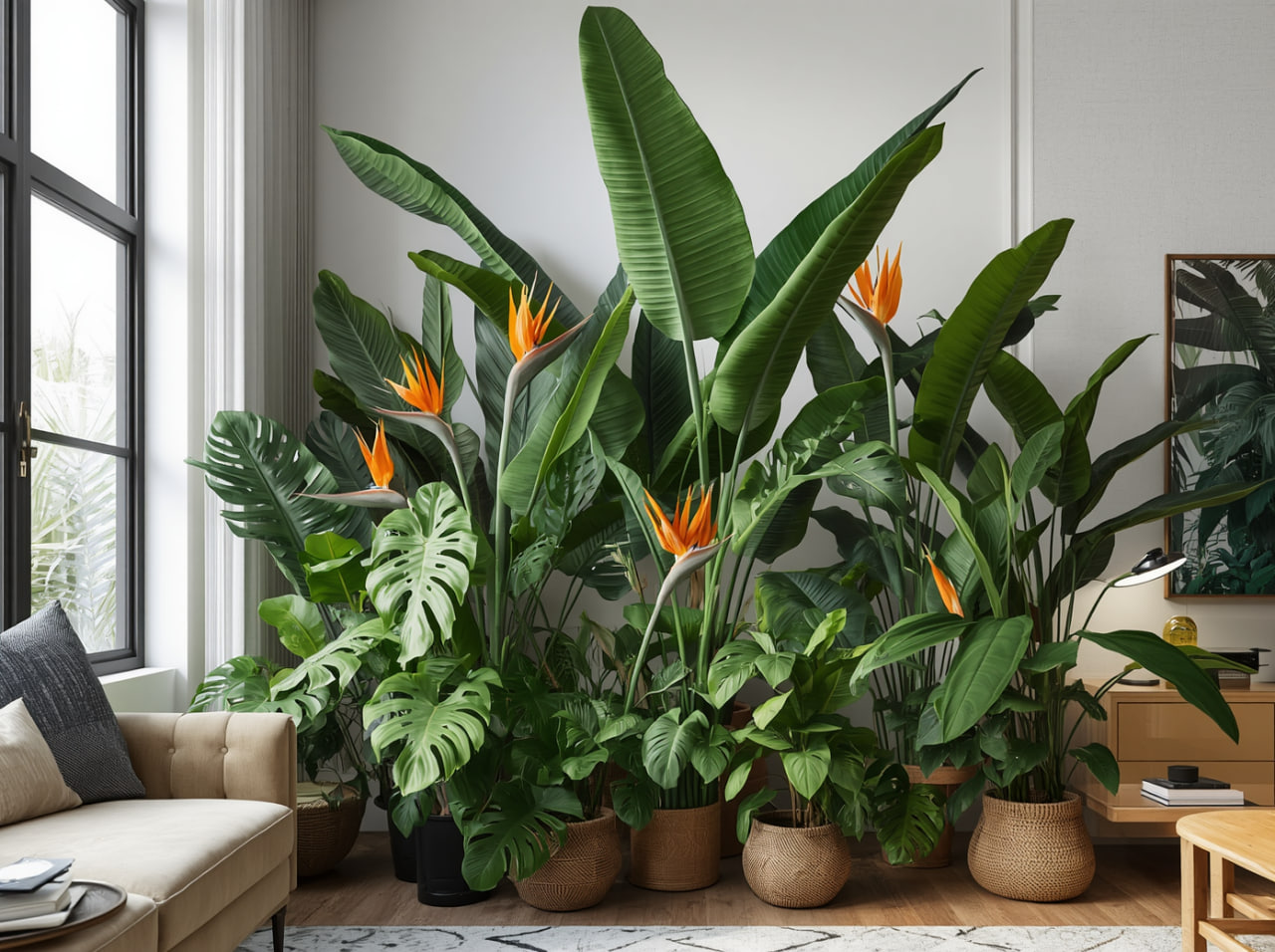
Tropical plants bring a sense of drama, abundance, and vitality to indoor spaces that no other plants can match. Their oversized leaves, bold forms, and vivid colors transform a room from merely decorated to genuinely alive. Growing tropical plants successfully indoors is, fundamentally, about recreating the conditions of their native habitats: warmth, humidity, bright filtered light, and consistent moisture.
The 15 Best Tropical Plants for Indoor Growing
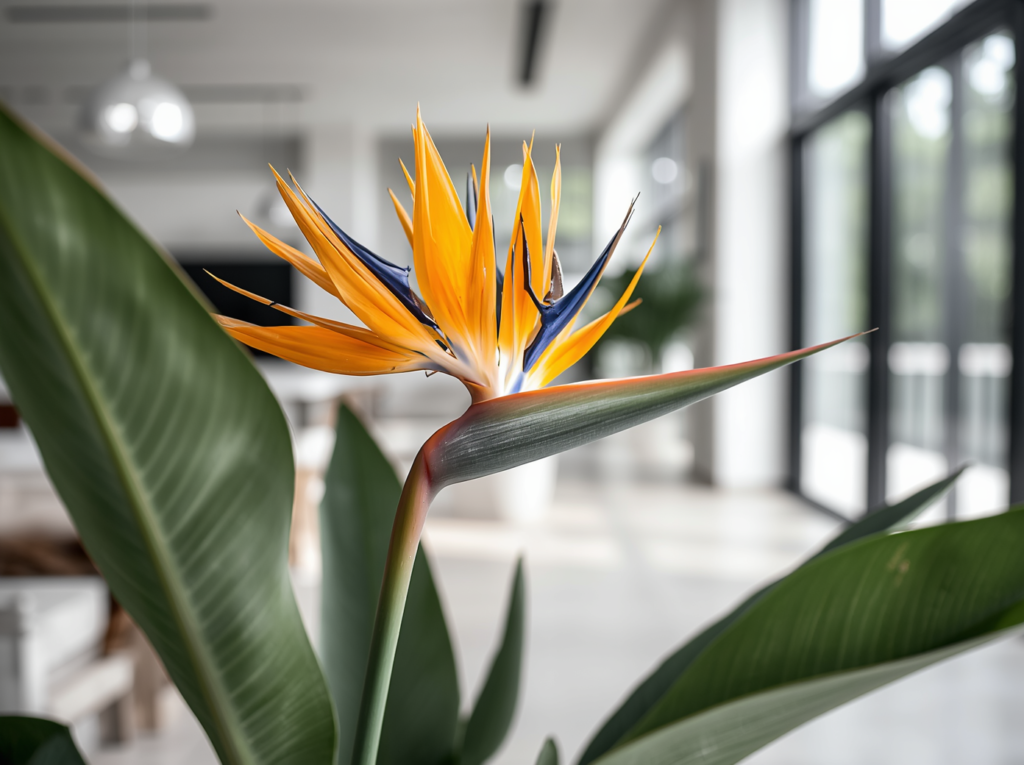
1. Bird of Paradise (Strelitzia reginae and S. nicolai)
The bird of paradise is one of the most iconic tropical plants in interior design. S. reginae, the orange flowering species, grows to four feet indoors; S. nicolai, the giant white-flowering species, can reach ceiling height with leaves spanning three to four feet. Both are bold, architectural, and long-lived.
- Light: bright indirect to some direct sun; needs at least six hours to flower
- Water: when top two inches dry; drought-tolerant once established
- Patience: plants need three to five years of growth before first flowering indoors
2. Elephant Ear (Alocasia)
Few plants make a more immediate statement than the giant-leaved elephant ears. Alocasia polly (African mask plant), A. zebrina with its striking spotted stems, and A. macrorrhiza which can produce leaves spanning two feet or more indoors are among the most spectacular. They grow from a corm and produce new leaves from the center as old ones naturally die.
- Water: keep consistently moist; sensitive to both over and underwatering
- Humidity: 60 percent or higher essential for preventing brown leaf edges
3. Banana Plant (Musa)
Growing a banana plant indoors is one of the most rewarding tropical plant experiences. The enormous, paddle-shaped leaves unfurl like living sculpture from the central pseudostem. Dwarf varieties remain manageable indoors, though they need significant space and maximum available light.
4. Monstera Deliciosa
The most famous tropical houseplant in the world. In bright indoor conditions with a moss pole for support, it produces increasingly large and fenestrated leaves that provide genuinely jungle-like atmosphere in any interior.
5. Peace Lily (Spathiphyllum)
One of the most reliable flowering tropical plants for indoor growing. Its pure white spathes, elegant dark foliage, and tolerance of lower light make it one of the most versatile tropical houseplants. It communicates its needs clearly by drooping dramatically when thirsty and recovering completely after watering.
6. Anthurium
Anthuriums produce their iconic waxy, heart-shaped spathes in red, pink, white, and purple that last for months. Unlike many tropical plants, they flower reliably indoors under the right conditions of bright indirect light, high humidity, and careful watering.
- Light: bright indirect light
- Flowering: produces flowers nearly year-round in good conditions
7. Bromeliad
Bromeliads are extraordinary tropical epiphytes that produce spectacular, long-lasting flower bracts in vivid colors. They grow from a central rosette that forms a water-collecting cup or tank. After the mother plant flowers, it dies but produces pups that grow into new flowering plants.
8. Calathea and Ctenanthe (Prayer Plants)
The prayer plant family produces the most dramatically patterned foliage of any tropical plant group, with leaves that appear hand-painted in combinations of green, silver, cream, pink, and purple. They genuinely move, folding their leaves upward at night and unfolding at dawn.
9. Cordyline (Ti Plant)
Cordylines produce rosettes of long, strap-like leaves in rich purple, burgundy, green, and variegated combinations. They are relatively easy to grow, tolerating lower light than many tropical plants, and produce an excellent tropical effect with minimal demands.
10. Heliconia
Heliconias are spectacular tropical plants with banana-like foliage and extraordinary waxy flower bracts in vivid red, yellow, and orange that look almost artificially perfect. They need warmth, humidity, and bright indirect light to thrive indoors.
11. Bamboo Palm (Chamaedorea seifrizii)
Palms in general represent tropical luxury in interior design. The bamboo palm specifically brings protective, gentle energy while improving air quality. Its graceful fronds create movement in air currents and the plant is rated non-toxic to pets.
12. Stromanthe Sanguinea
One of the most colorful foliage plants available, with leaves showing a dramatic combination of dark green, cream, pink, and magenta undersides that glow when backlit. It requires high humidity and indirect light but rewards with extraordinary color.
13. Costus (Spiral Ginger)
Spiral gingers produce unusual spiral-arranged stems with attractive foliage and waxy flowers in orange, red, and yellow. They are compact enough for indoor growing in large containers, need warmth and humidity, and produce an exotic tropical effect.
14. Canna Lily
Cannas produce enormous paddle-shaped leaves in green, bronze, and variegated purple, combined with vivid flowers in red, orange, yellow, and pink through the summer growing season. Grown from rhizomes in large containers with maximum light.
15. Frangipani (Plumeria)
Frangipani can be grown as a container plant if given full sun, warmth, and a dry winter rest period. The intensely fragrant flowers in white, yellow, pink, and red are one of the most evocative tropical experiences available to indoor gardeners.
Creating the Right Environment for Tropical Plants
Temperature
Most tropical plants thrive between 65 and 85 degrees Fahrenheit (18 to 30 degrees Celsius). They dislike cold drafts, temperatures below 55 degrees Fahrenheit, and proximity to exterior doors or air conditioning vents in summer.
Humidity
Tropical plants generally need 50 to 70 percent humidity. Solutions include running a humidifier near plant groups, grouping plants together to create a more humid microclimate, using large pebble trays with water, or locating plants in naturally humid rooms such as bathrooms and kitchens.
Feeding
Tropical plants are generally heavy feeders during their growing season from spring through early autumn. Use a balanced liquid fertilizer at the recommended rate every two to four weeks during active growth. Reduce feeding in autumn and stop entirely through winter.