
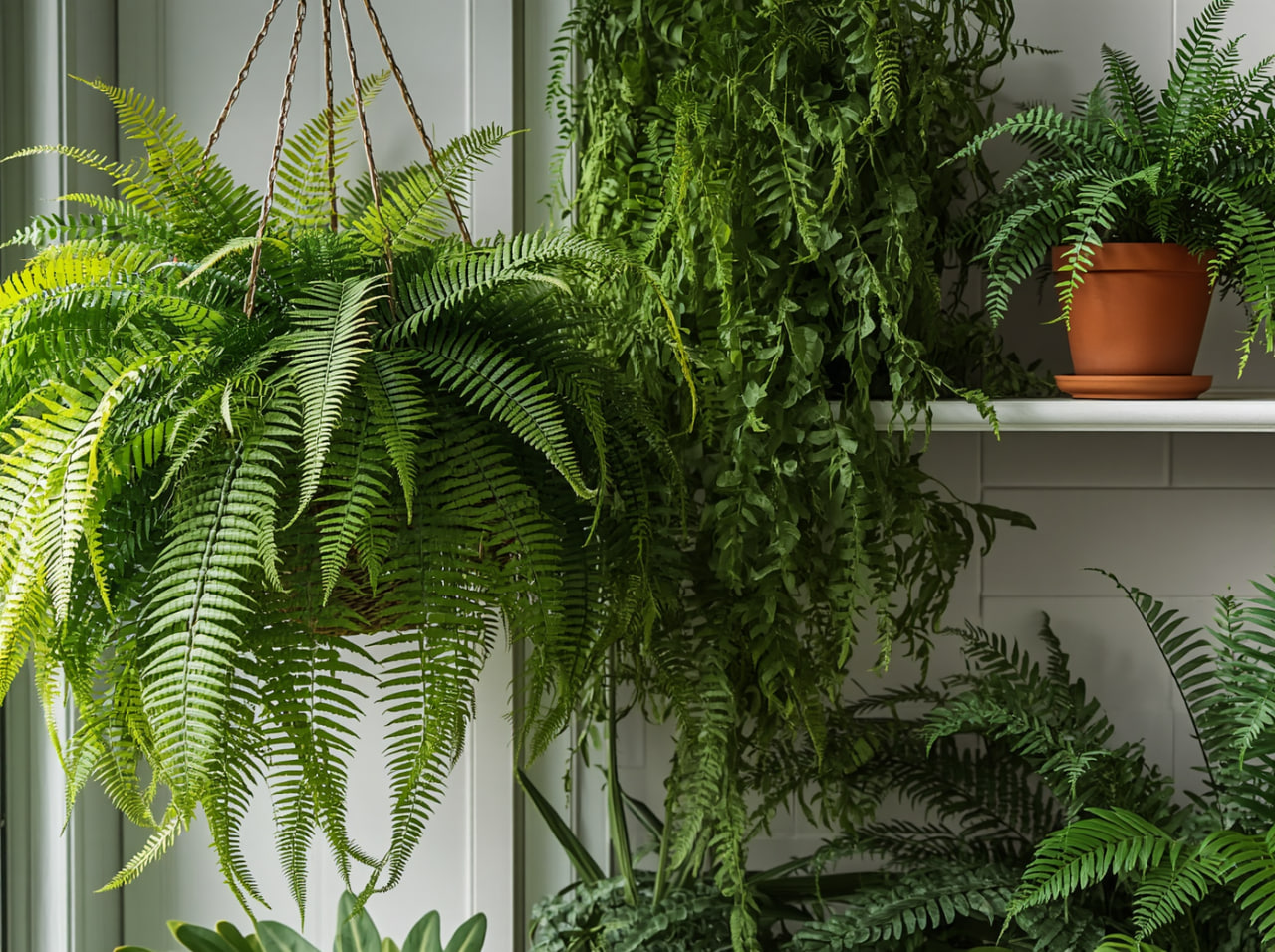
Ferns are among the oldest plant forms on earth, with a fossil record stretching back 360 million years. They predate flowering plants and virtually every other form of life we recognize today. Their survival across geological epochs speaks to extraordinary adaptability. The key to indoor fern success is understanding two things: their need for consistent moisture and their need for humidity. Get these right and ferns are genuinely beautiful, long-lived, and rewarding plants.
Understanding Ferns: How They Differ from Other Houseplants
Ferns are non-flowering plants that reproduce through spores rather than seeds. They evolved in perpetually moist environments: tropical and temperate forests where the air is consistently humid, the light is filtered through a dense canopy, and the soil remains moist but never waterlogged. Their delicate, often highly divided fronds have a large surface area for water loss, making them sensitive to low humidity and drought stress.
Unlike succulents and many tropical plants that store water in their tissues, ferns have no water storage capacity. A fern that dries out completely will brown and may die; one that is kept consistently moist in humid conditions will grow vigorously for decades.
The Most Important Fern Care Factors
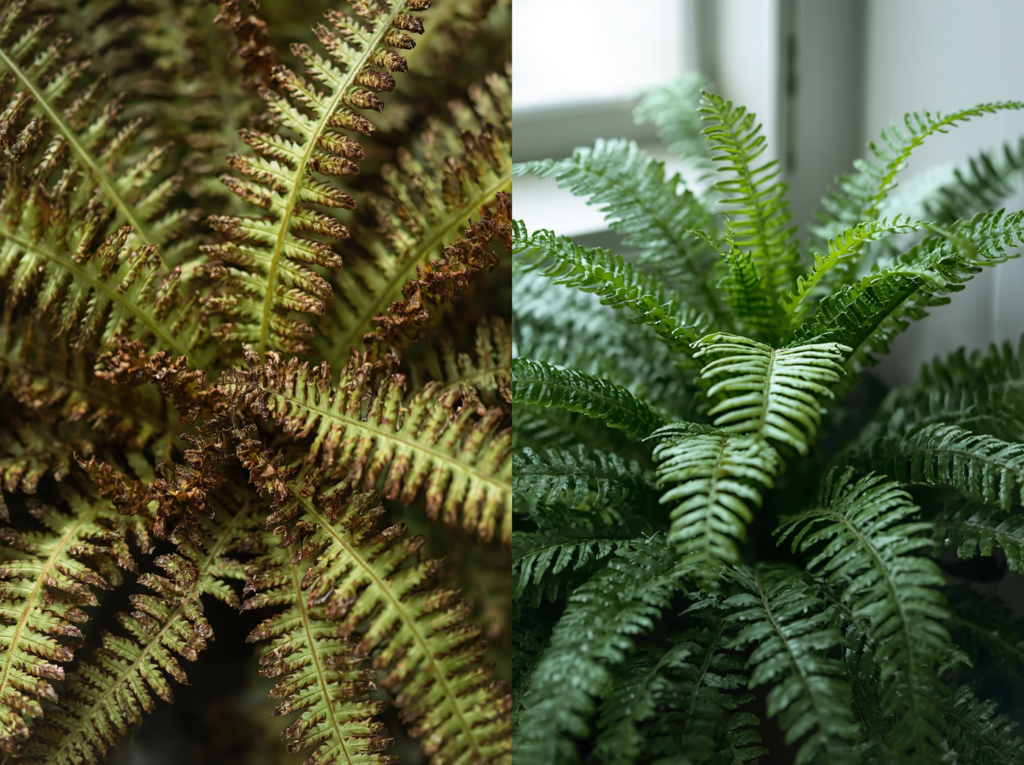
1. Humidity: The Non-Negotiable Factor
Most ferns need 50 to 70 percent humidity. Standard indoor air in a heated home can drop to 20 to 30 percent in winter, which is extremely damaging to most fern species. The brown, crispy leaf tips and edges that discourage so many fern growers are almost always a humidity problem rather than a watering problem.
How to Increase Humidity for Ferns:
- Bathroom placement: if your bathroom has reasonable natural light, it is often the ideal location for ferns
- Pebble tray: place the pot on a tray of pebbles filled with water to just below the pot base
- Humidifier: the most effective solution for maintaining consistent 50 to 70 percent humidity
- Grouping plants: multiple plants transpiring together create a more humid microclimate
2. Moisture: Consistent, Not Excessive
Ferns need consistently moist soil but not waterlogged conditions. The soil should never dry out completely, but water should not pool or stand at the base of the pot. Check the soil daily in summer and water whenever the top half-inch becomes dry.
3. Light: Bright, Indirect, Filtered
Most ferns prefer bright to medium indirect light, similar to the dappled light filtering through a forest canopy. North or east-facing windows work well for most species. Direct sun bleaches and burns fern fronds rapidly.
The Best Indoor Ferns and Their Specific Care
Boston Fern (Nephrolepis exaltata) — The Classic
The most widely grown indoor fern worldwide, producing cascading arching fronds from a central crown. One of NASA’s top air-purifying plants and also one of the best natural humidifiers among all houseplants, releasing significant moisture through transpiration. Thrives in hanging baskets near a bright window.
- Humidity: 50 percent minimum; benefits greatly from higher levels
- Water: keep consistently moist; check daily in warm weather
Maidenhair Fern (Adiantum) — The Most Delicate
The maidenhair fern is arguably the most beautiful and most challenging indoor fern. Its fan-shaped leaflets on delicate black stems create extraordinary texture and grace. It is highly sensitive to low humidity, irregular watering, and temperature fluctuations. A single missed watering on a hot day can cause complete browning. It rewards attentive growers with stunning beauty.
- Humidity: 60 percent or higher is essential
- Recovery: if fronds brown completely, cut all fronds to the base; new fronds will emerge within two weeks if roots are healthy
Bird’s Nest Fern (Asplenium nidus) — The Most Forgiving
Unlike delicate Boston or maidenhair ferns, the bird’s nest fern has broad, undivided, strap-like fronds emerging from a central nest-like rosette. It is significantly more tolerant of lower humidity and forgives occasional missed waterings. New fronds unfurl slowly and beautifully from the center.
- Light: medium to low indirect light; one of the most shade-tolerant ferns available
- Avoid: getting water into the central nest as this promotes crown rot
Staghorn Fern (Platycerium) — The Epiphytic Statement
Staghorn ferns grow naturally as epiphytes mounted on tree trunks. Their two types of fronds are distinctive: flat, brown basal fronds that grip the mounting surface, and upright bifurcated fronds resembling antlers that can reach two feet or more. Typically grown mounted on wooden boards and make extraordinary wall installations.
- Watering: soak the entire mount in water for twenty minutes weekly; allow to dry completely before rehydrating
- Mounting: attach to a wooden board or cork board with sphagnum moss around the roots
Autumn Fern (Dryopteris erythrosora)
One of the most cold-hardy and adaptable ferns, also successfully grown indoors. New fronds emerge in brilliant copper-orange before maturing to glossy dark green, creating a two-tone display throughout the growing season. More tolerant of low humidity than most fern species.
Silver Lace Fern (Pteris ensiformis Victoriae)
A compact fern with delicate, narrow fronds bearing central silver stripes. Smaller and more manageable than Boston fern, tolerates somewhat lower humidity, and makes an excellent choice for terrariums or as part of a mixed tropical display.
Seasonal Fern Care
Spring and Summer:
Active growing season. Water frequently, checking daily in warm weather. Maintain maximum humidity and feed monthly with a diluted balanced liquid fertilizer at half the recommended strength. Remove any brown or damaged fronds at the base to encourage new growth.
Winter:
The most challenging season for indoor ferns due to low humidity from heating systems. Use a humidifier, group plants together, and consider moving humidity-sensitive species like maidenhair fern to a bathroom for the winter months. Reduce watering slightly as growth slows considerably.