
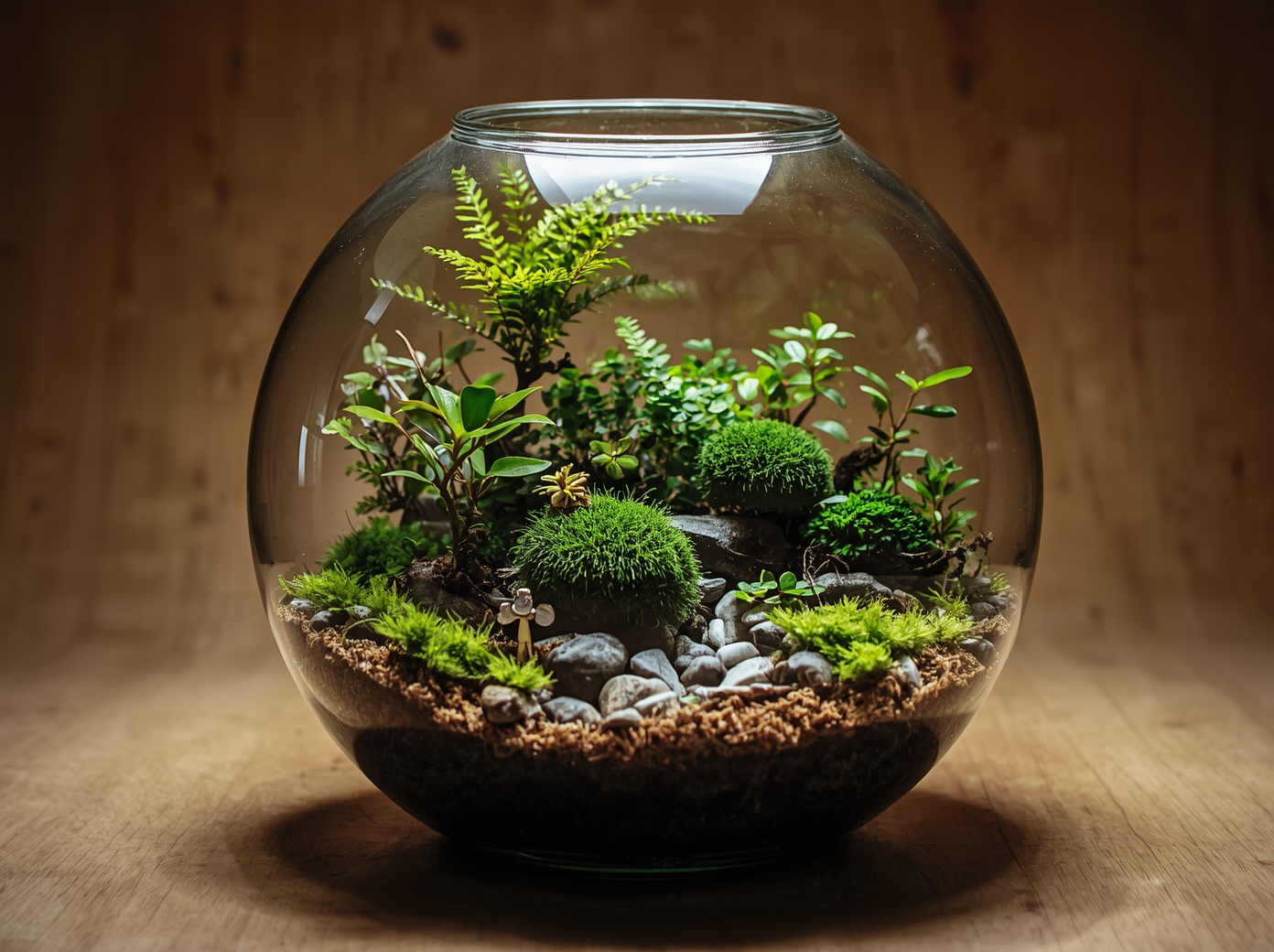
Terrariums are miniature ecosystems enclosed in glass, and they are among the most captivating objects in interior design. A well-made terrarium brings together the beauty of a garden with the artistry of design in a self-contained world that changes and grows over time. Closed terrariums can be almost entirely self-sustaining, with the enclosed moisture cycling continuously through the plants and glass surfaces.
Terrariums are also one of the most accessible forms of gardening: they require no outdoor space, minimal ongoing maintenance, and relatively small investment. Whether you want a tropical moss garden in a sealed vessel or a desert landscape of cacti and succulents in an open bowl, this guide covers everything you need.
Open vs. Closed Terrariums: The Key Decision
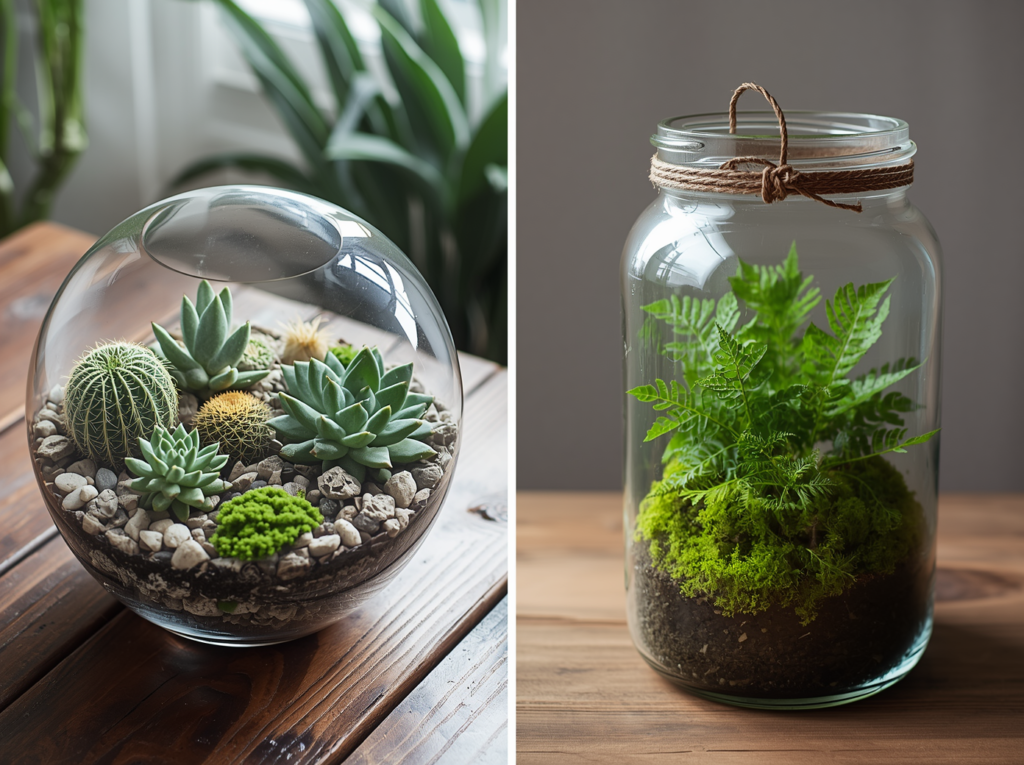
Closed Terrariums
Sealed or partially closed glass containers maintain high humidity through the water cycle: plants transpire moisture into the air, which condenses on the glass and drips back to the soil. This self-sustaining cycle means closed terrariums need watering very rarely, sometimes only every few months, once properly established. They are ideal for moisture-loving tropical plants and mosses.
Best plants for closed terrariums:
- Mosses (various species): the defining plant of the closed terrarium; grows lushly
- Fittonia (nerve plant): beautiful veined leaves; thrives in high humidity
- Miniature ferns (button fern, maidenhair): delicate fronds; love enclosed humidity
- Baby tears (Soleirolia): creates a moss-like carpet; spreads beautifully
- Miniature peperomia: compact; varied textures
Open Terrariums
Open terrariums, including wide bowls, geometric terrariums, and open-top containers, maintain lower humidity and are ideal for drought-tolerant plants like succulents, cacti, and air plants. They require more frequent watering than closed terrariums but allow for a wider range of plant choices and are generally more forgiving of design errors.
Best plants for open terrariums:
- Succulents (echeveria, haworthia, sedum): colorful rosettes; architectural form
- Cacti: sculptural; low maintenance; extraordinary variety of forms
- Air plants (Tillandsia): mount on rocks or driftwood; require no soil
- Sempervivum: frost-hardy; rosette-forming; beautiful colors
Choosing Your Container
Almost any glass container can become a terrarium: vintage apothecary jars, geometric glass terrariums, fish tanks, brandy glasses, bell jars, glass bowls, or repurposed glass bottles. The choice of container shapes the design aesthetic.
Container Considerations:
- Closed terrariums: wide-mouthed jars, apothecary bottles, or cloche-style glass domes allow you to place plants and design the interior
- Open terrariums: geometric terrariums, glass bowls, or shallow glass dishes
- Size: larger containers maintain more stable conditions and allow more creative design
- Clear glass versus colored: clear glass shows the layers and plant colors most effectively
Building a Closed Terrarium: Step-by-Step
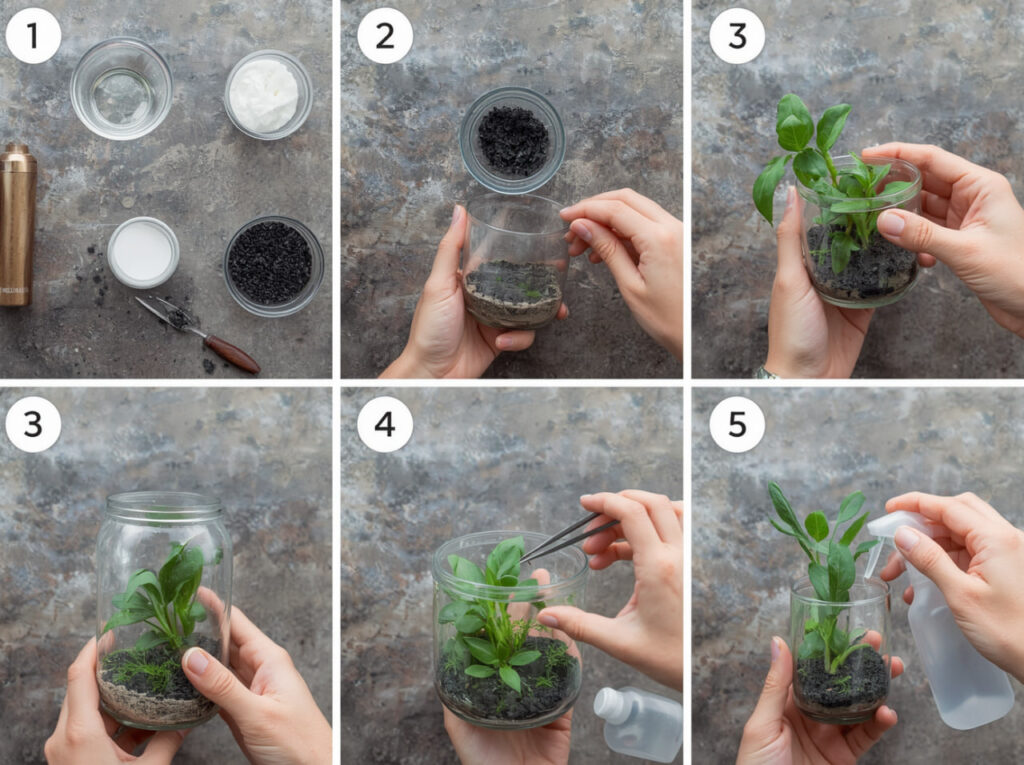
Materials You Will Need:
- Clean glass container with lid or cork
- Fine gravel or small stones for drainage layer
- Activated charcoal (horticultural grade)
- Terrarium potting mix (peat-based or coco coir based, well-draining)
- Sphagnum moss (sheet moss for decoration or live moss for planting)
- Small plants suitable for humid, enclosed conditions
- Long tweezers or chopsticks for precise placement
- Small watering can or spray bottle
- Decorative elements: stones, small crystals, figurines, bark
Step 1: Create the Drainage Layer
Add one to two inches of fine gravel, small stones, or LECA (lightweight expanded clay aggregate) to the bottom. This layer collects excess water below the soil line, preventing roots from sitting in saturated soil.
Step 2: Add Activated Charcoal
Sprinkle a thin layer of activated horticultural charcoal over the drainage layer. This is not fertilizer; it is a filter that absorbs toxins produced by decomposing organic matter and prevents the sour, unpleasant odors that can develop in sealed containers without it.
Step 3: Add the Growing Medium
Add two to three inches of appropriate potting mix. For closed tropical terrariums, a peat-based or coco-coir mix with added perlite works well. Mound the substrate slightly in the back and center for visual depth and a more naturalistic appearance.
Step 4: Design Your Layout
Before planting, arrange plants and decorative elements in the container without soil to plan your composition. Work from tallest or most structural elements at the back to shorter, trailing elements at the front. Consider color contrast, texture variety, and how the design will look from all visible angles.
Step 5: Plant Your Terrarium
Working with tweezers or long chopsticks, make small holes in the substrate and nestle each plant into position. Firm in gently to ensure good soil contact with roots. For closed terrariums, add a layer of sheet moss over the exposed soil surface to retain moisture and add visual texture.
Step 6: Water and Seal
Mist the interior lightly with a spray bottle. The soil should be evenly moist but not saturated. Seal the container. Over the next few days, condensation will form on the glass. If condensation is very heavy and stays on the glass all day, open briefly to release excess moisture. If there is no condensation at all after three to four days, add a small amount of water.
Building an Open Succulent Terrarium: Step-by-Step
Layer 1: Drainage
Add one to two inches of coarse gravel, pea gravel, or LECA. This layer is even more important in open terrariums than in closed ones because you will be watering regularly.
Layer 2: Soil
Add two to three inches of well-draining cactus and succulent mix with added coarse sand or perlite at a ratio of fifty percent. The mix should drain almost immediately when water is applied.
Layer 3: Design and Plant
Position your succulents and cacti, working from largest to smallest. Leave space between plants for growth and visual breathing room. Use tweezers to avoid touching cactus spines.
Layer 4: Top Dressing
Cover exposed soil with decorative gravel, fine sand, small pebbles, or crushed granite. This prevents soil disturbance when watering and creates the clean, finished aesthetic of a desert landscape.
Layer 5: Decorative Elements
Add small stones, driftwood, miniature figurines, polished crystals, or sand art to complete the scene. Scale is important: everything should appear proportional to the plants.
Terrarium Maintenance
Closed Terrarium Maintenance:
- Initially: monitor condensation levels; adjust moisture as described above
- Once established: check every two to four weeks; water only if soil looks dry or no condensation forms
- Pruning: trim plants that have outgrown the space using small, sterilized scissors
- Dead material: remove any yellowing leaves promptly to prevent fungal issues
- Light: provide bright indirect light; avoid direct sun which heats the enclosed air
Open Terrarium Maintenance:
- Watering: check weekly; water succulents when soil is completely dry
- Light: full sun for cacti and succulents; place in the brightest position available
- Pruning: trim overgrown plants; remove dead growth
- Replenish: replace plants that outgrow the container or decline
Common Terrarium Problems and Solutions
Fogging and Condensation
Some condensation is normal in a closed terrarium. Permanent heavy condensation that never clears suggests too much moisture. Open the lid for a few hours daily until condensation normalizes.
Mold
White mold on soil or plant material usually indicates too much moisture and inadequate air circulation. Remove affected material, open the container, and allow to dry partially. Ensure you used activated charcoal in the drainage layer.
Etiolation (Stretching)
Plants reaching toward light, becoming leggy. Move to a brighter location or add supplemental grow lighting.
Plant Death
A plant that dies in a closed terrarium should be removed immediately before decay spreads. Replace it with a similarly-sized species with the same humidity and light requirements.