
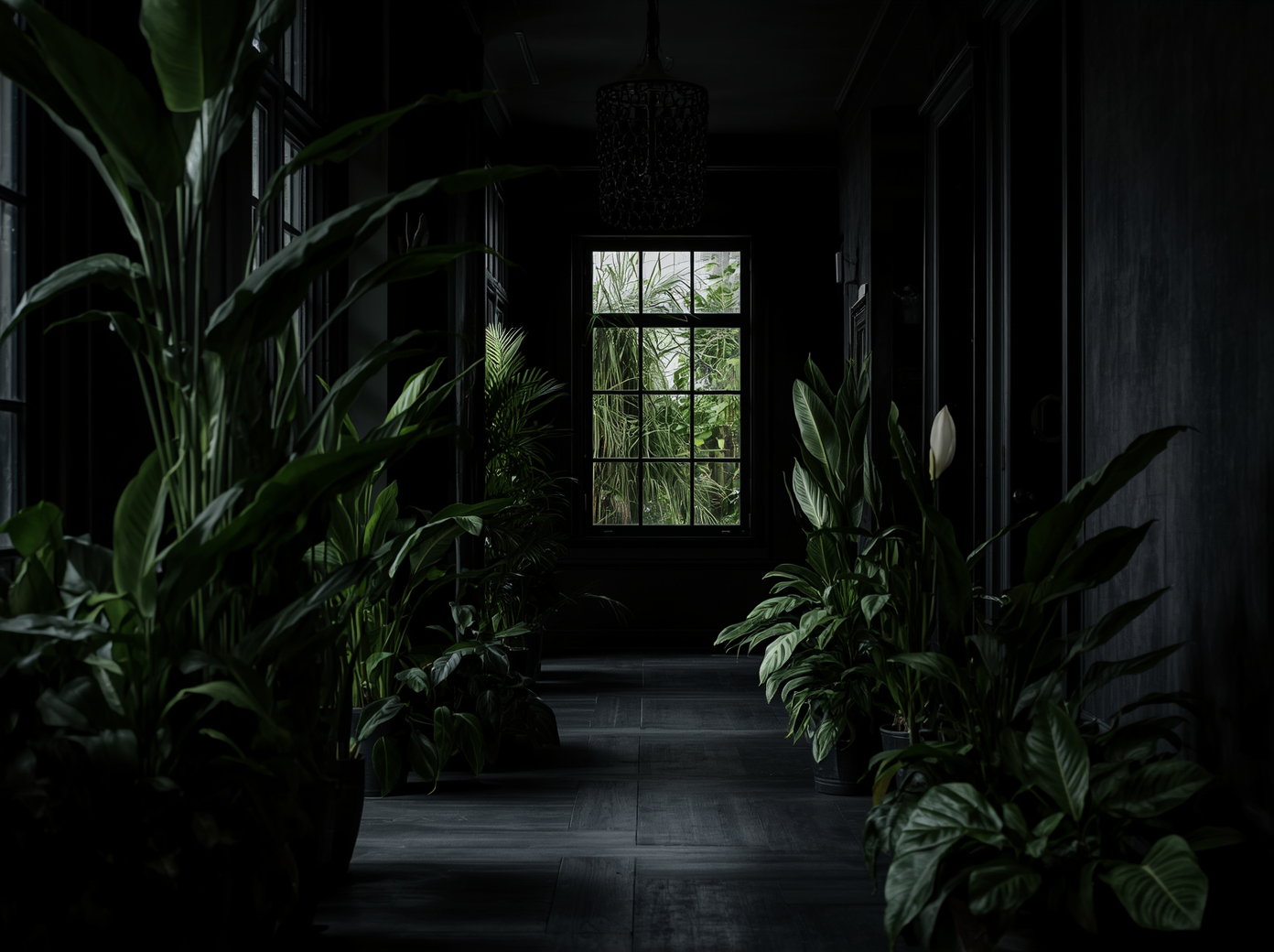
One of the most common challenges for plant lovers is finding plants that will genuinely thrive in darker areas of their homes or offices. North-facing rooms, hallways, interior offices, windowless bathrooms, and spaces shaded by buildings or trees can feel like botanical dead zones. But there is a substantial selection of plants that not only survive in low light but actually grow better away from intense sun.
This guide cuts through the confusion with honest assessments of each plant’s true light tolerance. All 18 plants on this list are genuine low-light performers, not simply plants that will survive for a few months before slowly declining.
Understanding Low Light: What It Actually Means
Low light in plant care terms means less than 100 foot-candles of illumination, roughly equivalent to being twelve or more feet from a window or in a room with small north-facing windows. It is bright enough to read a book comfortably but not bright enough for most plants to photosynthesize effectively.
Very few plants genuinely thrive in deep shade or artificial light only. Plants described as low-light tolerant will survive and produce some new growth in these conditions, but will grow more slowly and produce smaller leaves than in brighter indirect light.
The Best 18 Low-Light Indoor Plants
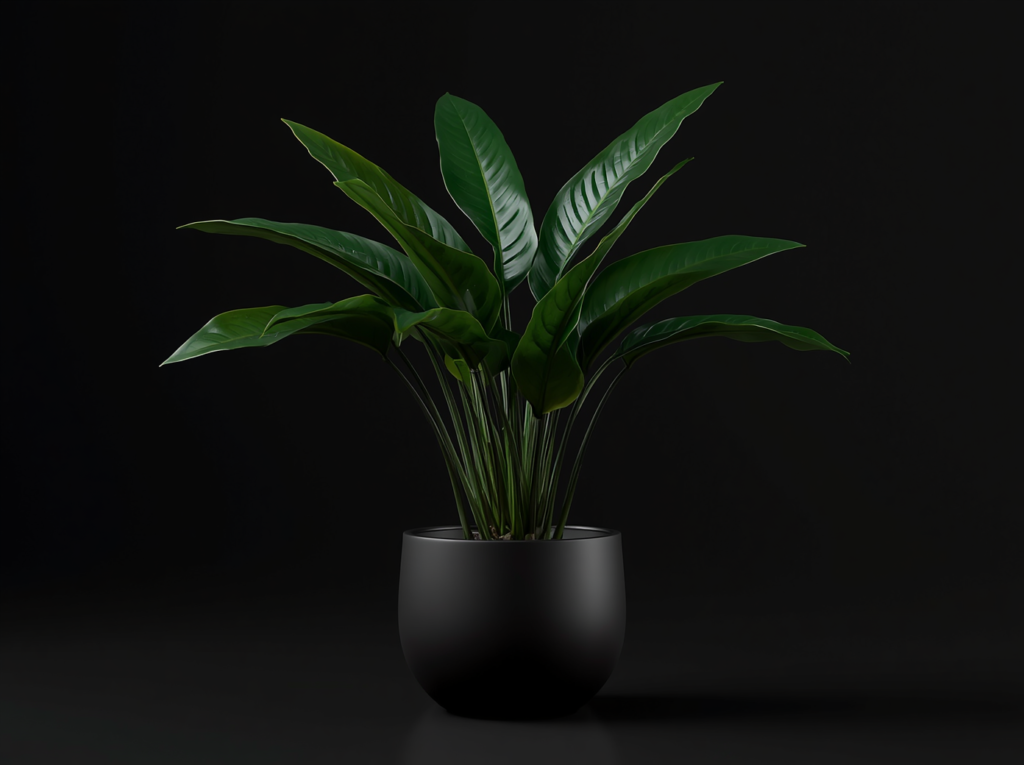
1. ZZ Plant (Zamioculcas zamiifolia) — The Ultimate Dark Room Plant
The ZZ plant is the closest thing to a genuinely shade-proof houseplant. Its glossy, waxy leaves evolved to maximize light capture in the understory of dry woodland in eastern Africa. The plant stores water and nutrients in thick underground rhizomes, making it extraordinarily tolerant of both low light and prolonged drought. New stems emerge slowly and beautifully from the soil as polished, dark green growth.
- Light tolerance: survives in conditions as dark as ten foot-candles; grows acceptably at thirty to fifty
- Water: every three to four weeks; extremely drought-tolerant
- Caution: toxic to humans and pets if ingested
2. Cast Iron Plant (Aspidistra elatior) — The Victorian Standard
The cast iron plant earned its name in Victorian England, where it was prized for surviving the gas-lit, smoky, cold interiors of nineteenth-century homes where all other plants perished. It grows slowly but is virtually indestructible, tolerating deep shade, temperature extremes, irregular watering, and poor soil conditions that would kill most houseplants within weeks.
- Light: tolerates very deep shade; one of the darkest-tolerant plants available
- Water: every three to four weeks
- Growth rate: very slow; long-lived
3. Snake Plant (Sansevieria trifasciata) — Architectural Low-Light Survivor
Snake plants tolerate very low light conditions while maintaining their striking upright form and bold markings. They grow more slowly in low light, but they survive where most plants would struggle. They are also one of the few plants that continues to release oxygen at night, making them popular for bedrooms.
- Light: tolerates low light; performs better in bright indirect
- Water: every two to four weeks; stores water in thick leaves
4. Heartleaf Philodendron (Philodendron hederaceum) — Fast-Growing Trailer
Heartleaf philodendrons are among the most adaptable of all houseplants. Their large, glossy, heart-shaped leaves are highly efficient at capturing low levels of light. They grow vigorously even in dim conditions, trailing beautifully from shelves or climbing up supports in spaces where few other plants would produce notable growth.
- Light: tolerates low to medium indirect light
- Water: when top inch dries; roughly every ten days
5. Peace Lily (Spathiphyllum) — Low-Light Bloomer
One of the very few flowering plants that thrives in low light conditions. Peace lilies produce their distinctive white spathes even in rooms with minimal natural light, making them extremely valuable for adding flowering interest to darker spaces. They are also highly effective air purifiers.
- Light: one of the most shade-tolerant flowering plants
- Water: when leaves begin to slightly droop (the plant signals clearly when thirsty)
6. Dracaena (Various Species)
Multiple dracaena species tolerate low light conditions well, including Dracaena marginata (dragon tree), D. fragrans (corn plant), and D. janet craig. They grow slowly in dim conditions but maintain their upright form and striped foliage. Particularly useful for adding height and structure to darker rooms.
7. Chinese Evergreen (Aglaonema) — Colorful Dark Room Performer
Chinese evergreens are among the most reliable low-light performers available. The darker green varieties actually prefer lower light and will bleach in bright sun. Even the more colorful red and pink varieties can manage in moderate low light. Their large, attractively patterned leaves add genuine color and interest to darker spaces.
- Light: darker varieties tolerate very low light; colored varieties need slightly more
- Water: every ten to fourteen days
8. Pothos (Epipremnum aureum) — Adaptable Classic
Pothos is famous for its adaptability and will produce growth in low-light conditions where most trailing plants fail. In low light it grows more slowly and produces smaller leaves than in bright light, but it remains healthy and continues to trail and climb. Golden varieties lose some of their yellow variegation in low light, reverting toward solid green.
9. Spider Plant (Chlorophytum comosum) — Safe and Adaptable
Spider plants tolerate a wide range of light conditions, including fairly dim indirect light. They grow more slowly in low light and produce fewer spiderettes, but they maintain their health and attractive arching form. Their non-toxic status makes them ideal for dim bedrooms and children’s rooms.
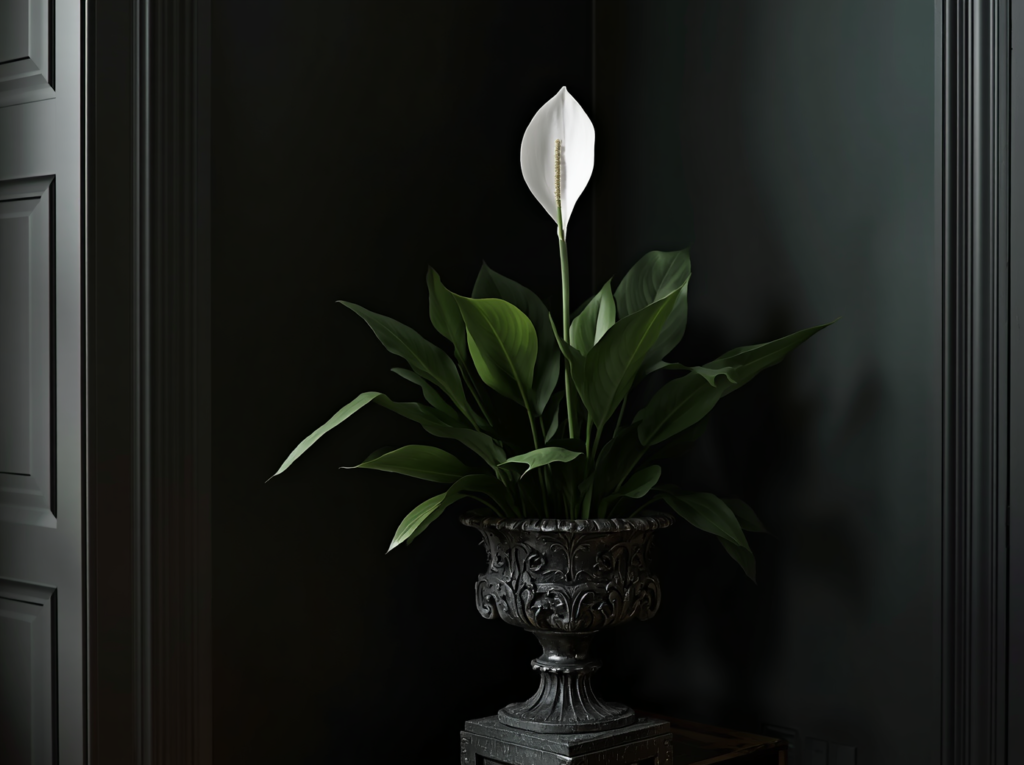
10. Parlor Palm (Chamaedorea elegans)
The parlor palm is specifically adapted to low-light conditions, having evolved in the understory of tropical rainforests where very little sunlight reaches the ground. It is one of the best palms for indoor use and tolerates the lower light levels of average homes better than most palm species.
11. Boston Fern (Nephrolepis exaltata)
Boston ferns thrive in indirect light and actually prefer to avoid direct sun, which scorches their delicate fronds. They are excellent for hallways, bathrooms with windows, and shaded indoor spaces, provided humidity levels are maintained. Their dense, cascading fronds create beautiful texture in dim spaces.
12. Maidenhair Fern (Adiantum)
Maidenhair ferns are among the most delicate and beautiful foliage plants for indoor use, with distinctive fan-shaped leaflets on black stems. They require consistent moisture and high humidity but reward attentive care with extraordinary elegance. They prefer indirect light and are genuinely beautiful in bathroom settings.
13. Calathea and Maranta (Prayer Plants)
Prayer plants evolved in the deeply shaded floor of tropical forests and genuinely prefer low to medium indirect light. They show their displeasure with direct sun through bleached, burnt leaf patches. Their dramatic, painted foliage is at its most colorful in filtered light.
14. Nerve Plant (Fittonia)
Nerve plants have intensely patterned leaves with white or pink veins on dark green backgrounds. They are ground-cover plants from Peruvian rainforests adapted to forest floor shade. They work beautifully in terrariums or closed glass containers where humidity remains consistently high.
15. Baby Rubber Plant (Peperomia obtusifolia)
With its thick, glossy, rounded leaves, the baby rubber plant stores water and tolerates irregular light well. It grows slowly but steadily in lower light and maintains its compact, attractive form without becoming leggy.
16. Velvet Leaf Plant (Philodendron micans)
An increasingly popular collector plant, Philodendron micans has velvety, iridescent leaves that shimmer between bronze and dark green. Like other philodendrons, it adapts well to lower light while maintaining its distinctive leaf texture and trailing habit.
17. Lucky Bamboo (Dracaena sanderiana)
Lucky bamboo grows in water and tolerates very low natural light conditions, making it one of the most practical plants for truly dark interior spaces such as offices without windows. Artificial fluorescent lighting is sufficient to maintain its health.
18. English Ivy (Hedera helix)
English ivy is one of the few trailing plants that genuinely tolerates low light. It grows more slowly in dim conditions but maintains healthy foliage and continues to trail. Variegated varieties need slightly more light than solid green varieties to maintain their markings.
Making the Most of Low-Light Spaces
Maximize Natural Light
Before giving up on natural light, ensure windows are clean, curtains or blinds are fully open during daylight hours, and no furniture or objects are blocking light paths. Reflective surfaces such as white walls and mirrors can significantly redistribute available light.
Rotate Plants Regularly
Rotate pots by a quarter turn every two weeks to ensure all sides receive equal light exposure and the plant develops symmetrically rather than leaning toward the light source.
Consider Grow Lights
Full-spectrum LED grow lights have become inexpensive and aesthetically attractive. A small grow light positioned above plants in a dark corner, timed to run for twelve to sixteen hours daily, can transform a space where plants were merely surviving into one where they genuinely thrive.