
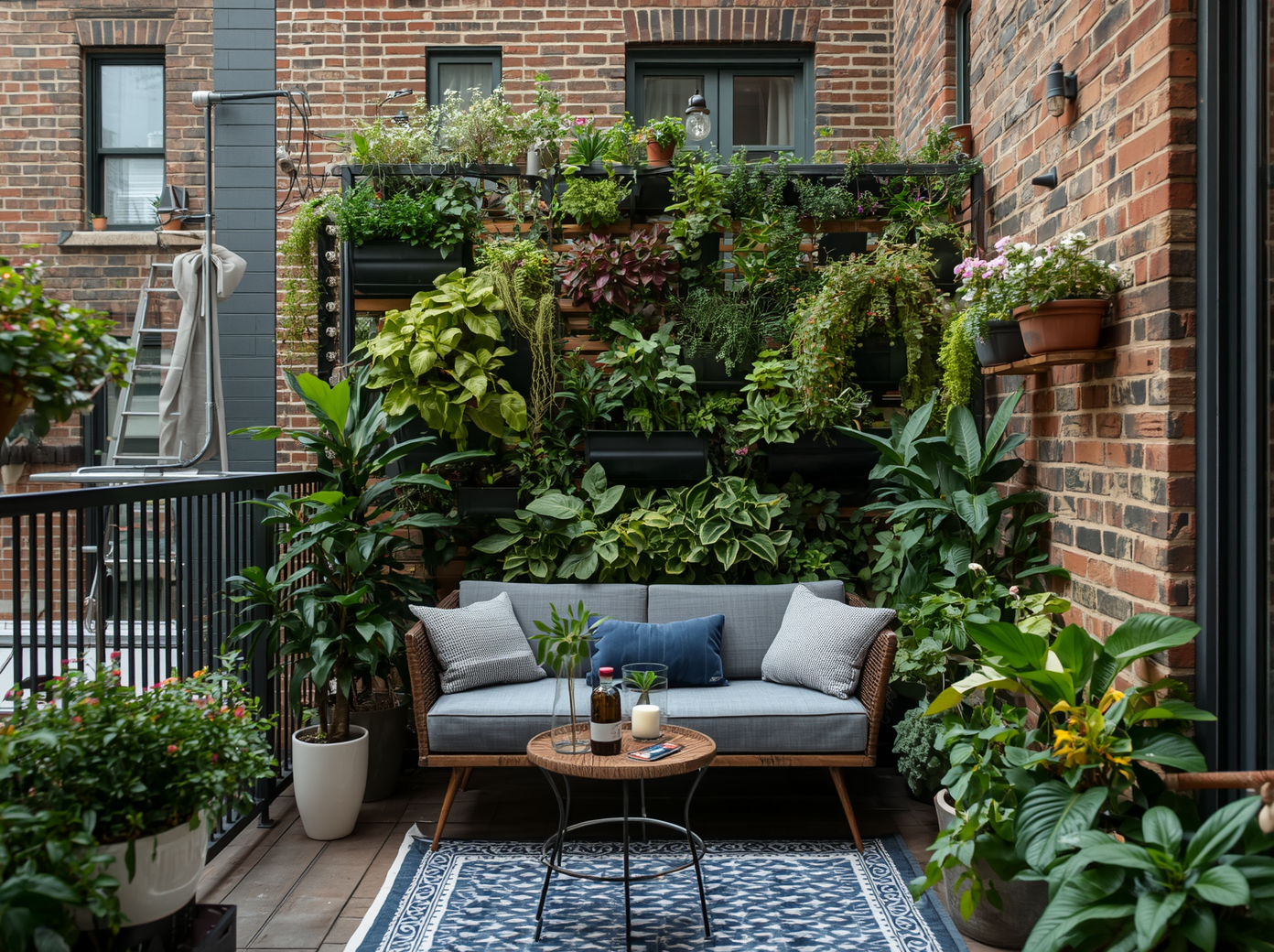
A balcony, even a tiny one, holds enormous potential for creating a green sanctuary in the middle of an urban environment. Studies show that access to plants and greenery reduces stress, improves mental health, and increases life satisfaction. And yet most urban apartment dwellers overlook their balconies, seeing only a strip of concrete rather than a canvas for transformation.
Whether you have a spacious terrace or a narrow four-foot ledge, these ideas and strategies will help you create a lush, beautiful balcony garden that maximizes every inch of space.
Step 1: Assess Your Balcony Conditions
Sun Exposure:
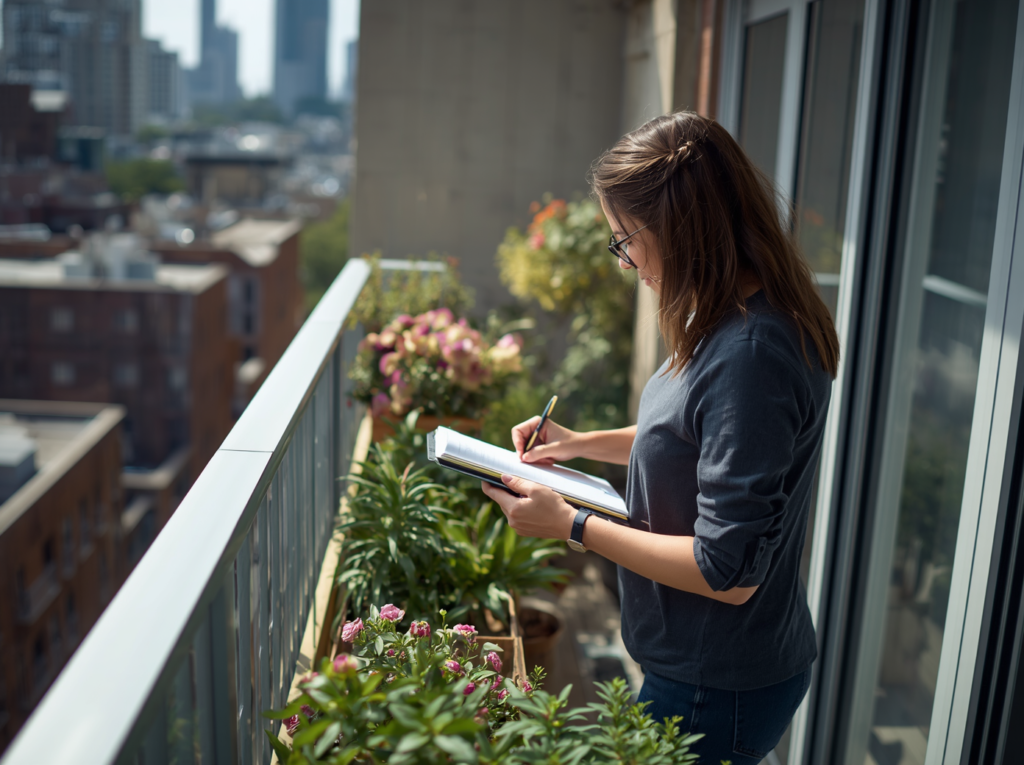
Spend a full day observing your balcony. Track where the sun hits at 9am, 12pm, 3pm, and 6pm. South and west-facing balconies typically receive the most sun at six or more hours daily, ideal for vegetables, herbs, and most flowering plants. North-facing balconies receive little or no direct sun and require shade-tolerant plants. East-facing balconies get gentle morning sun and afternoon shade, perfect for many ornamentals.
Wind:
High-floor balconies and those on corners experience significantly more wind than sheltered ground-floor spaces. Wind rapidly desiccates plants, can topple containers, and damages delicate foliage. On windy balconies, choose more compact resilient plants, use heavy pots, install a windbreak screen, and group containers together for mutual support.
Weight Bearing:
Before loading your balcony with heavy ceramic pots and wet soil, check your building’s balcony weight specifications. Most residential balconies support 40 to 60 pounds per square foot. A large ceramic pot filled with wet soil can easily weigh 100 or more pounds. Use lightweight fiberglass pots and lightweight potting mixes to stay within safe limits.
Vertical Gardening: Multiply Your Growing Space
Living Walls and Pocket Planters
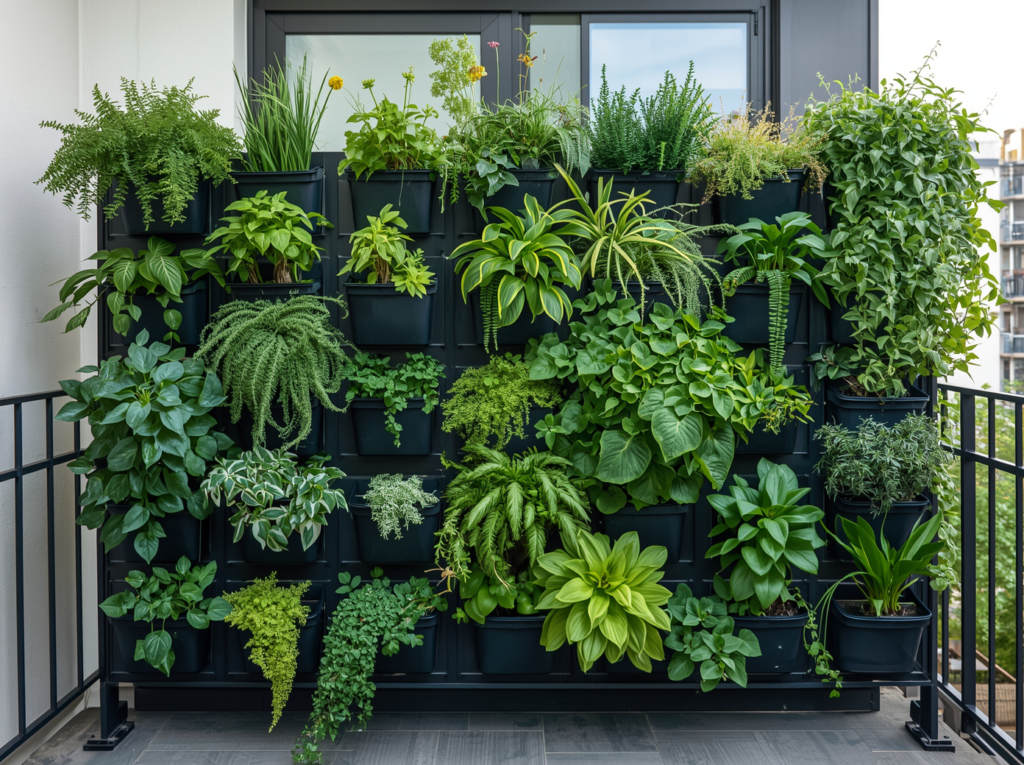
Vertical pocket planters, which are fabric or plastic panels with multiple planting pockets, mount directly on balcony walls or railings, turning unused vertical space into growing area. They are lightweight, affordable, and perfect for herbs, succulents, strawberries, and trailing flowers. One four-foot panel can hold 20 or more individual plants.
Trellis Systems
Install a simple wooden or metal trellis against the balcony wall and train climbing plants up it: passionflower, clematis, sweet peas, climbing roses, or even cucumbers and climbing beans for edibles. A trellis with vigorous climbers creates a beautiful privacy screen while maximizing vertical growing space.
Hanging Baskets
Overhead space is almost always underutilized on balconies. Hanging baskets from the ceiling, overhang, or specially mounted ceiling hooks multiplies your growing capacity while creating beautiful cascading displays of flowers and trailing foliage.
Tiered Plant Stands
Multi-tiered metal or wooden plant stands allow you to display six to ten pots in the footprint of one. They create beautiful visual layering and make efficient use of floor space.
Best Plants for Balcony Gardens by Condition
Full Sun Balconies (6+ Hours Direct Sun)
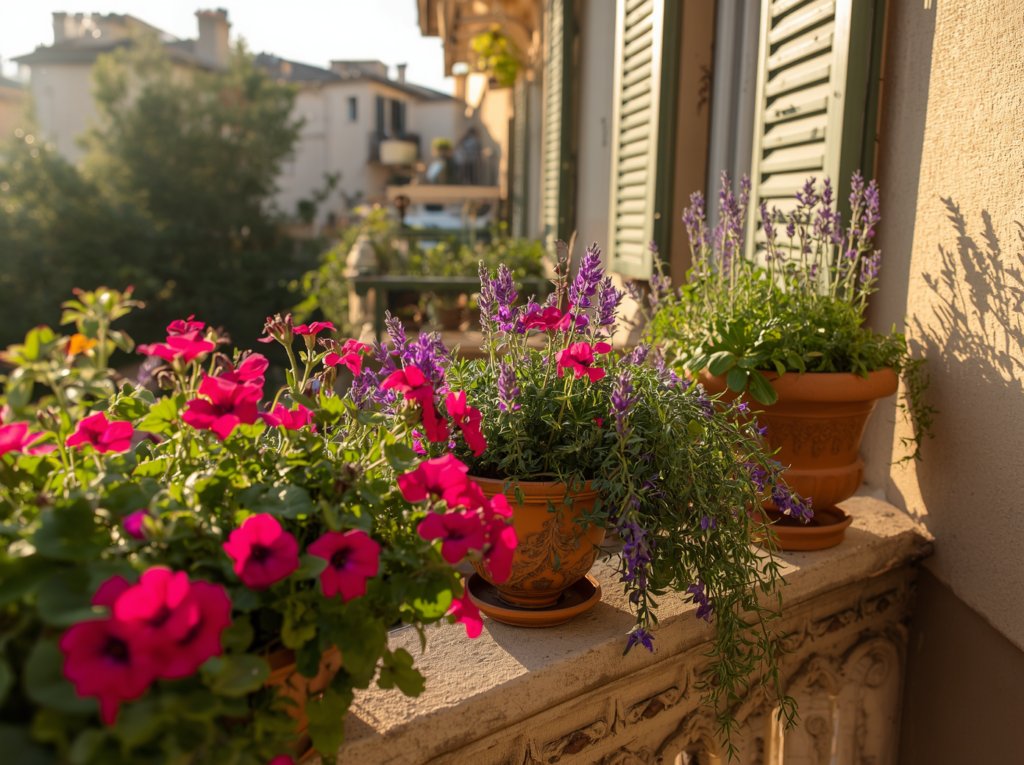
- Petunias: prolific, continuous flowering all summer; excellent in hanging baskets
- Geraniums (Pelargoniums): tough, drought-tolerant, beautiful color range
- Lavender: fragrant; attracts pollinators; drought-tolerant; excellent in pots
- Marigolds: continuous color; repels pests; easy from seed
- Herbs (basil, rosemary, thyme, oregano): culinary usefulness AND beauty
- Cherry tomatoes (Tumbling Tom, Balcony Star): productive in large containers
- Calibrachoa (Million Bells): tiny petunia-like flowers; magnificent trailing habit
Partial Shade Balconies (3-6 Hours Sun)
- Fuchsia: spectacular hanging baskets; prefers cool, partially shaded conditions
- Begonias (tuberous): shade-tolerant; large colorful flowers; long season
- Heuchera (coral bells): beautiful foliage colors; year-round interest
- Impatiens: classic shade bedder; continuous color; very easy
- Hostas: dramatic foliage in shade; architectural; beautiful in large containers
Full Shade Balconies (Less Than 3 Hours Sun)
- Ferns (Boston, Hart’s tongue): thrive in shade; lush green texture
- Caladiums: spectacular foliage in white, pink, and red; tropical; shade-loving
- Hellebores: winter and spring flowering; shade-tolerant; long-lived
Edible Balcony Gardens: Growing Food in Small Spaces
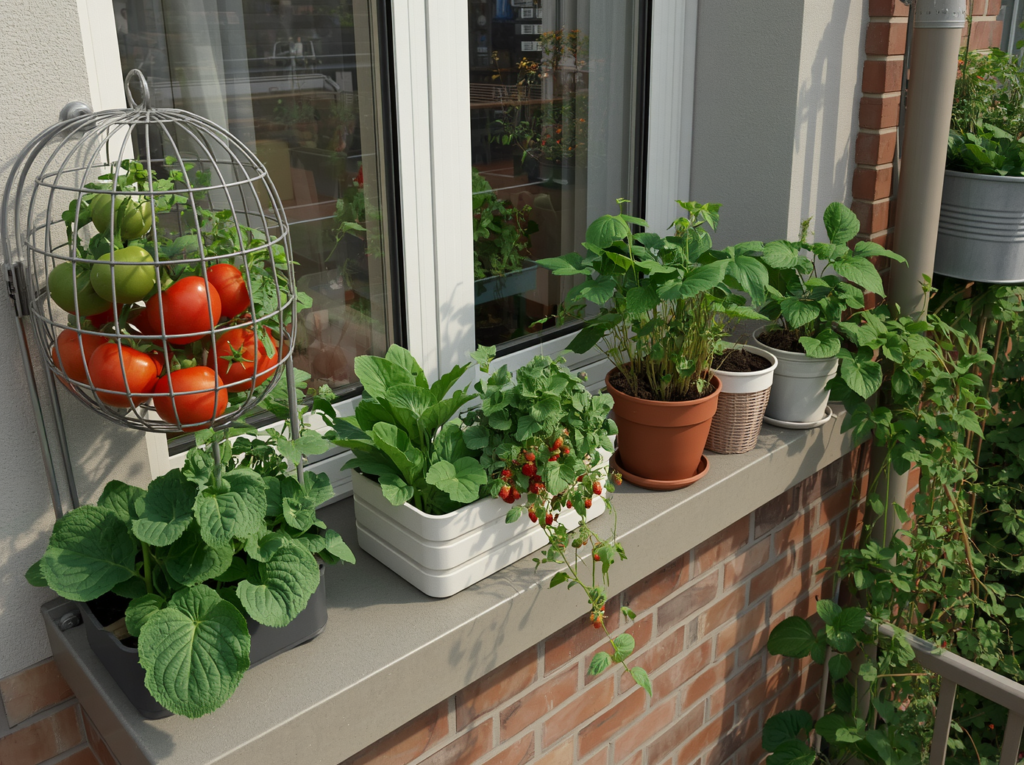
The Most Productive Edibles for Containers:
- Salad leaves (lettuce, rocket, spinach): fastest to harvest in four to six weeks; grow in window boxes; cut-and-come-again varieties give continuous supply
- Cherry tomatoes: most productive tomato for containers; Tumbling Tom is specifically bred for hanging baskets
- Herbs (basil, mint, chives, parsley, thyme, rosemary): thrive in containers
- Radishes: mature in three to four weeks; perfect for filling gaps
- Strawberries: perfect for hanging baskets; runners become beautiful cascades of berries
- Chillies: compact, productive, ornamental; thrive in containers with full sun
Year-Round Balcony Color: Seasonal Planting Calendar
Spring (March to May):
Spring bulbs planted the previous autumn: tulips, daffodils, hyacinths, alliums. Underplanted with pansies, violas, wallflowers, and primulas for cool-season color.
Summer (June to August):
The main flowering season. Petunias, geraniums, begonias, marigolds, calibrachoa, osteospermum, salvias, and fuchsias. Maximum color with the most maintenance required.
Autumn (September to November):
Chrysanthemums, asters, ornamental grasses, ornamental kale and cabbage, heucheras, autumn pansies, sedum Autumn Joy, and cyclamen.
Winter (December to February):
Evergreen structural plants like dwarf conifers, ivy, small hollies, and box topiary, winter heathers, cyclamen, winter pansies, and ornamental stems.
Watering Solutions for Balcony Gardens
The Biggest Challenge:
Container plants on balconies dry out significantly faster than garden beds, sometimes within hours in hot, sunny, windy conditions. A large balcony with many containers can require 30 to 60 minutes of daily watering in summer.
Efficient Watering Solutions:
- Self-watering containers: built-in reservoirs provide days of water without intervention
- Drip irrigation with timer: connect to an outdoor tap; waters automatically on schedule
- Water-retaining gel crystals: mixed into potting mix; absorb water and release slowly
- Watering globes or spikes: fill with water; releases slowly; good for vacations
Design Principles for Beautiful Balcony Gardens
Create Levels
Use a combination of tall plants at the back or center, medium plants in the middle zone, and trailing or low plants at the edges and fronts. This layering creates visual depth and makes the space feel abundant rather than flat.
Repeat Colors and Textures
Choose a palette of two to three main colors and repeat them throughout the space in different plant forms. This creates cohesion and makes even a collection of different plants feel intentional and designed.
Add Non-Plant Elements
String lights, lanterns, small solar-powered water features, attractive containers, and outdoor cushions transform a plant display into a complete outdoor room. The plants provide life; the accessories provide ambience.
Consider Scent
Fragrant plants on a balcony create an immersive sensory experience. Lavender, jasmine in sheltered warm spots, sweet peas, roses, and fragrant herbs like basil and rosemary make sitting on the balcony truly restorative.