
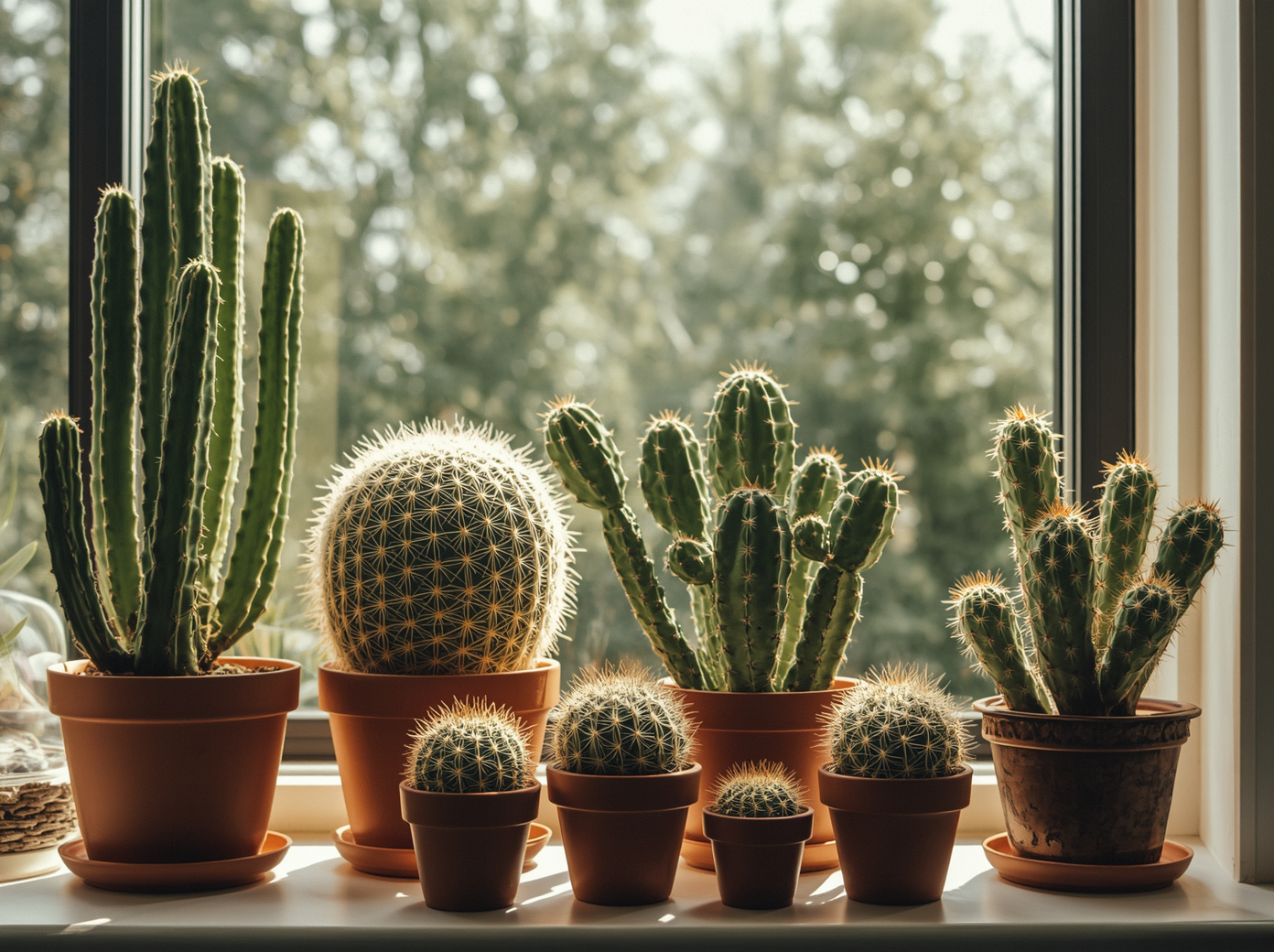
Cacti are some of the most extraordinary plants on earth. Evolved over millions of years to survive in some of the world’s most extreme environments, including scorching deserts, high-altitude Andes slopes, and coastal cliffs, they have developed remarkable adaptations that make them both fascinating to study and forgiving to grow. Their sculptural forms, unexpected flowers, and almost impossibly low maintenance needs have made them among the most popular houseplants worldwide.
But cacti are not entirely maintenance-free, and understanding their specific needs is the key to keeping them healthy rather than slowly declining.
The Biology of Cacti: Why They’re Different
Cacti are members of the family Cactaceae, native almost exclusively to the Americas. Their most distinctive feature is the areole, a specialized organ unique to cacti that produces spines, flowers, and new growth. When people ask how to distinguish a cactus from a succulent, the presence of areoles is the definitive answer.
Cacti store water in their thick, fleshy stems rather than leaves. Most true cacti have no leaves at all (spines are modified leaves). Their thick, waxy outer layer (epidermis) minimizes water loss, and their wide, shallow root systems are designed to rapidly absorb large volumes of water during rare rainfall events.
This evolutionary strategy means cacti are adapted for infrequent but intense watering, not for chronic low moisture. They want to be watered thoroughly and then allowed to dry completely.
Light: The Most Critical Requirement
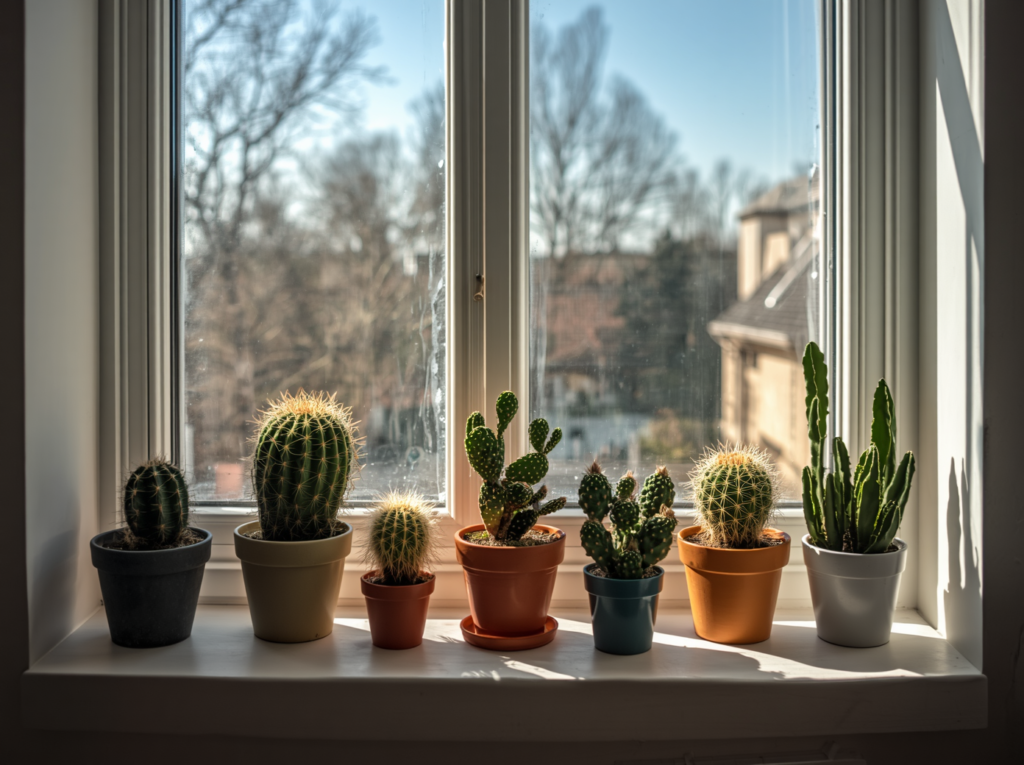
The vast majority of cacti require intense, direct sunlight: four to six hours of direct sun minimum, with more being better for most species. This is the area where indoor cactus growing most commonly fails. The light level inside even the brightest home is a fraction of the intense desert sunlight cacti evolved under.
Light Assessment:
- Best: south-facing windowsill with direct sun from late morning through afternoon
- Good: west-facing windowsill receiving direct afternoon sun
- Marginal: east-facing windowsill with only morning sun; some species will manage, many will not
- Insufficient: north-facing window or anywhere without direct sun; most cacti will slowly decline
Signs of Insufficient Light:
- Etiolation: the cactus stretches toward the light source, producing a thin, elongated, pale section of new growth that is a different form than the healthy base
- Fading color: the cactus loses its vibrant green or blue-green color, becoming pale and washed-out
- No flowers: most cacti require adequate light to initiate flowering
Grow Lights for Indoor Cacti:
If your home lacks adequate natural light, full-spectrum LED grow lights positioned very close (four to six inches above the cactus tops) for twelve to sixteen hours daily can supplement natural light effectively. This is the most reliable solution for growing cacti in darker homes.
Watering Cacti: The Soak and Dry Method
Despite their desert reputation, cacti do need water. The error is not in giving them none; it is in giving them constant small amounts. Cacti want infrequent, deep, thorough watering followed by complete drying.
The Correct Watering Method:
- Water thoroughly until water flows freely from the drainage hole
- Allow the soil to dry completely throughout the entire pot before watering again
- In spring and summer: water every one to two weeks depending on heat and pot size
- In autumn and winter: reduce to once a month or even less
Seasonal Watering Calendar:
- Spring (March to May): begin increasing water as light levels and temperatures rise; once every ten to fourteen days
- Summer (June to August): peak watering period; every seven to fourteen days in heat; check soil first
- Autumn (September to November): reduce gradually; once every three weeks
- Winter (December to February): dormant period; once a month or even every six to eight weeks
Why Winter Drought Is Important:
Many cacti require a cool, dry winter dormancy period to initiate spring and summer flowering. Watering heavily in winter keeps the plant active but prevents the hormonal changes that trigger bud formation. Keep desert cacti cool (40 to 55 degrees Fahrenheit if possible) and dry from November through February.
Soil and Drainage
Why Cactus Soil Is Different
Standard potting soil retains far too much moisture for cacti. It contains organic matter that stays damp and promotes root rot. Cacti need a fast-draining medium that dries quickly after watering.
Ideal Cactus Mix:
- 50 percent mineral content: coarse sand, perlite, grit, or crushed granite
- 50 percent organic content: quality potting mix or cactus compost
Commercial Cactus Mix:
Most commercial cactus mixes are acceptable as a starting point but benefit from the addition of extra perlite or coarse grit at a ratio of about one part extra mineral to two parts commercial mix.
Pots and Drainage:
Terracotta pots are ideal for cacti because they are porous and allow moisture to evaporate through the walls, reducing root rot risk. Always use pots with drainage holes. Avoid large pots that contain more soil than the roots can dry out quickly.
Best Cacti for Beginners
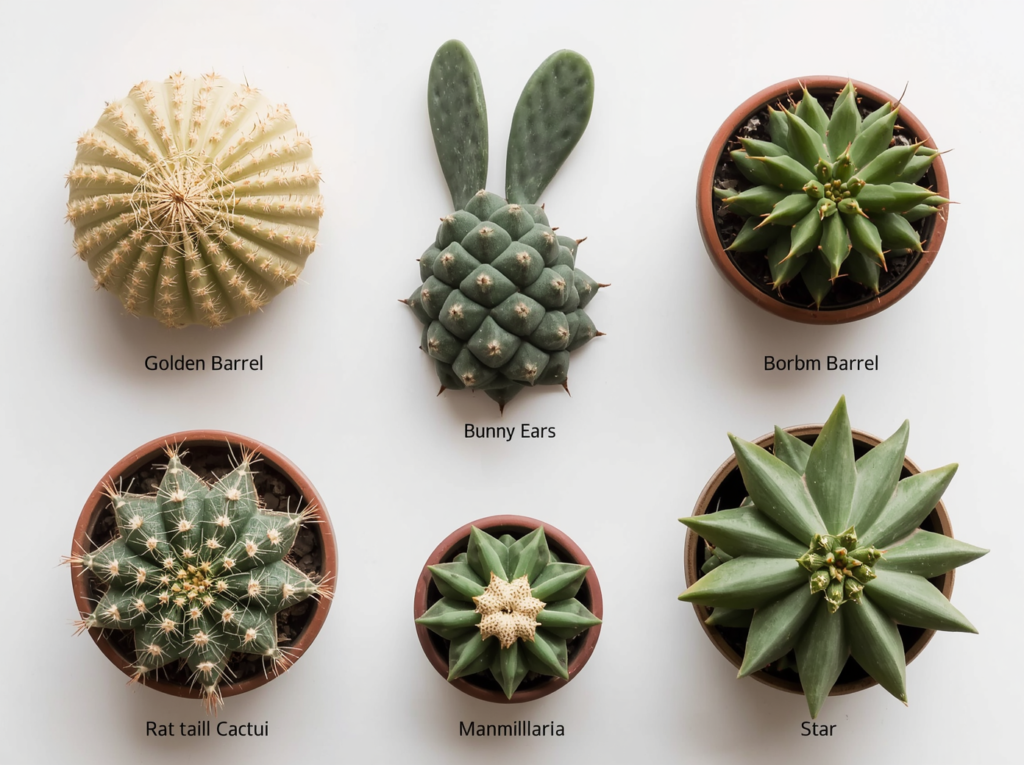
Golden Barrel Cactus (Echinocactus grusonii)
An iconic, perfectly spherical cactus covered in golden yellow spines, native to Mexico. It grows slowly, is extraordinarily drought-tolerant, and produces yellow flowers on mature plants. A classic for sunny windowsills and gardens in warm climates.
Bunny Ears Cactus (Opuntia microdasys)
Produces flat, oval pads covered in soft-looking but sharp glochids (tiny barbed spines). Very easy to grow, fast-growing, and produces beautiful yellow flowers. Handle carefully as the glochids are extremely irritating to skin.
Old Man Cactus (Cephalocereus senilis)
Covered in long, white, hair-like spines that give it a genuinely striking appearance. Very slow-growing, needs full sun, and produces pink flowers on mature plants. One of the most visually distinctive cacti for windowsill collections.
Mammillaria (Pin Cushion Cactus)
A huge genus of small to medium-sized cacti that produce rings of small, jewel-like flowers around the top of the plant. One of the most reliably flowering cacti in indoor cultivation. Hundreds of species with varying spine colors and flower shades.
Christmas Cactus (Schlumbergera) — Jungle Cactus
Unlike desert cacti, Christmas cacti are native to Brazilian cloud forests and need quite different care: more frequent watering, partial shade, and higher humidity. They produce spectacular flowers in winter. Remember: their needs are the opposite of desert cacti.
Repotting Cacti
Cacti should be repotted every two to three years in spring, or when roots emerge from drainage holes. Move up one pot size only. Handle spiny cacti with folded newspaper wrapped around the plant or thick leather gloves.
After repotting, wait one to two weeks before watering to allow any damaged roots to callus. This reduces the risk of root rot in freshly disturbed soil.
Getting Cacti to Flower
- Ensure maximum light levels throughout spring and summer
- Provide a cool, dry winter dormancy period (temperatures 40 to 55 degrees Fahrenheit)
- Avoid overwatering year-round
- Feed with a low-nitrogen, high-phosphorus fertilizer in spring and summer
- Repot into fresh growing medium every two years to replenish nutrients