
Few gardening experiences match the pleasure of eating a sun-warmed strawberry picked straight from the plant. Homegrown strawberries are in a completely different class from supermarket fruit: they are picked fully ripe, with flavor at its peak rather than harvested weeks early to survive transit. They are also remarkably easy to grow in a surprising range of settings.
You do not need a large garden to grow strawberries. A hanging basket on a balcony, a window box on a windowsill, a few containers on a patio, or a small raised bed can all produce satisfying harvests. This guide covers every method.
Understanding Strawberry Types
June-Bearing (Summer-Fruiting)
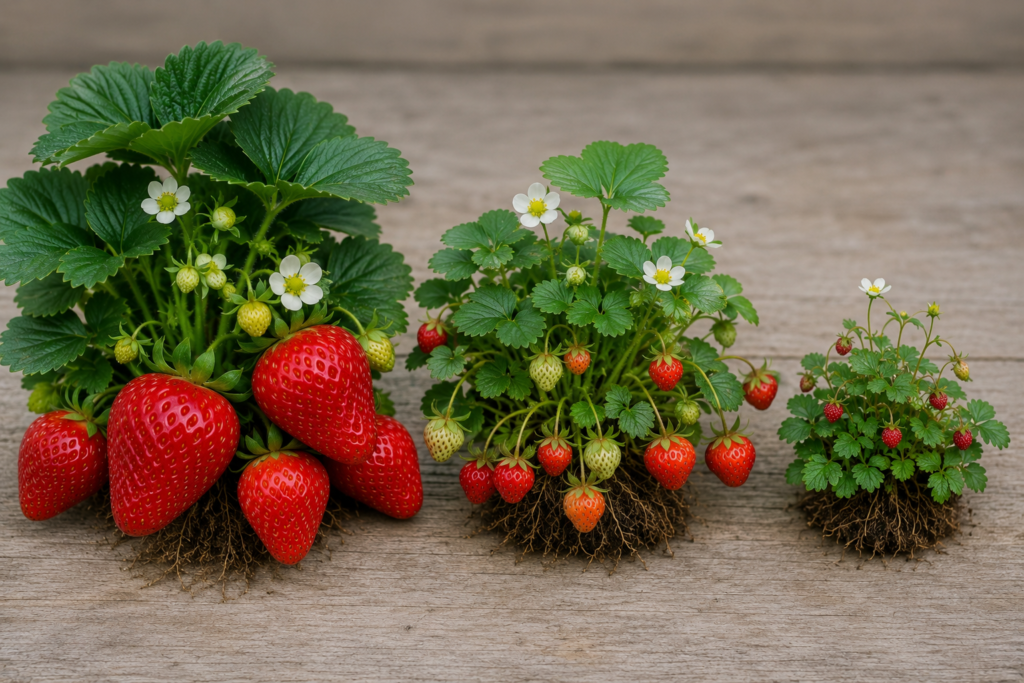
June-bearing strawberries produce a single large crop concentrated over two to four weeks in early summer. They produce the largest berries and the most intense flavor, and are the best choice for jam-making and freezing. They also produce the most runners, making them easy to propagate. Popular varieties include Elsanta, Honeoye, and Cambridge Favourite.
Everbearing (Perpetual)
Everbearing varieties produce two smaller flushes of fruit, typically one in early summer and one in late summer or autumn. They extend the harvest season considerably and are excellent for gardeners who want fresh fruit over a longer period rather than a single intensive harvest. Varieties include Ostara, Mara des Bois, and Albion.
Day-Neutral
Day-neutral strawberries produce fruit continuously throughout the season from summer to first frost, regardless of day length. They are the most productive for continuous picking but individual fruits are generally smaller. Excellent for containers.
Alpine Strawberries (Fragaria vesca)
Alpine strawberries produce tiny, intensely flavored fruits throughout summer. They grow well from seed, tolerate partial shade (unlike other strawberries), and make beautiful edible ground cover or edging plants. The flavor is exceptional, often described as the essence of strawberry distilled into a tiny fruit.
Growing Strawberries in Hanging Baskets
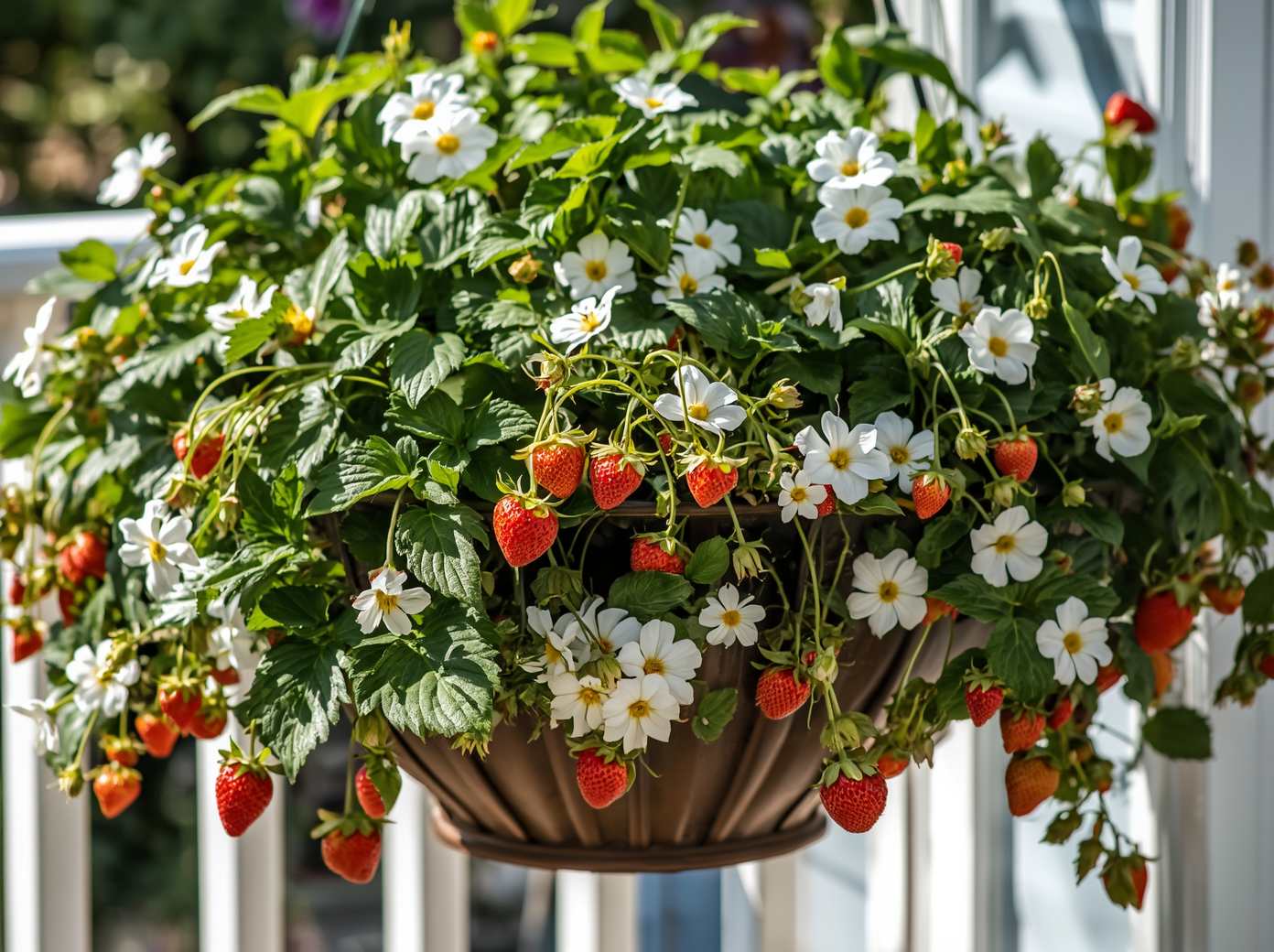
Hanging baskets are one of the most popular and productive ways to grow strawberries in small spaces. The cascade of runners, flowers, and ripe fruit is beautiful and provides a surprisingly good harvest. The elevated position also protects fruit from slugs and soil splash.
Choosing a Basket:
- Minimum 12-inch diameter; larger baskets dry out less quickly and are more productive
- Wire baskets lined with coco fiber or jute are ideal; allow good drainage
- Self-watering hanging baskets with reservoirs dramatically reduce watering frequency
Planting:
- Plant three to four strawberry plants per 12-inch basket
- Use a quality compost mixed with water-retaining gel crystals
- Position plants around the outside of the basket as well as in the top
- Firm in well and water thoroughly at planting
Care:
- Water daily in warm weather; hanging baskets dry very quickly
- Feed weekly with high-potassium liquid feed (tomato fertilizer) once flowering begins
- Remove runners to direct energy into fruit production
- Replace plants every two to three years as productivity declines
Growing Strawberries in Containers
Best Containers for Strawberries:
- Traditional strawberry planters with side pockets: elegant; efficient use of space; can fit twelve or more plants in a small footprint
- Window boxes: excellent for balconies; grow a row of four to six plants
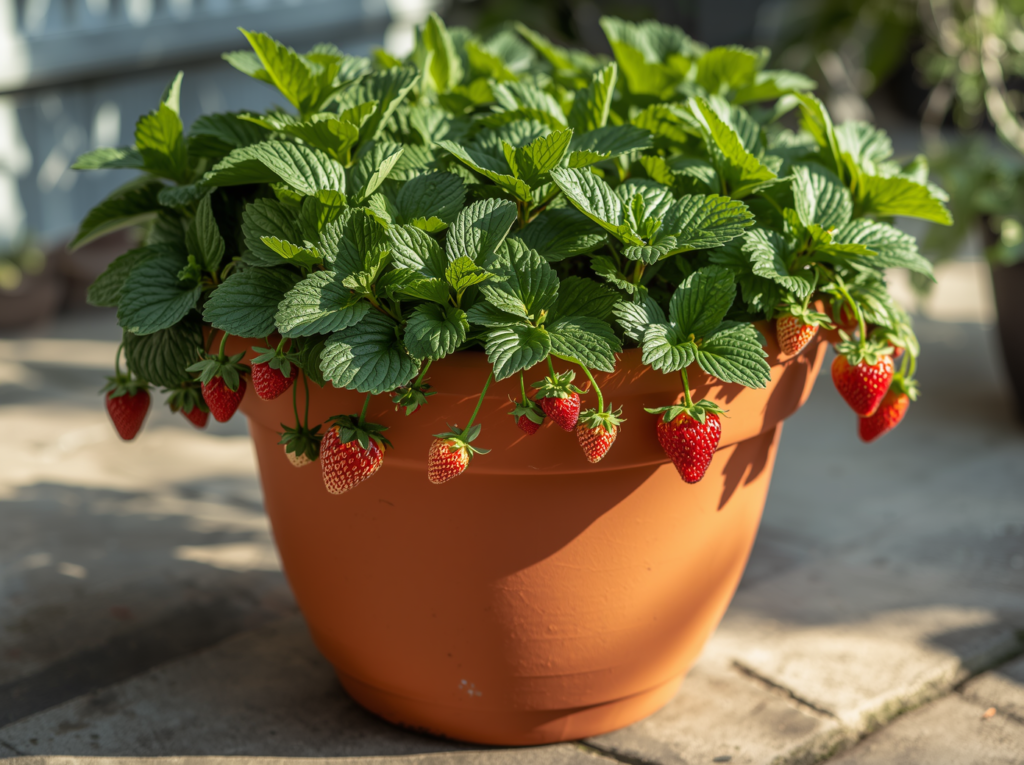
- Standard pots (ten inches or larger): flexible; easy to move; can group for visual impact
- Grow bags: inexpensive; hold three to four plants; disposable after two years
Soil Mix for Containers:
- Quality multi-purpose compost with added perlite for drainage
- Mix in slow-release fertilizer granules at planting for the first month of feeding
- Add water-retaining gel crystals to reduce watering frequency
Planting Time:
Plant container strawberries in early spring (March to April) for fruiting from June onwards, or in late summer (August to September) for establishment before winter and heavy cropping the following year.
Growing Strawberries in Raised Beds and Garden Plots
Bed Preparation:
Strawberries perform best in fertile, well-draining, slightly acidic soil with a pH of 5.5 to 6.5. Prepare beds by digging in generous amounts of compost or well-rotted manure and ensuring excellent drainage. Raised beds are ideal.
Spacing:
Space plants twelve to eighteen inches apart in rows, with eighteen to twenty-four inches between rows. This spacing allows adequate air circulation and room for runner development.
Planting Technique:
- Plant so the crown (the growing point at soil level) is exactly at soil level
- Too deep: the crown rots
- Too shallow: the crown dries out and roots are exposed
- Water thoroughly after planting; mulch with straw to suppress weeds and keep fruit clean
Essential Strawberry Care
Watering:
Strawberries need consistent moisture, especially during flowering and fruit development. Irregular watering causes misshapen fruit and reduced yields. Drip irrigation is ideal for garden beds as it delivers water directly to roots without wetting foliage, reducing fungal disease risk.
Feeding:
Feed with a balanced fertilizer in early spring as growth begins. Once flowers appear, switch to a high-potassium liquid feed every seven to fourteen days through the fruiting period. After fruiting, apply a balanced fertilizer to support vegetative growth and runner production.
Managing Runners:
- For fruit production: remove runners promptly; they divert energy from fruit
- For propagation: allow selected runners to develop; peg down every other runner node into small pots of compost; sever from mother plant after three to four weeks when rooted
- Runners are genetic clones of the mother plant; only propagate from healthy, productive, virus-free plants
Renovation After Fruiting:
After the main harvest, cut all foliage back to within three to four inches of the crown using shears. Remove the cut material, old straw mulch, and any runners you do not want to keep. Apply a balanced granular fertilizer and water in. New foliage grows quickly, and the plant is fully productive again by the following season.
Common Strawberry Problems
Grey Mold (Botrytis cinerea)
Gray fuzzy mold on fruit, particularly prevalent in damp, humid conditions. Improve air circulation; water at soil level rather than overhead; remove affected fruit immediately; apply appropriate fungicide in high-risk periods.
Slugs and Snails
Slugs and snails are the primary fruit-eating pest of strawberries. The traditional solution is straw mulch (which keeps fruit off soil and makes slug movement more difficult) plus iron phosphate slug pellets that are safe for wildlife and pets.
Verticillium Wilt
Soil-borne fungal disease that causes wilting, yellowing, and plant death. No chemical cure. Remove affected plants; do not replant strawberries in the same soil for three to four years. Choose resistant varieties.