
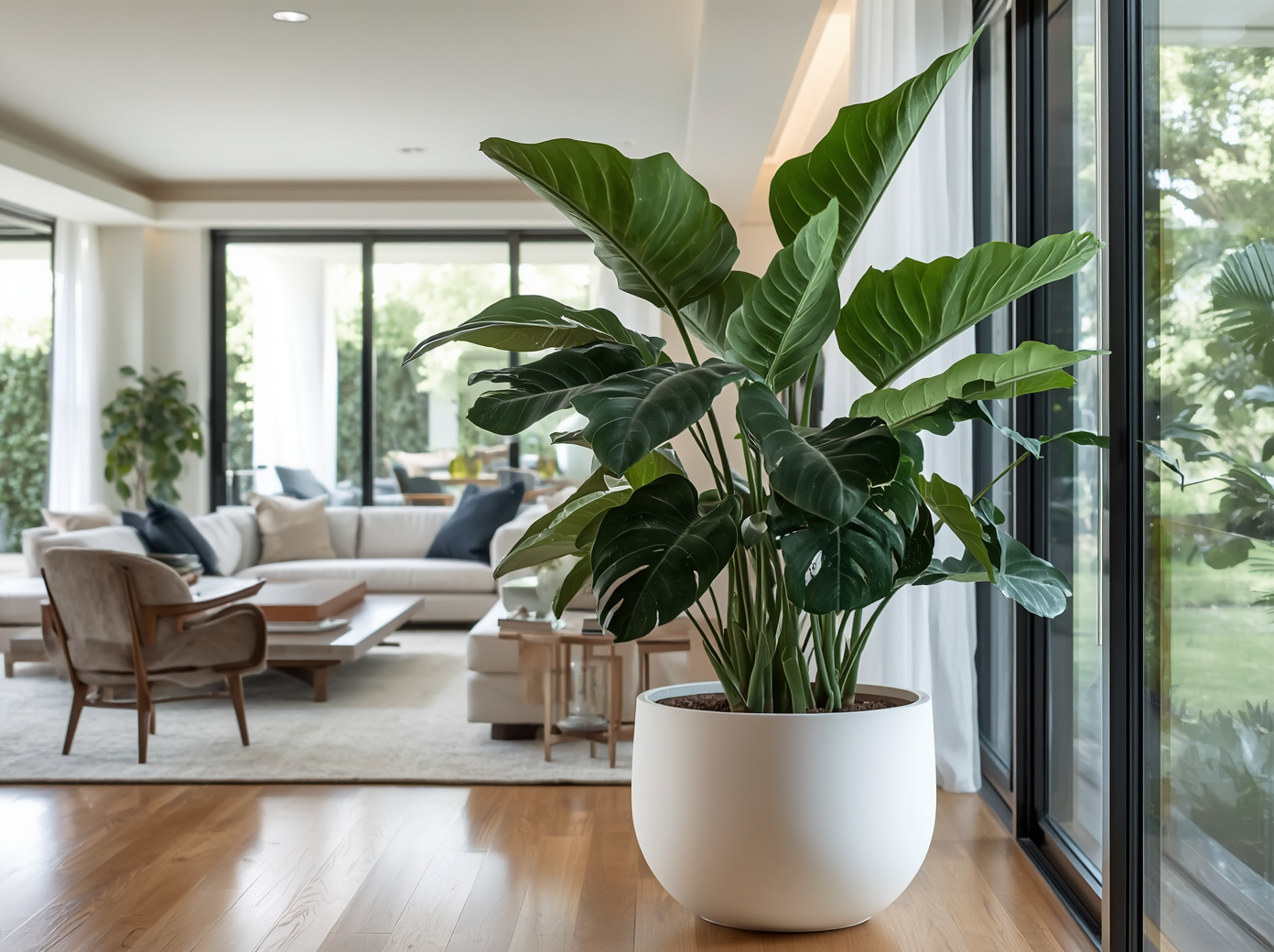
The fiddle leaf fig (Ficus lyrata) is simultaneously one of the most popular and most notorious houseplants. Its massive, violin-shaped leaves make a dramatic architectural statement that no other plant can match — and it’s graced countless interior design magazines and social media feeds. But it’s also famed for being temperamental, dropping leaves at the slightest provocation, and resisting all attempts at care.
The secret to fiddle leaf fig success isn’t complicated — it comes down to understanding what this plant needs, finding the right spot, and then leaving it alone. Fiddle leaf figs don’t die from neglect; they die from inconsistency. This guide will teach you exactly what they need.
Understanding Fiddle Leaf Fig: Origins Matter
Ficus lyrata is native to the tropical rainforests of West Africa, where it grows as a large forest tree in warm, humid conditions with bright, filtered light. In the wild, it can reach 40–50 feet tall. Indoors, it typically grows 6–10 feet, though well-cared-for specimens can be taller.
Understanding its origins explains its care needs: warm, consistently humid conditions; bright but filtered light (not direct sun that would scorch the large leaves); and minimal disruption once established in a good spot.
The #1 Rule: Location Consistency
Fiddle leaf figs hate being moved. Unlike most houseplants that adapt relatively quickly to new positions, fiddle leaf figs respond to relocation by dropping leaves — sometimes dramatically. Once you find the right spot, commit to it.
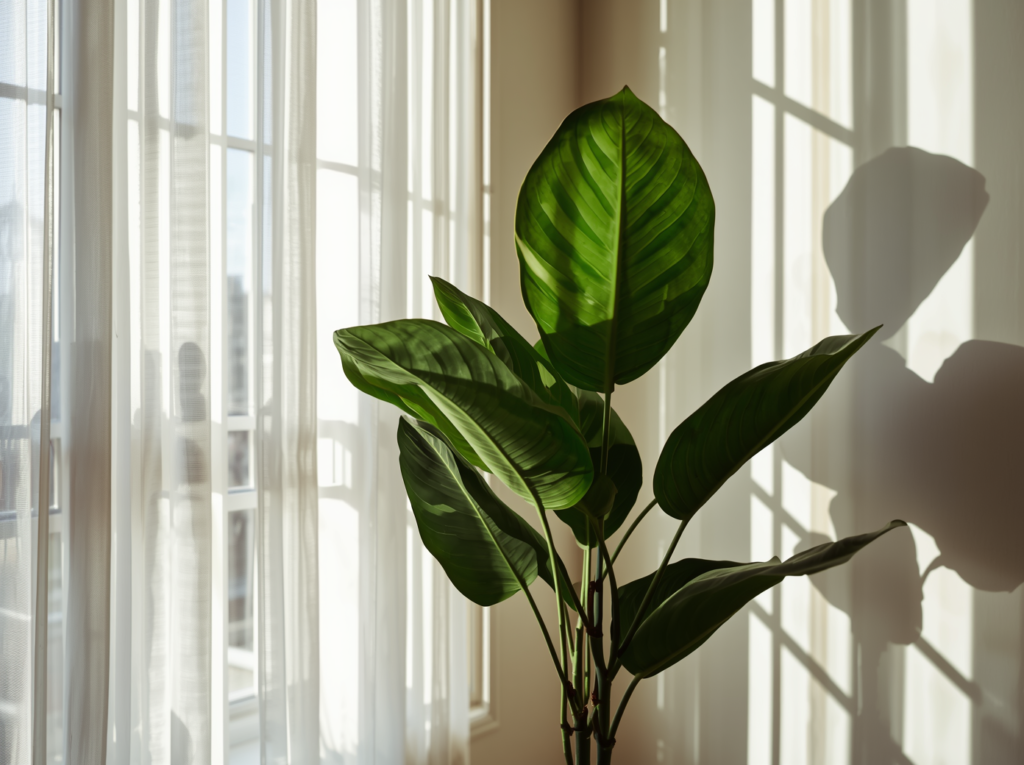
The ideal location: near a large south or east-facing window where the plant receives several hours of bright, indirect light without direct afternoon sun touching the leaves. Rotate the pot 1/4 turn once every 2–4 weeks so all sides receive even light exposure — this is more effective than moving the whole plant.
Light Requirements
Ideal Light:
Bright, indirect light for 6+ hours daily. The best indicator of good light: your plant produces 1–2 new leaves per month during the growing season (spring through summer).
Too Little Light Signs:
- Growth completely stalls or new leaves are very small
- Existing leaves fade from rich dark green to a lighter, less vibrant color
- Plant leans heavily toward the window
Too Much Direct Sun Signs:
- Brown patches in the middle of leaves (not at edges) — sunscald
- Bleached, pale patches on sun-facing leaves
For rooms with less natural light, full-spectrum LED grow lights positioned close to the plant (18–24 inches away) are an excellent supplement. Run them for 12–16 hours daily.
Watering — The Most Critical Factor
The Correct Approach:
Water thoroughly when the top 2–3 inches of soil are dry. Use room-temperature water, water slowly until it flows freely from drainage holes, then empty the saucer after 30 minutes. Never let the plant sit in standing water.
Watering Schedule as a Starting Point:
- Spring/summer: approximately every 7–10 days
- Fall/winter: every 10–14 days; the plant’s growth slows significantly
Overwatering Signs:
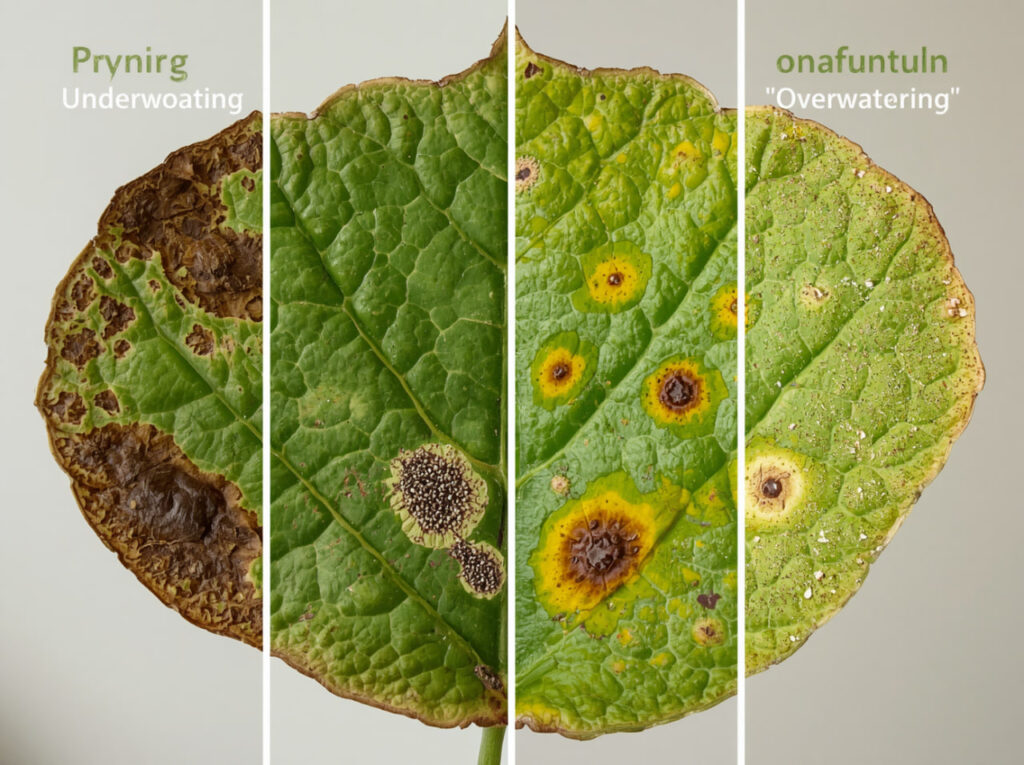
- Brown spots in the CENTER of leaves with a yellow ring — bacterial infection from overwatering
- Yellowing lower leaves
- Mushy stem base
Underwatering Signs:
- Brown spots starting at leaf EDGES and tips, dry and crispy
- Leaf curl
- Leaves feel dry and papery
The distinction between over and underwatering is critical — they look similar from a distance but require opposite treatments. Brown edge = dry. Brown center with yellow = wet.
Humidity and Temperature
Humidity:
Fiddle leaf figs prefer 30–65% humidity. In most indoor environments (especially in winter with heating running), humidity drops to 20–30%, which causes brown leaf edges. Solutions: run a humidifier nearby, cluster plants together, or use a large pebble tray with water beneath the pot.
Temperature:
Keep between 60°F and 85°F (15°C–29°C). Avoid cold drafts from windows, doors, or air conditioning vents — a blast of cold air can trigger immediate leaf drop. Similarly, don’t place near heating vents, which blow hot, dry air.
Soil and Potting
Fiddle leaf figs need well-draining soil that retains adequate moisture without becoming waterlogged. A good mix: 60% high-quality potting soil + 30% perlite + 10% orchid bark.
Repotting:
Repot every 1–2 years when roots circle the bottom of the pot or emerge from drainage holes. Move up only one pot size — oversized pots hold too much moisture. Spring is the best time; repotting in fall or winter can shock the plant.
Fertilizing
Use a balanced, water-soluble fertilizer formulated for fiddle leaf figs (3-1-2 NPK ratio is commonly recommended) or a general balanced fertilizer (20-20-20) at half strength.
Schedule:
- Spring through summer: once a month
- Fall: reduce to every 6–8 weeks
- Winter: stop fertilizing completely
Signs of over-fertilization: salt buildup on soil surface (white crust); brown leaf tips even when humidity is adequate. Flush soil with water every 6 months to remove salt buildup.
Common Problems and Solutions
Problem: Sudden Leaf Drop
Sudden leaf drop (especially of otherwise healthy-looking green leaves) is almost always a stress response: being moved to a new location, a sudden temperature change, cold draft, or root disturbance from repotting. Provide consistent conditions and the plant usually stabilizes within 4–6 weeks.
Problem: Brown Spots in Center of Leaves
Brown spots with yellow halos in the center of leaves indicate root rot caused by overwatering. Remove affected leaves, check roots (trim any brown/mushy roots), repot in fresh mix, and significantly reduce watering frequency.
Problem: Brown Edges and Tips
Brown, crispy edges and tips indicate low humidity, underwatering, fluoride/salt damage from water or fertilizer, or cold air exposure. Check all four factors systematically.
Problem: No New Growth
If your fiddle leaf fig hasn’t produced new leaves in 2+ months during the growing season, investigate: insufficient light (most common cause), being root-bound, or under-nutrition.
Problem: Leggy, Single-Stem Growth
Fiddle leaf figs naturally grow as single trunks. To encourage branching: nick the trunk with a clean knife just above a bud in early spring, or make a cut just above where you want branching to occur. The plant will produce new shoots at the wound site.
Notching for Branching: Step-by-Step
- Step 1: Choose the height at which you want a new branch
- Step 2: In early spring, use a clean, sterile knife to make a small notch (1/4 inch deep) just above a dormant bud node
- Step 3: Do not cut deeper than 1/3 of the stem diameter
- Step 4: Wait 4–8 weeks; a new growth point should emerge from above the notch
- Step 5: Once the new branch grows 2–3 leaves, the plant will continue branching naturally
The fiddle leaf fig’s reputation for difficulty is somewhat deserved but also somewhat overstated. Find the right spot, establish a consistent watering routine based on soil moisture rather than a fixed schedule, maintain adequate humidity, and resist the urge to move or repot frequently. Do these things and your fiddle leaf fig will reward you with spectacular, dramatic growth for years to come.