
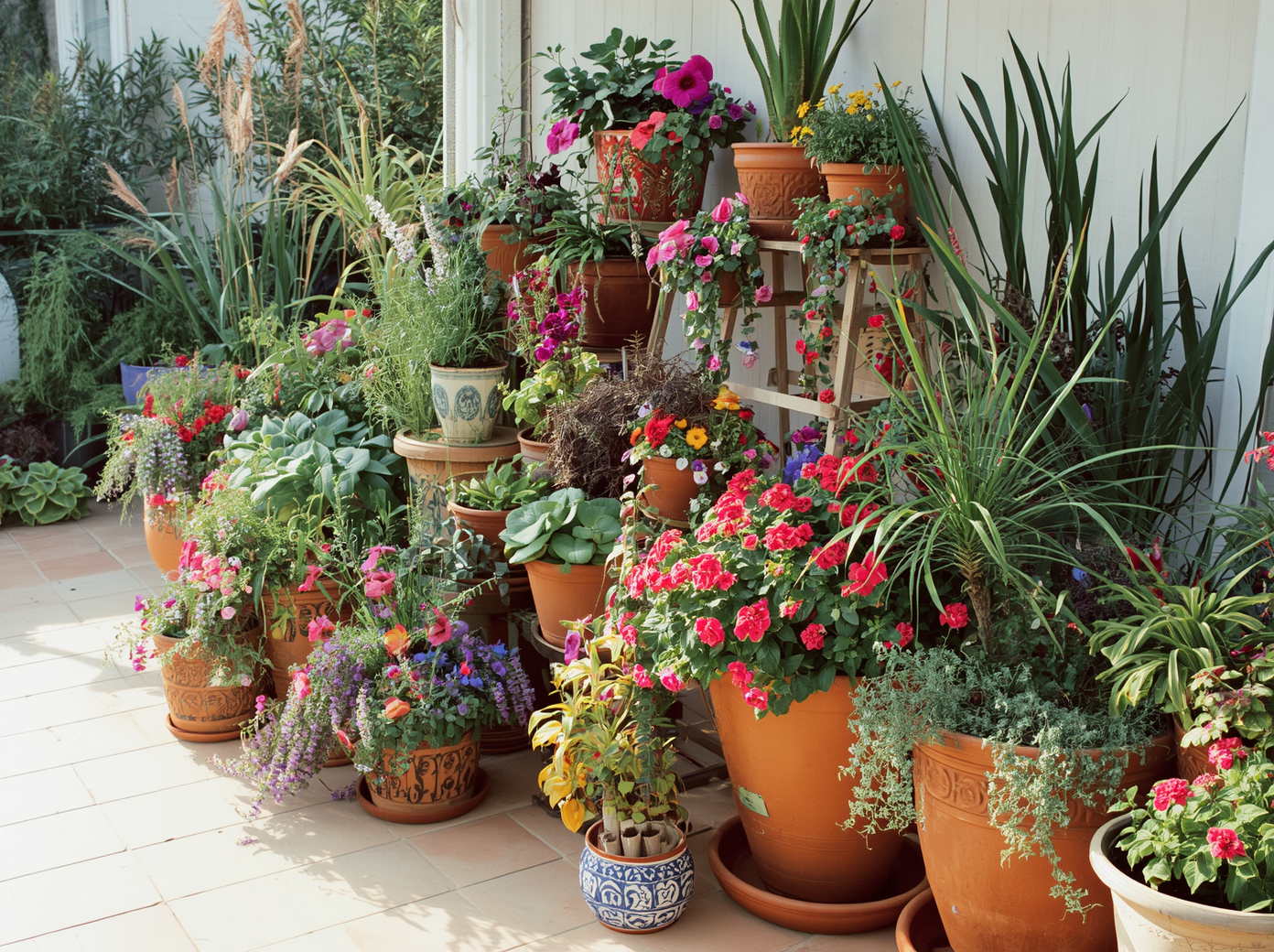
Container gardening is one of the most accessible and creatively flexible forms of gardening. You don’t need a yard, a large budget, or extensive horticultural knowledge — just some pots, good soil, the right plants, and a sunny spot. Container gardens transform balconies, patios, front steps, windowsills, and even indoor spaces into living displays of color, texture, and fragrance.
Whether you want elegant year-round evergreen structures, an explosion of summer color, a productive herb garden, or a dramatic statement planting, containers make it possible anywhere. This guide walks you through every step of creating a container garden that’s beautiful, practical, and long-lasting.
Step 1: Assess Your Space and Conditions
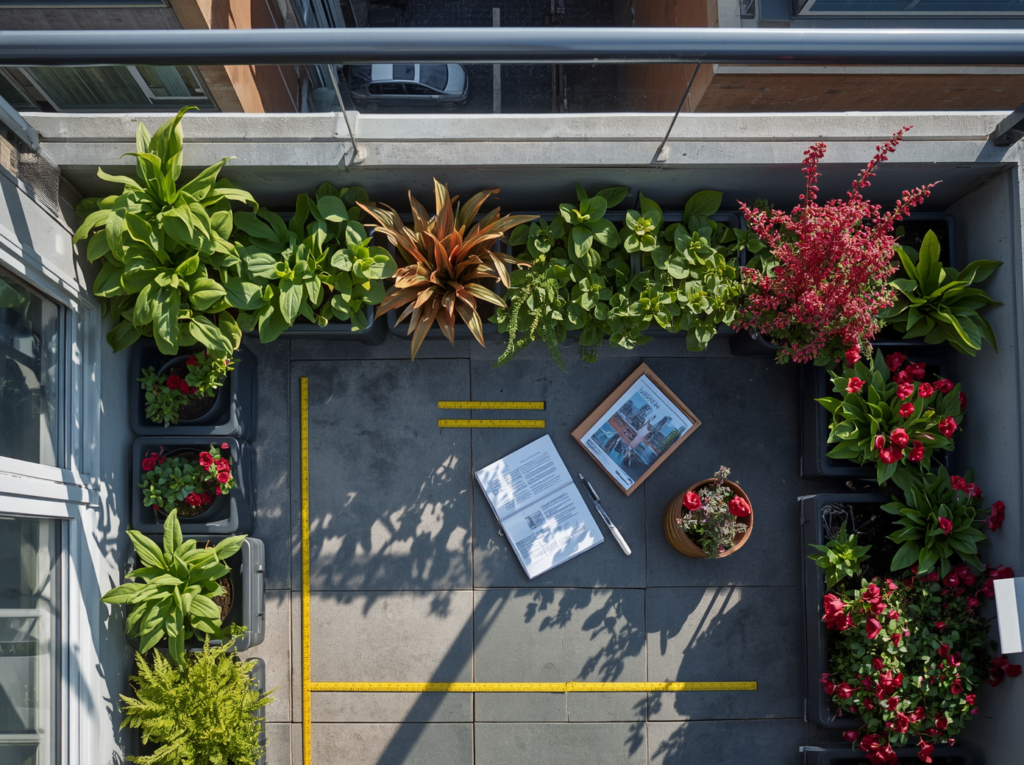
Sun Exposure: The Foundation of Every Decision
Before choosing any plant or container, spend a full day observing your space. Note: How many hours of direct sun does each area receive? Does it get morning sun (gentler) or afternoon sun (more intense)? Is there shade from buildings or trees at certain times?
- Full sun: 6+ hours of direct sun — ideal for most flowers, vegetables, herbs
- Partial sun/shade: 3–6 hours — good range; many ornamentals thrive here
- Full shade: less than 3 hours — limited but workable with the right plants
Wind Exposure:
High-rise balconies and exposed rooftop spaces can have significant wind, which desiccates plants rapidly and can topple containers. In windy spots, choose more wind-tolerant plants (sedums, ornamental grasses, geraniums), use heavy containers, and group pots together for mutual support.
Weight Restrictions:
If you’re gardening on a balcony, confirm the weight-bearing capacity with your building’s specifications. A large terracotta pot filled with wet soil can weigh 100+ lbs. Consider lightweight fiberglass or plastic containers and lightweight potting mixes for elevated spaces.
Step 2: Choosing the Right Containers
Material Options and Their Trade-offs:
- Terracotta: breathable (prevents overwatering), beautiful, heavy, can crack in frost
- Ceramic/glazed: decorative, retains moisture well, heavy, frost-risk if not sealed
- Plastic: lightweight, retains moisture, affordable, less attractive but practical
- Fiberglass: looks like terracotta or stone, lightweight, frost-resistant, expensive
- Wood (half-barrels, window boxes): attractive, insulates roots, rots over time
- Metal: modern aesthetic, heats rapidly in sun (can cook roots), lightweight
Size Matters:
Bigger containers are almost always better — they hold more soil (which means more water and nutrient reserves), have greater temperature stability, and allow roots to develop properly. As a minimum: 12 inches in diameter and depth for most perennials and large annuals; 6–8 inches for herbs and small annuals.
Drainage is Non-Negotiable:
Every container must have drainage holes. Without drainage, water accumulates at the bottom, soil becomes anaerobic, roots suffocate, and root rot kills plants rapidly. If a beautiful pot lacks drainage holes, either drill them or use it as a decorative outer sleeve with a planted inner nursery pot.
Step 3: The Right Potting Mix
Never use garden soil in containers — it’s too dense, compacts badly, and often carries weed seeds and pathogens. You need a specific container mix.
What to Look for in Container Mix:
- Good drainage: water should flow through, not pool
- Adequate moisture retention: shouldn’t dry out in hours
- Lightweight: important for balconies and large containers
- Good aeration: roots need oxygen
DIY Premium Container Mix:
- 50% quality multi-purpose potting compost
- 25% perlite or horticultural grit (drainage and aeration)
- 15% coco coir (moisture retention, lightweight)
- 10% slow-release granular fertilizer mixed in
Specialist Mixes:
- Succulents and alpines: add extra grit (up to 50%)
- Acid-loving plants (rhododendrons, blueberries): use ericaceous compost
- Herbs: lean mix with added grit for Mediterranean species
Step 4: The ‘Thriller, Filler, Spiller’ Design Formula
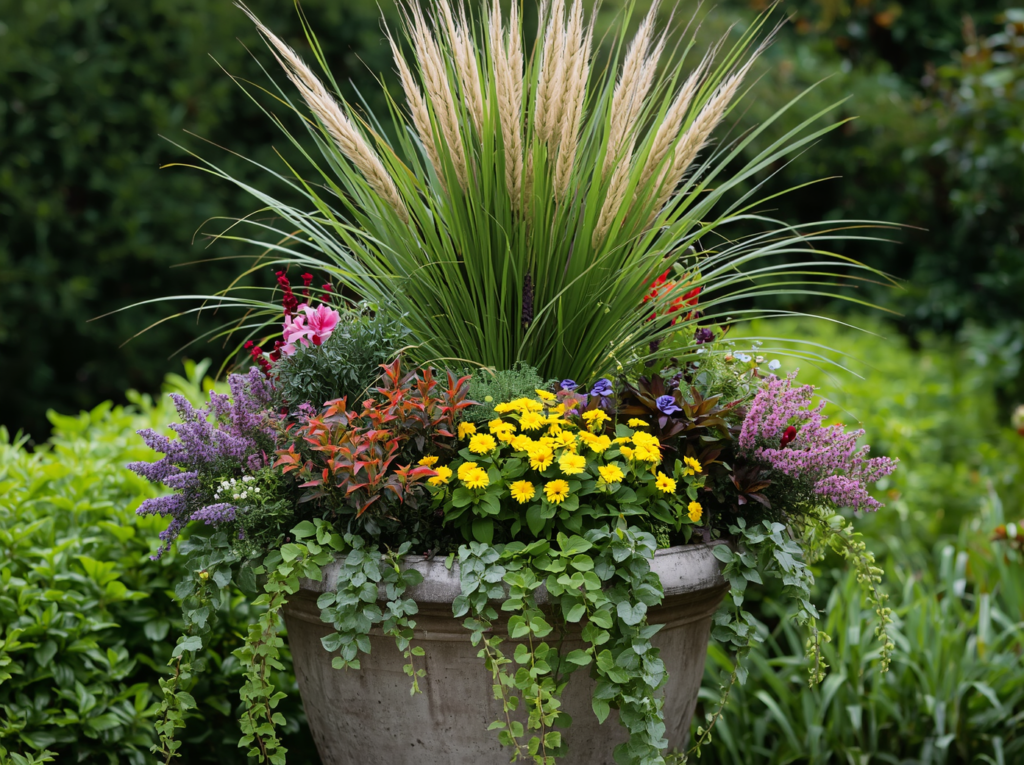
The thriller-filler-spiller formula is the single most useful design principle for creating beautiful containers. Apply it to almost any planting combination for an instantly professional result.
Thriller (30% of the planting):
The tall, dramatic focal point plant that draws the eye and provides height. Examples: ornamental grass, canna lily, cordyline, tall salvia, standard roses, phormium (New Zealand flax), dracaena, tall snapdragons.
Filler (50% of the planting):
Mid-height, bushy plants that fill the container and provide volume, color, and texture. Examples: petunias, begonias, geraniums (pelargoniums), impatiens, calibrachoa, lobularia, marigolds, osteospermum, heuchera.
Spiller (20% of the planting):
Trailing plants that cascade over the edge of the container, softening the hard edge and creating a lush, overflowing look. Examples: trailing lobelia, bacopa, sweet potato vine (Ipomoea), trailing fuchsia, creeping jenny (Lysimachia), million bells (calibrachoa trailing varieties), ivy.
Container Arrangement:
- Round/square containers seen from all sides: place thriller in center
- Containers viewed from one side (against a wall): place thriller at back
- Vary heights to create visual interest across a group of containers
Step 5: Seasonal Planting Plans
Spring Container: Cool-Season Color
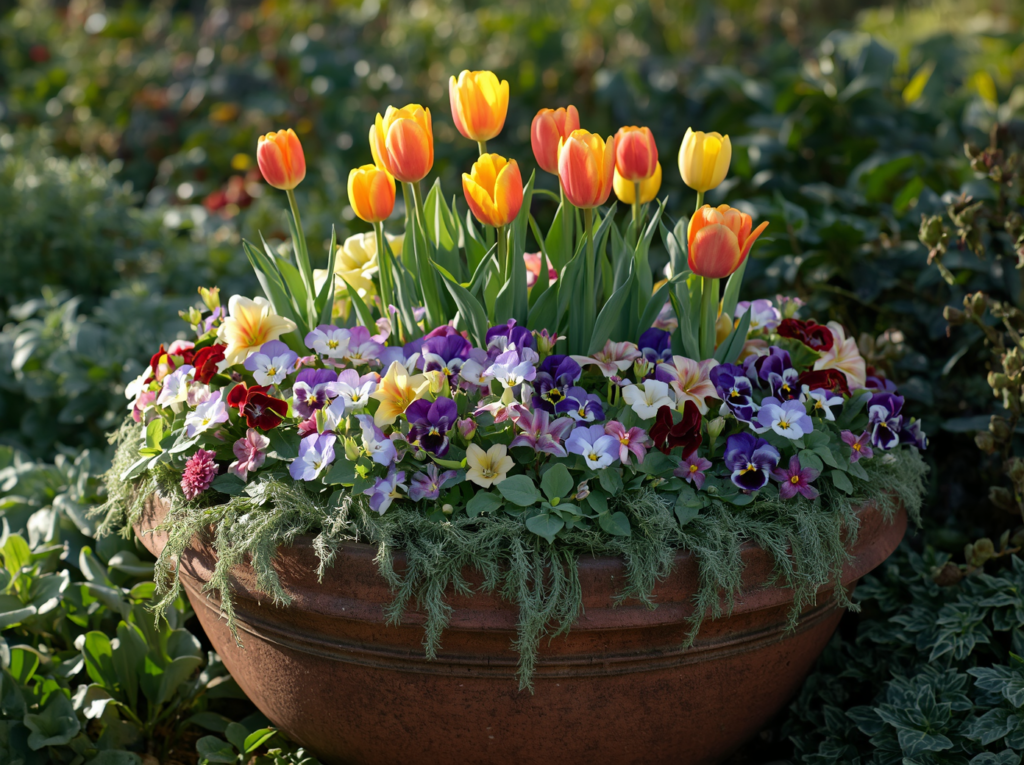
Spring containers shine with cool-season plants that thrive before summer heat arrives. They can be planted in late winter in mild climates or early spring elsewhere.
- Thriller: tall tulips or hyacinths (bulbs planted in fall for spring bloom)
- Filler: pansies, violas, primulas, wallflowers, polyanthus
- Spiller: trailing violas, creeping phlox, ajuga
Spring containers often fade as temperatures rise. Plan to transition them to summer plants in late spring.
Summer Container: Maximum Color Impact
Summer is the peak season for container gardens. The selection of annuals available is extraordinary, and with adequate watering and feeding, summer containers provide continuous color for months.
- Thriller: canna lily, ornamental grass, phormium, standard fuchsia, tall verbena
- Filler: petunias, geraniums, begonias, osteospermum, diascia, verbena
- Spiller: bacopa, trailing lobelia, sweet potato vine, trailing fuchsia
Key Success Factor:
Summer containers need feeding every 7–14 days with a high-potassium liquid fertilizer (tomato feed works well) to sustain the heavy flowering. Without regular feeding, flowering declines rapidly after the first flush.
Fall Container: Warm Tones and Texture
Fall containers celebrate the season with warm colors, interesting textures, and a more structural approach as summer annuals fade.
- Thriller: ornamental grasses (pennisetum, cortaderia), tall leucothers, tall ornamental kale
- Filler: chrysanthemums, asters, rudbeckia, ornamental kale and cabbage, heuchera
- Spiller: ivy, creeping jenny, winter pansies
Winter Container: Structure and Evergreen
Winter containers rely on structure, texture, and evergreen foliage rather than flowers. They can be beautiful for months with minimal maintenance.
- Thriller: small conifer (Picea glauca ‘Conica’), holly, small standard bay tree
- Filler: winter heather, cyclamen, evergreen grasses, skimmia
- Spiller: trailing ivy, euonymus, winter pansies
Step 6: Watering Container Gardens
Containers dry out far more quickly than garden beds — sometimes needing daily watering in summer heat. This is the most demanding aspect of container gardening, and understanding how to manage it efficiently is key.
How Often to Water:
Check daily in summer by pushing a finger into the soil. Water when the top inch is dry for most plants; allow 2 inches to dry for drought-tolerant plants like lavender and sedums. In hot weather with full sun, large containers may need watering twice daily.
Water-Saving Strategies:
- Water-retaining gel crystals mixed into potting mix — swell to retain moisture
- Self-watering containers with reservoirs — significantly reduces frequency
- Mulching the soil surface with gravel or fine bark — reduces evaporation by up to 30%
- Drip irrigation or soaker hose systems with timers — ideal for large collections
- Grouping containers together — reduces drying from wind and conserves moisture
Step 7: Feeding Container Gardens
Plants in containers are entirely dependent on you for nutrition — unlike garden plants whose roots can explore wide areas of soil. Container nutrients deplete quickly through watering and plant uptake.
Feeding Options:
- Slow-release granules mixed into potting mix at planting (Osmocote or similar) — provides nutrition for 4–6 months; simplest approach
- Liquid feeds applied weekly or bi-weekly — more control; adjust to plant needs
- High-potassium feed (tomato feed) for flowering plants — promotes flower production
- Balanced NPK (20-20-20) for foliage plants and young plants establishing roots
Plant Combination Ideas by Style
Elegant Mediterranean:
Lavender + rosemary + trailing rosemary + sedum — drought-tolerant; fragrant; blue-gray-green palette. Perfect for a sunny, dry patio.
Tropical Exuberance:
Canna lily (red/orange) + coleus (rich burgundy) + sweet potato vine (black/purple) + trailing bacopa — bold, dramatic; needs full sun and regular watering.
Cottage Garden Romance:
Standard rose + dianthus + trailing lobelia + creeping jenny — classic, fragrant; soft pink and blue palette.
Modern Architectural:
Phormium (black/bronze) + ornamental grass + hebe + trailing ajuga — sleek lines; year-round structure; low maintenance.
Wildlife-Friendly Pollinator Pot:
Salvia ‘Hot Lips’ + lavender + verbena bonariensis + trailing thyme — attracts bees, butterflies, and hummingbirds; easy care; fragrant.
Container gardening offers complete creative freedom — you can change the design with every season, experiment with combinations, grow plants that don’t suit your garden soil, and create stunning displays in the smallest spaces. Start with one well-designed container using the thriller-filler-spiller formula, a quality potting mix, and a consistent feeding and watering routine. Once you experience the satisfaction of a thriving, beautiful container garden, you’ll find it very hard to stop at just one.