
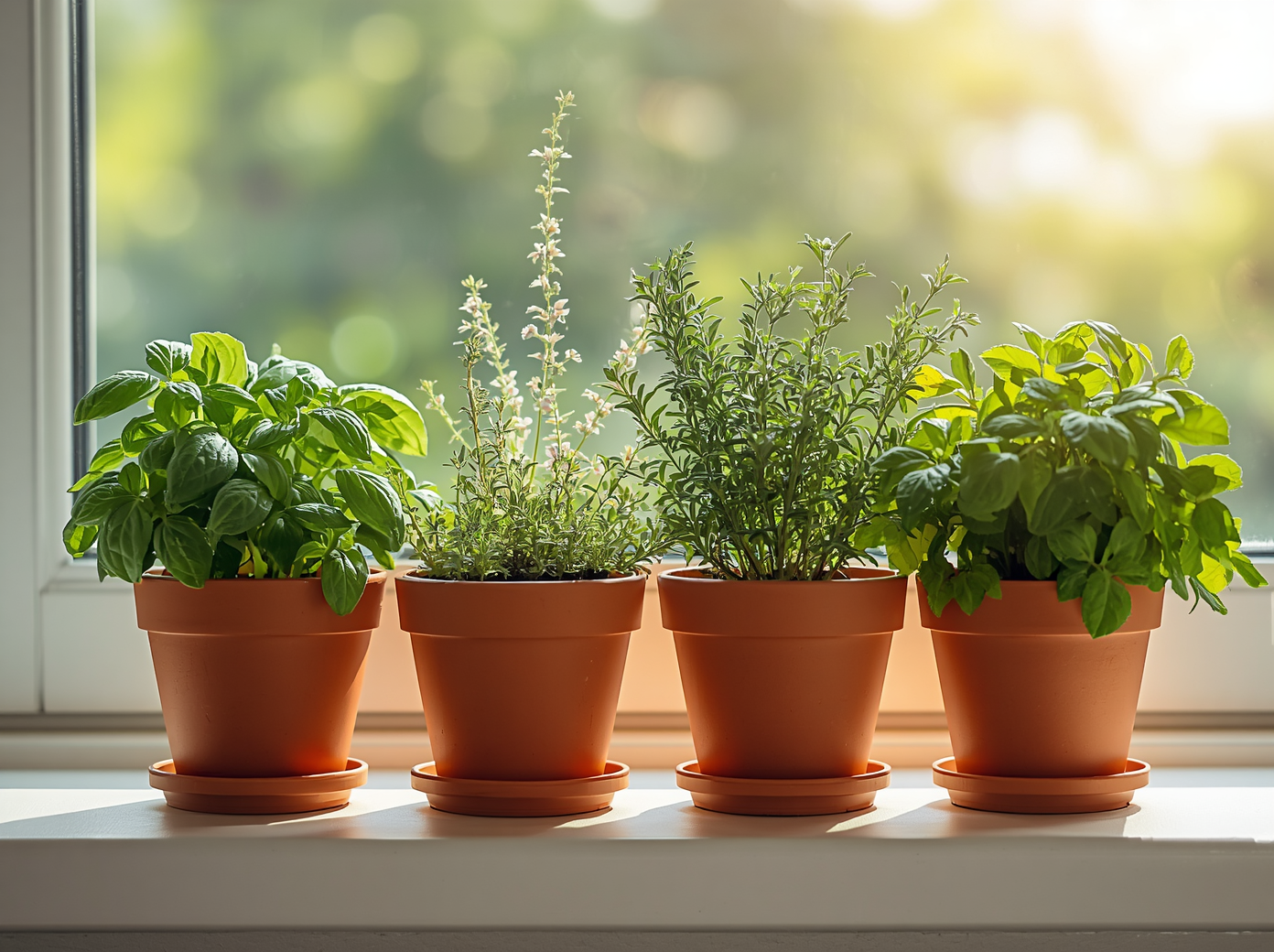
Growing your own herbs is one of the most immediately rewarding forms of gardening. Within weeks of planting, you’re harvesting fresh basil for pasta, snipping rosemary for roasted chicken, or tearing mint leaves for tea. Fresh herbs taste dramatically better than dried ones, they’re expensive to buy repeatedly, and the plants themselves are beautiful, fragrant additions to any kitchen or garden.
The best news for beginners: herbs are forgiving, grow quickly, and many thrive in containers on a kitchen windowsill. You don’t need a garden — just a sunny spot and some basic knowledge.
Indoor vs. Outdoor Herb Gardening
Indoor Herb Gardens
Indoor herb gardens work best for culinary herbs you use frequently. The key requirement is light — most culinary herbs need 6+ hours of direct sun, which means you need a south-facing window or a grow light. Without adequate light, herbs grow leggy and produce fewer, less flavorful leaves.
Outdoor Herb Gardens
Outdoors, herbs have access to full sun, natural rainfall, and better air circulation — producing more vigorous growth and more intensely flavored leaves. Most culinary herbs can be grown outdoors from spring through fall in temperate climates, and year-round in frost-free zones.
Best of Both Worlds:
Plant herbs in containers that you can move between indoor and outdoor positions seasonally — inside on the kitchen sill in winter, outside on the patio or balcony from spring through fall.
The 10 Best Herbs to Start With
1. Basil — The Summer Herb
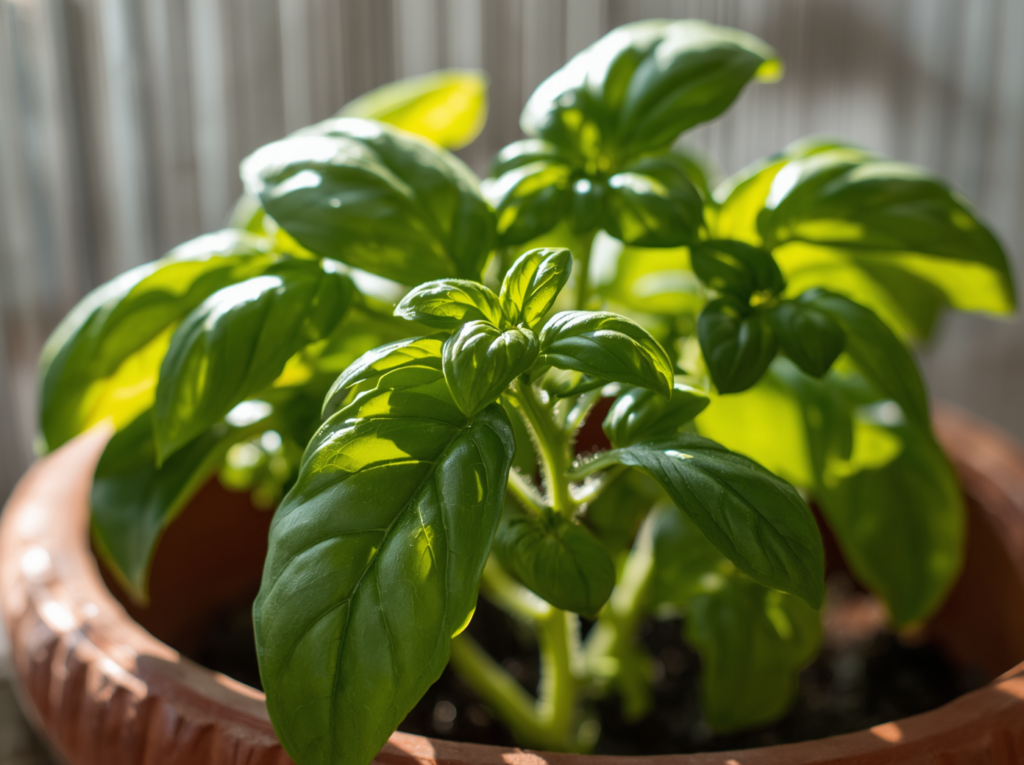
Basil is the essential kitchen herb — the foundation of pesto, the companion to tomatoes, the finishing touch on pizza and pasta. It’s a fast-growing annual that thrives in heat and full sun, making it ideal for summer gardens and south-facing windowsills.
Care Essentials:
- Light: Full sun (6+ hours) — essential; basil in shade becomes leggy and tasteless
- Water: Keep consistently moist; wilts quickly but recovers fast when watered
- Harvest: Pinch off the top 2-3 sets of leaves regularly to prevent flowering
- Key tip: Once basil flowers (bolts), leaf production slows and flavor decreases — pinch flower buds as soon as they appear
Popular Varieties:
- Sweet basil (Genovese) — classic; large leaves; best for pesto
- Thai basil — smaller leaves; licorice flavor; heat-tolerant
- Purple basil — striking color; slightly spicier flavor; beautiful in containers
- Lemon basil — citrus notes; excellent with fish and light salads
2. Mint — The Prolific Producer
Mint is one of the easiest herbs to grow — almost too easy. It spreads aggressively via underground runners and will take over a garden bed if given the chance. The solution: always grow mint in containers. A pot of mint on a kitchen windowsill provides an endless supply for teas, cocktails, desserts, and cooking.
Care Essentials:
- Light: Full sun to partial shade — tolerates lower light better than most culinary herbs
- Water: Keep consistently moist; mint loves water
- Containment: Always plant in a pot, never directly in a garden bed
- Harvest: Cut stems to just above a leaf node; it regrows vigorously
Key Varieties:
- Spearmint — classic flavor; best for cooking and drinks
- Peppermint — intensely cooling; excellent for tea and desserts
- Chocolate mint — dessert-like aroma; lovely for garnishes
- Apple mint — mild, fruity; beautiful fuzzy leaves
3. Rosemary — The Evergreen Culinary Shrub
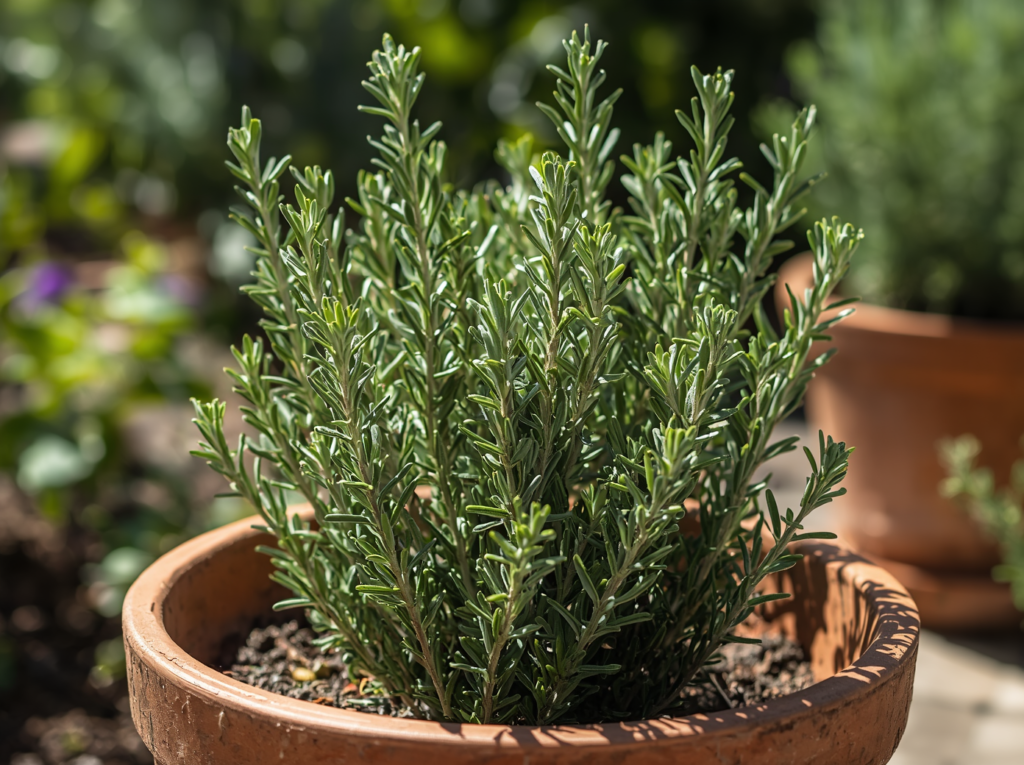
Rosemary is a Mediterranean herb that evolved on rocky, sun-drenched hillsides. It’s drought-tolerant once established, evergreen (keeps its leaves year-round in mild climates), and wonderful with roasted meats, breads, and potatoes. Indoors, it needs the absolute sunniest spot you have.
Care Essentials:
- Light: Full sun — the more the better
- Water: Allow soil to dry significantly between waterings; overwatering is the main killer
- Soil: Well-draining; add grit or perlite to standard potting mix
- Cold hardiness: Hardy to USDA Zone 7 (-10°C / 14°F)
4. Thyme — The Low-Maintenance Flavor Powerhouse
Thyme is extraordinarily useful in the kitchen — essential for stocks, soups, roasted meats, eggs, and marinades — and equally low-maintenance. Like rosemary, it’s Mediterranean by origin and thrives on neglect, poor soil, and full sun. It’s one of the best herbs for beginners.
Care Essentials:
- Light: Full sun (4–6 hours minimum)
- Water: Allow to dry slightly between waterings; drought-tolerant once established
- Harvest: Trim regularly to prevent woodiness; take no more than 1/3 of the plant at once
- Varieties: Common thyme, lemon thyme, creeping thyme (ground cover)
5. Chives — The Fast and Easy Onion Flavor
Chives are one of the first herbs to emerge in spring and among the last to die back in fall. They grow in neat clumps of slender, hollow green leaves with a mild onion-garlic flavor, and produce beautiful edible purple-pink flowers in early summer. They’re completely cold-hardy and virtually pest-free.
Care Essentials:
- Light: Full sun to partial shade
- Water: Regular moisture; more forgiving than most herbs
- Harvest: Cut leaves to 1-2 inches above soil level; entire clump regrows
- Propagation: Divide clumps every 2–3 years to maintain vigor
6. Parsley — Biennial Kitchen Essential
Parsley is a biennial (living two years) that’s typically grown as an annual. It’s rich in vitamins C and K, has a bright, clean flavor that enhances nearly every savory dish, and is one of the most versatile garnishes in the kitchen. Italian flat-leaf parsley has better flavor than curly; curly is more decorative.
Care Essentials:
- Light: Full sun to partial shade
- Water: Keep consistently moist; dislikes drying out
- Note: Slow to germinate from seed (3–4 weeks); buying transplants is easier for beginners
- Second-year plants flower and set seed before dying — allow some to self-seed
7. Cilantro / Coriander — The Bolting Challenge
Cilantro (the leaves) and coriander (the seeds) come from the same plant — Coriandrum sativum. It’s one of the world’s most used herbs but also one of the trickiest: it bolts (goes to flower and seed) rapidly in heat, especially in summer. The trick is successive sowing — plant a new batch every 3–4 weeks for continuous supply.
Care Essentials:
- Light: Full sun to partial shade
- Temperature: Cool weather is best (spring and fall); bolts rapidly in summer heat
- Sow direct: Cilantro dislikes transplanting; always sow direct where it will grow
- Harvest: Cut outer leaves; allow some to go to seed for coriander spice
8. Dill — The Feathery Aromatic
Dill’s feathery, delicate fronds have a distinctive anise-like flavor perfect for fish, pickles, potatoes, and salads. It grows tall (up to 3–4 feet) and produces beautiful yellow flower umbels that are also edible and attractive to beneficial insects.
9. Oregano — Drought-Tolerant and Flavorful
Mediterranean oregano is intensely aromatic and drought-tolerant — it actually develops more concentrated flavor in poor, dry conditions. It’s essential for Italian and Greek cooking, pizza, and tomato sauces. Like thyme and rosemary, it prefers lean soil and full sun over rich, moist conditions.
10. Lavender — Beautiful, Fragrant, and Useful
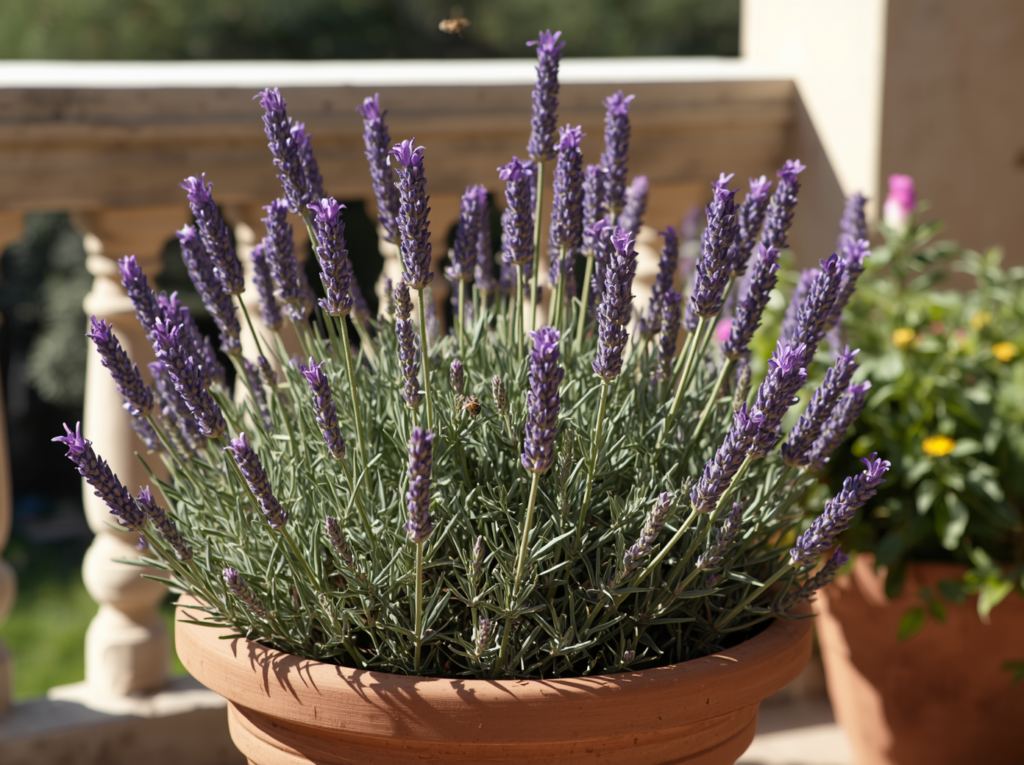
Technically a shrub rather than an annual herb, lavender is included because it bridges the gap between culinary herb, fragrant plant, and garden ornamental. It’s used in cooking (lavender sugar, desserts, cocktails), aromatherapy, and as a cut flower. It thrives in dry, sunny, well-draining conditions.
Container vs. In-Ground Herb Growing
Container Growing Advantages:
- Mobile — can be moved to follow sun or brought indoors for winter
- Containment — essential for invasive herbs like mint
- Better drainage control — critical for Mediterranean herbs
- Pest management — easier to inspect and treat
Best Containers for Herbs:
- Terracotta — breathable; prevents overwatering; traditional aesthetic
- Self-watering planters — excellent for basil and parsley that like consistent moisture
- Window boxes — space-efficient for multiple herbs on balconies and sills
The minimum container size for most herbs is 6 inches in diameter, with drainage holes. Mint and basil appreciate 8–10 inch pots.
Harvesting Herbs for Maximum Yield
The 1/3 Rule
Never remove more than 1/3 of the plant at a single harvest. This allows the plant to maintain enough foliage for photosynthesis and recover quickly for the next harvest.
Harvest in the Morning
Essential oil content — which determines flavor intensity — is highest in the morning after dew has dried. Herbs harvested mid-morning on a dry day have the best flavor.
Pinch, Don’t Tear
Always use clean scissors or pinch with fingernails just above a leaf node. Clean cuts heal faster and encourage branching, producing a bushier plant with more harvesting points.
An herb garden is one of the most practical and satisfying forms of gardening. Start with three or four of your most-used culinary herbs, learn their rhythms, and expand as your confidence grows. Within a season, you’ll be harvesting fresh herbs daily — and wondering how you ever cooked without them.