
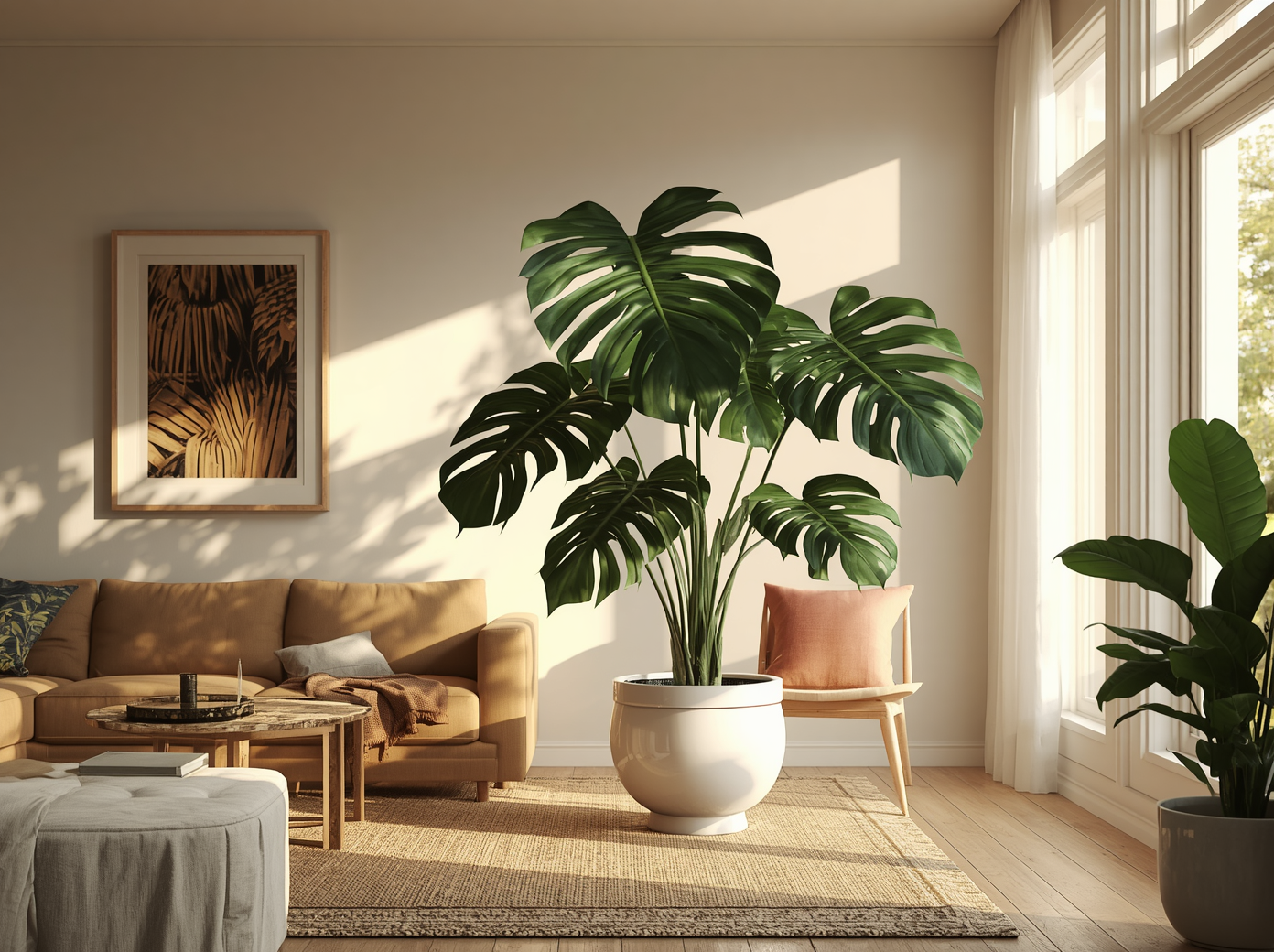
Few houseplants have achieved the cultural icon status of Monstera deliciosa. With its dramatic, split leaves — each one a natural work of art — and rapid growth that rewards attentive care, it’s no wonder this tropical plant dominates social media feeds, interior design magazines, and plant collections worldwide.
But beneath the Instagram aesthetics lies a plant with specific needs. Get the care right and Monstera grows into a magnificent specimen that can reach the ceiling. Get it wrong and those iconic leaves will be small, split-free, and disappointing. This guide covers everything.
Understanding Monstera Deliciosa: Origins and Natural Habitat
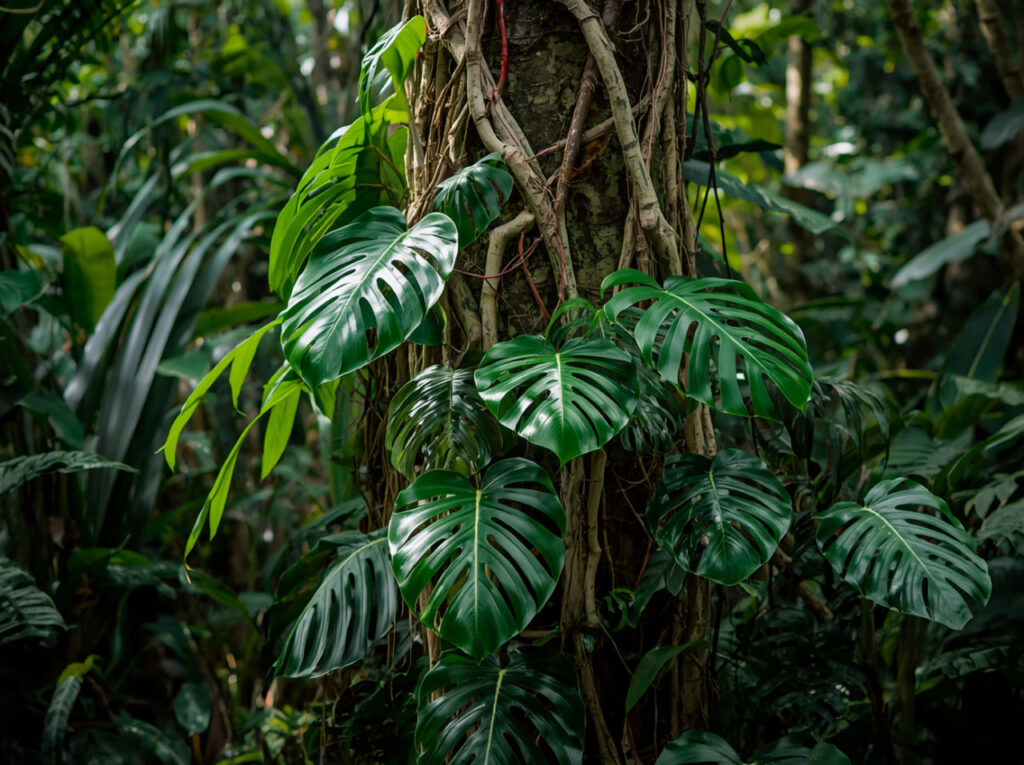
Monstera deliciosa is native to the tropical rainforests of Central America, from southern Mexico to Panama. In the wild, it’s a hemi-epiphytic climbing vine — beginning life on the forest floor and then climbing trees using aerial roots, eventually reaching the forest canopy.
This origin tells us everything about its care needs: it’s adapted to warm, humid conditions with bright, indirect light filtered through the forest canopy; well-draining yet moisture-retentive soil rich in organic matter; and something to climb.
Why Do Monstera Leaves Split?
The iconic fenestrations (holes and splits in the leaves) are believed to help the plant survive tropical storms — wind passes through the gaps rather than tearing the leaves. They also allow lower leaves to receive dappled light filtering through the upper canopy. Young monsteras produce solid, unsplit leaves; fenestrations develop with age and are more pronounced in high-light, well-nourished plants.
Light Requirements
Monstera thrives in bright, indirect light — the equivalent of being a few feet back from a south or west-facing window. This is their sweet spot: enough light for vigorous growth and large, fenestrated leaves, but not so intense that the leaves scorch.
Light Scenarios:
- Ideal: 2–5 feet from a south or west-facing window with a sheer curtain
- Acceptable: 5–10 feet from a bright window; growth will be slower
- Too dark: narrow hallways, north-facing rooms with small windows
- Too bright: direct hot sun through unfiltered glass bleaches and burns leaves
Signs of insufficient light: new leaves emerge small and without fenestrations; the plant grows slowly; petioles (leaf stems) become abnormally long as the plant stretches toward light.
Signs of too much direct sun: pale yellow or bleached patches on leaves; crispy brown areas; leaves curl to reduce exposure.
Watering Monstera
Monstera likes consistently moist (but not wet) soil. The general guideline is to water when the top 1–2 inches of soil are dry — roughly every 1–2 weeks in summer and every 2–3 weeks in winter.
The Correct Watering Method:
- Water slowly and thoroughly until water flows from drainage holes
- Wait for excess water to drain completely, then empty the saucer
- Check soil moisture with your finger before every watering
- Never let Monstera sit in water — root rot develops quickly
Seasonal Adjustment:
Monstera grows actively from spring through early fall. During this period, it needs more frequent watering. In winter, when growth slows dramatically, reduce watering frequency by approximately half.
Water Quality:
Monstera can be sensitive to fluoride and chlorine in tap water, which can cause brown leaf tips. If your tap water is heavily chlorinated, let it sit overnight before using it to allow chlorine to dissipate, or use filtered water.
Soil and Potting
Monstera needs a well-draining yet moisture-retentive mix — it can’t tolerate waterlogged soil but also shouldn’t dry out completely between waterings.
Ideal DIY Mix:
- 40% high-quality potting mix (provides nutrition and moisture retention)
- 30% perlite (improves drainage and aeration)
- 20% orchid bark or coco coir (drainage and organic texture)
- 10% worm castings (provides slow-release nutrition)
Repotting:
Repot every 1–2 years in spring when roots start emerging from drainage holes or circling the pot. Move up only one pot size at a time — too large a pot holds excess moisture and invites root rot.Humidity and Temperature
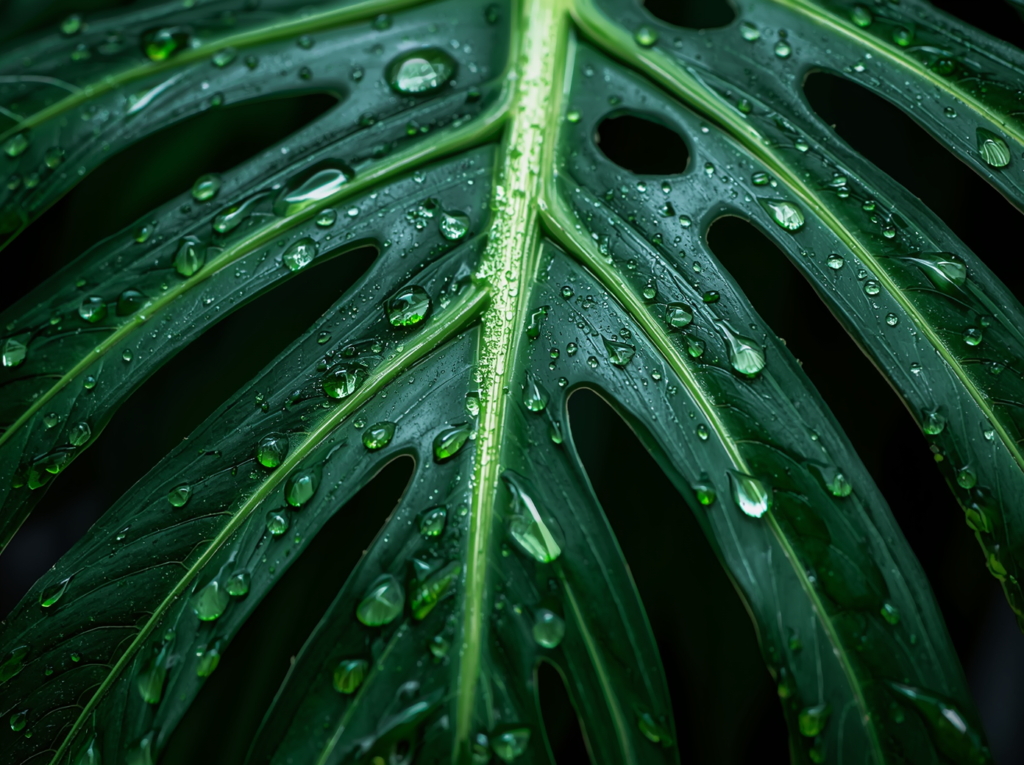
Humidity:
Ideal humidity for Monstera is 60–80% — considerably higher than average indoor humidity (typically 30–50%). While Monstera will grow at lower humidity levels, higher humidity promotes faster growth, larger leaves, and prevents brown leaf edges.
How to Increase Humidity:
- Humidifier (most effective method) — maintain 60%+ near the plant
- Pebble tray with water — provides modest humidity boost immediately around the plant
- Grouping plants together — creates a humid microclimate
- Bathroom or kitchen placement — naturally higher humidity rooms
Temperature:
Monstera thrives between 65°F and 85°F (18°C–29°C). Keep away from cold drafts, air conditioning vents, and temperatures below 50°F (10°C), which cause chill damage and blackened leaves.
Fertilizing
Monstera is a relatively heavy feeder during its growing season. Use a balanced, water-soluble fertilizer (such as a 20-20-20 or specifically formulated houseplant fertilizer) diluted to half strength.
Fertilizing Schedule:
- Spring and summer: once every 2–4 weeks
- Fall: reduce to once per month
- Winter: stop fertilizing entirely — plants in dormancy can’t absorb excess nutrients
Signs of Nutrient Deficiency:
- Yellowing leaves with green veins: iron or manganese deficiency (check soil pH — may be too alkaline)
- Overall pale, washed-out appearance: nitrogen deficiency (general fertilizer needed)
- Slow growth + small leaves: overall nutrient deficiency or root-bound conditions
Supporting Your Monstera: Moss Poles and Trellises
In nature, Monstera climbs trees. Providing a support structure isn’t just aesthetically pleasing — it actively improves the plant’s health and leaf size. When Monstera’s aerial roots find something to grip (especially a moist moss pole), the plant redirects energy toward producing larger, more fenestrated leaves.
Support Options:
- Moss pole (coco coir or sphagnum moss wrapped around a PVC pipe): most effective; keeps aerial roots moist; promotes faster growth
- Wooden stake or bamboo cane: functional but doesn’t engage aerial roots
- Trellis or wire frame: good for flat wall displays
Attach the main stem to the support loosely with soft plant ties, and guide aerial roots toward the moss pole. Mist the moss pole regularly to keep it moist — the aerial roots will anchor themselves over time.
Propagation
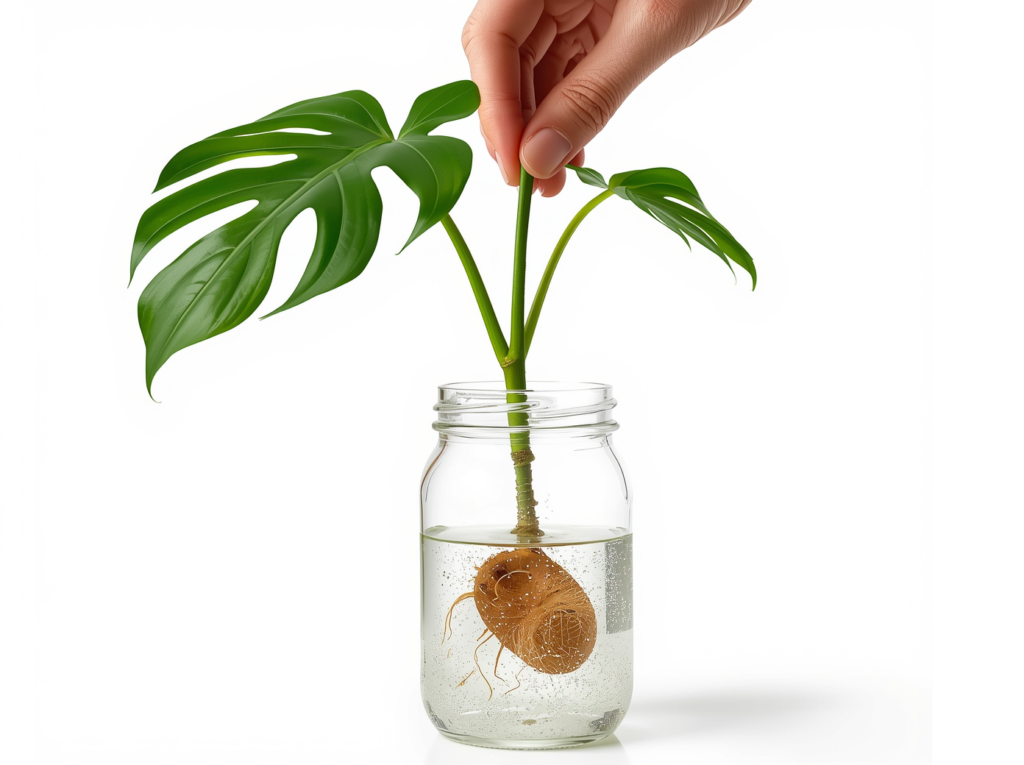
Monstera propagates most easily by stem cuttings. For best results, ensure each cutting includes at least one node and ideally an aerial root.
Water Propagation Method:
- Identify a healthy stem section with a node and at least one leaf
- Cut cleanly just below the node using sterilized scissors
- Remove any leaves that would sit in water
- Place in a clear jar or vase with room-temperature water
- Keep in bright, indirect light; change water weekly
- Roots appear in 3–6 weeks; transplant to soil when roots reach 2+ inches
Soil Propagation Method:
- Take cutting as above and allow to callus for 1–2 hours
- Plant in moist, well-draining propagation mix
- Maintain high humidity (cover with plastic bag or propagator)
- Roots form in 4–8 weeks; new growth indicates successful rooting
Troubleshooting Common Monstera Problems
Yellow Leaves
The most common cause is overwatering — check soil moisture and root health. Other causes include poor drainage, insufficient light, nutrient deficiency, or natural aging of lower leaves.
Brown Leaf Tips and Edges
Usually indicates low humidity, fluoride sensitivity in tap water, or underwatering. Improve humidity, use filtered water, and ensure the soil never dries out completely.
No Fenestrations (No Splits)
Young plants naturally produce uncut leaves; fenestrations develop with maturity. In mature plants, lack of fenestration indicates insufficient light — move closer to your brightest window.
Drooping Leaves
Drooping in otherwise healthy plants usually means the plant needs water. If soil is already moist, the cause could be root rot or a temperature shock.
Monstera Varieties Worth Knowing
- M. deliciosa ‘Albo Variegata’ — rare white variegation; highly sought after; expensive
- M. deliciosa ‘Thai Constellation’ — cream-speckled variegation; tissue culture; more stable
- M. adansonii — smaller leaves with oval holes; faster growing; excellent in hanging baskets
- M. obliqua — rare; paper-thin leaves with massive holes; collector’s item
- Rhaphidophora tetrasperma — often called ‘mini monstera’; smaller, faster-growing; not a true monstera