
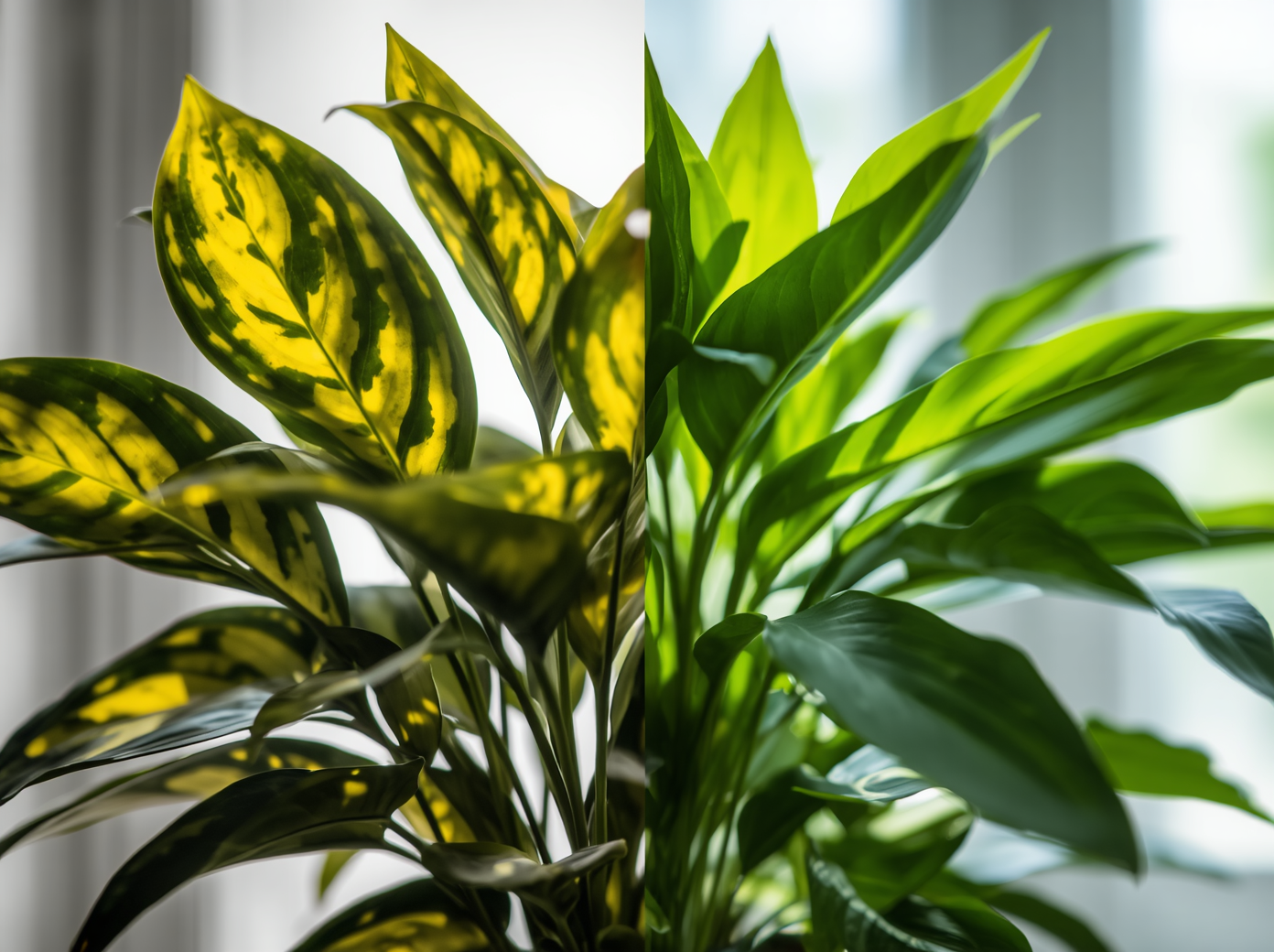
Even the most dedicated plant parents occasionally face sick plants. Drooping leaves, mysterious spots, unusual discoloration, or sudden decline can indicate disease — and early identification is everything. Catch a problem in its early stages and most plants can be fully recovered. Ignore the signs and what started as a minor fungal issue can spread and kill an otherwise healthy collection.
This guide covers the 10 most common houseplant diseases — what causes them, how to identify them, and exactly how to treat them.
1. Root Rot — The Silent Killer
What Causes It:
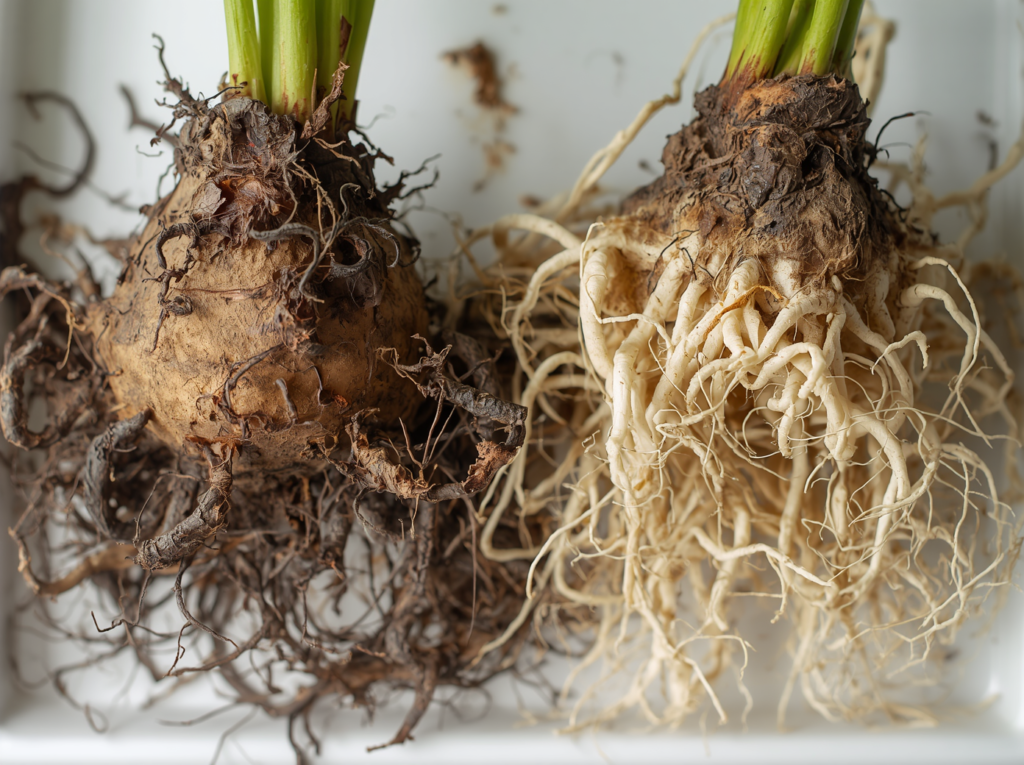
Root rot is caused primarily by overwatering combined with poorly draining soil. When roots sit in waterlogged soil, oxygen is depleted and opportunistic fungi (primarily Phytophthora, Pythium, and Rhizoctonia species) proliferate, attacking and destroying root tissue.
How to Identify It:
- Wilting despite moist soil (plant looks thirsty even after watering)
- Yellowing lower leaves that fall off readily
- Mushy, brown, or black stem base
- Foul, sour odor from the soil
- When removed from pot: brown, mushy roots instead of firm, white healthy roots
Treatment:
- Remove the plant from its pot and gently wash roots under lukewarm water
- Trim all affected roots with sterilized scissors until only firm, white roots remain
- Dust cut ends with sulfur powder or cinnamon (natural antifungals)
- Repot in fresh, well-draining mix in a clean pot with drainage holes
- Do not water for 5–7 days to allow roots to stabilize
Prevention:
Root rot is entirely preventable. Always use pots with drainage holes, use well-draining soil appropriate to the plant species, and follow the ‘soil check’ method before watering — push a finger 1–2 inches into soil; water only when it’s dry.
2. Powdery Mildew — The White Coating
What Causes It:
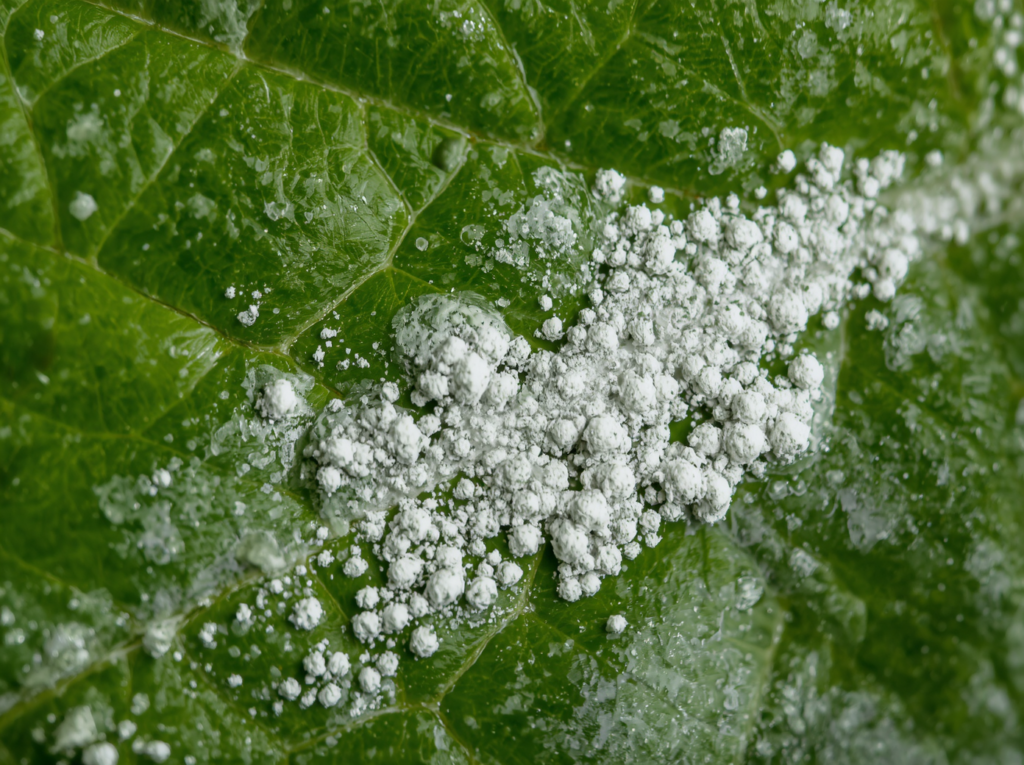
Powdery mildew is caused by various fungal species (commonly Erysiphe, Sphaerotheca) that thrive in conditions of high humidity combined with poor air circulation. It’s most common in densely packed plant collections and in rooms without adequate ventilation.
How to Identify It:
- White or gray chalky/powdery coating on leaf surfaces (top side primarily)
- Leaves may curl, yellow, or develop brown edges as infection progresses
- Most commonly affects begonias, African violets, cucurbits, and roses
Treatment:
- Remove severely affected leaves and dispose of (not compost)
- Mix 1 tablespoon of baking soda + 1/2 teaspoon liquid soap + 1 quart of water; spray weekly
- Neem oil spray (1 teaspoon neem oil + 1/2 teaspoon dish soap + 1 quart water) is highly effective
- Commercial fungicides containing potassium bicarbonate or sulfur work for severe cases
Prevention:
- Improve air circulation — space plants further apart, use fans
- Water at soil level; avoid wetting foliage
- Avoid over-fertilizing with nitrogen, which promotes succulent new growth that mildew loves
3. Leaf Spot Diseases — Fungal and Bacterial
Leaf spot is a broad category covering both fungal (Cercospora, Alternaria, Septoria) and bacterial (Xanthomonas, Pseudomonas) pathogens. While similar in appearance, they require slightly different treatments.
How to Identify It:
- Fungal leaf spot: circular or irregular brown/tan spots with distinct yellow halos; may have dark spore masses in the center
- Bacterial leaf spot: water-soaked (translucent), greasy-looking spots that turn brown; no spore masses; often follows leaf margins
Treatment:
- Remove and destroy affected leaves — do not compost
- Fungal: treat with copper-based fungicide or neem oil spray every 7–10 days
- Bacterial: no chemical cure; remove affected tissue; improve airflow; reduce leaf wetting
- Always sterilize tools between plants to prevent spread
4. Gray Mold (Botrytis) — The Fuzzy Gray Rot
Botrytis cinerea is one of the most common fungal pathogens of houseplants and garden plants alike. It attacks damaged, dead, or dying tissue first, then spreads to healthy plant material. It’s most active in cool, humid, low-light conditions.
How to Identify It:
- Gray, fuzzy mold growth on leaves, stems, flowers, or fruit
- Tissue becomes soft and brown beneath the mold
- Spores spread easily as a visible gray ‘smoke’ cloud when disturbed
Treatment:
- Remove all affected material immediately and dispose of carefully
- Improve air circulation and reduce humidity around the plant
- Apply copper fungicide or botrycide spray
- Avoid overhead watering and wounding plants
5. Anthracnose — Dark Sunken Lesions
Anthracnose is a group of fungal diseases (Colletotrichum, Gloeosporium) causing dark, sunken lesions on leaves, stems, and fruit. It’s particularly common on peace lilies, palms, aroids, and tropical plants.
How to Identify It:
- Dark brown to black, sunken, irregularly shaped lesions
- Lesions often start at leaf tips or margins and spread inward
- Tiny salmon-pink or orange spore masses may appear in wet conditions
Treatment:
- Remove affected leaves with sterilized scissors
- Apply copper fungicide or neem oil every 7–14 days
- Reduce leaf wetness and improve air circulation
6. Sooty Mold — The Black Coating
Sooty mold isn’t technically a plant disease — it’s a secondary condition caused by insect infestations. When sap-sucking insects (aphids, scale, mealybugs, whiteflies) excrete honeydew on plant surfaces, sooty mold fungi colonize the sticky residue, coating leaves in black.
How to Identify It:
- Black, sooty coating on upper leaf surfaces
- Wipes off relatively easily (unlike powdery mildew which is more embedded)
- Usually accompanied by visible insect pests on stems and leaf undersides
Treatment:
The key is eliminating the underlying insect problem. Treat the infestation with appropriate insecticide (neem oil, insecticidal soap, or systemic insecticide for severe cases), then wipe sooty mold from leaves with a damp cloth mixed with a small amount of dish soap.
7. Fusarium Wilt — The Wilting Collapse
Fusarium oxysporum is a soil-dwelling fungus that invades through the roots, colonizes the water-conducting vascular tissue (xylem), and causes progressive wilting that doesn’t respond to watering. It’s devastating because it persists in soil for years.
How to Identify It:
- Progressive wilting that doesn’t improve after watering
- Yellowing of lower leaves, often on one side first
- Brown discoloration visible when stem is cut — vascular tissue shows brown streaks
- Root system appears relatively healthy (unlike root rot)
Treatment:
- No effective chemical cure exists for infected plants
- Remove and destroy severely affected plants — do not compost
- Disinfect pots thoroughly with 10% bleach solution before reuse
- Solarize affected soil if outdoors, or discard potting mix entirely
- Prevention: avoid wounding roots, use pasteurized potting mix, ensure good drainage
8. Crown Rot — At the Base
Crown rot (caused by Sclerotinia and Phytophthora) attacks the crown of the plant — the junction between roots and stem at soil level. It’s particularly common in succulents, African violets, and plants with central rosette structures after overwatering.
How to Identify It:
- Wilting and collapse despite moist soil
- Mushy, discolored tissue at or just below the soil surface
- White, cottony mycelium may be visible at the soil line
Treatment:
- For early cases: remove plant, cut away all affected tissue to healthy growth
- Allow cut sections to dry completely before repotting
- Repot in fresh, sterile, extremely well-draining mix
- Water only from below to keep the crown dry
9. Mosaic Virus — The Mottled Leaves
Mosaic viruses (transmitted primarily by aphids and other sap-sucking insects) cause a distinctive mottled pattern of light and dark green on leaves, sometimes with yellow patches and leaf distortion. Unlike fungal diseases, viruses cannot be treated — only managed.
How to Identify It:
- Mottled, mosaic-like pattern of light and dark areas on leaves
- Leaf distortion, puckering, or stunted growth
- Often accompanied by a history of aphid infestation
Management:
- Remove and destroy heavily infected plants to prevent spread
- Control aphids aggressively — they’re the primary transmission vector
- Wash hands and sterilize tools between plants
- No chemical treatment can cure virus-infected plants
10. Edema — Corky Blisters (Not Actually a Disease)
Edema is a physiological disorder (not caused by a pathogen) where plant cells absorb water faster than they can transpire it, causing cells to rupture and form corky blisters or wart-like outgrowths, usually on lower leaf surfaces. It’s particularly common in succulents, jade plants, and peperomias.
How to Identify It:
- Corky, wart-like bumps on undersides of leaves
- Blisters may appear yellowish initially, then turn brown and corky
- No associated wilting, yellowing, or other signs of infection
Treatment:
- Reduce watering frequency
- Improve light levels — better light improves water use efficiency
- Increase air circulation
- Affected leaves won’t recover but new growth will be clean
General Disease Prevention Principles
Start Clean
Always use fresh, pasteurized potting mix for new plants. Sterilize used pots with diluted bleach solution. Inspect new plants carefully before bringing them home, as nursery plants can carry undetected pests and diseases.
Maintain Good Hygiene
Remove dead and dying leaves promptly — they’re primary sites of disease entry. Sterilize cutting tools between plants. Wash hands before and after working with plants.
Optimize Growing Conditions
Healthy plants in optimal conditions — appropriate light, well-draining soil, proper watering, adequate nutrition — have far greater resistance to disease. Most houseplant diseases are opportunistic: they attack stressed or weakened plants first.