
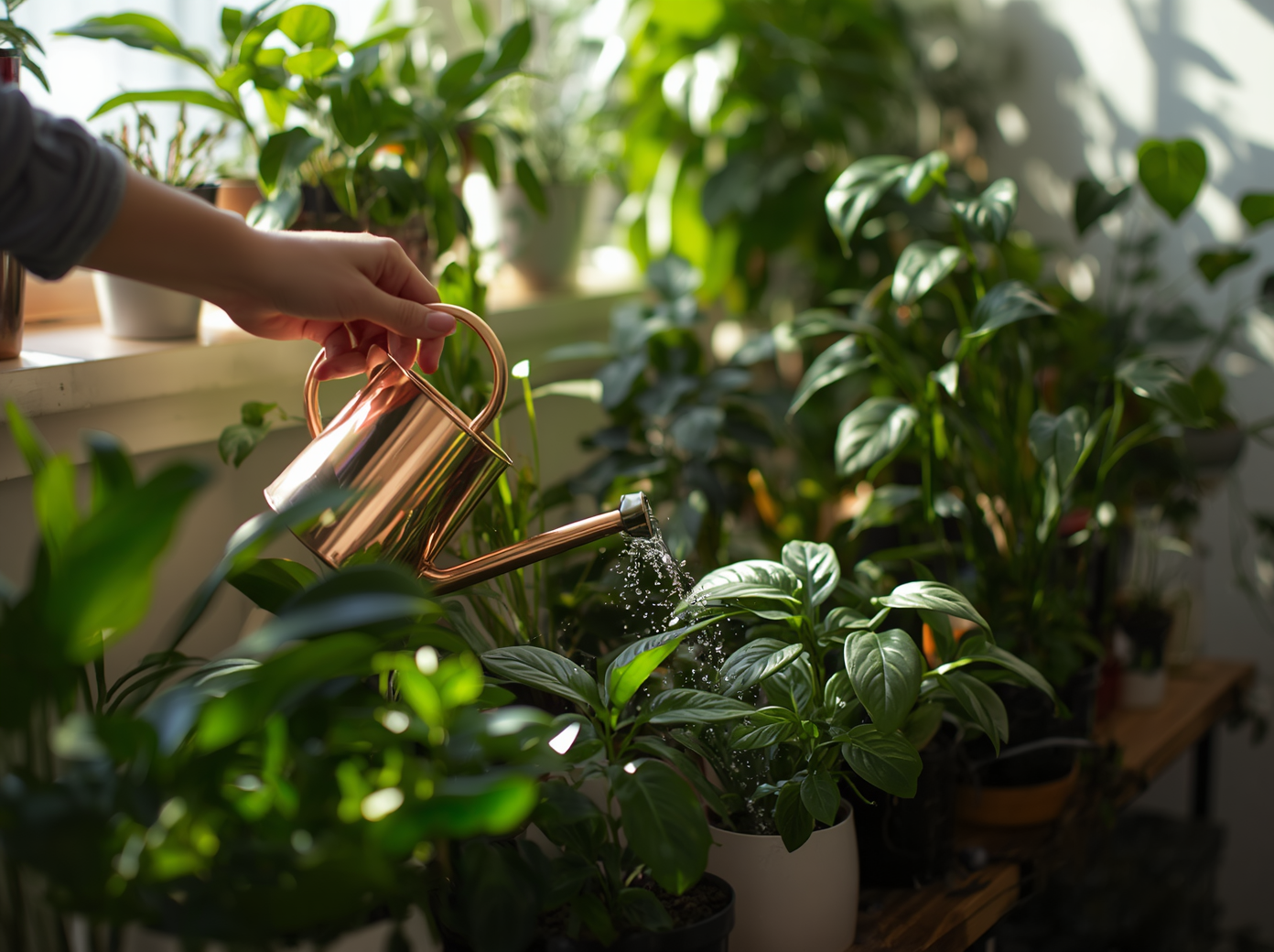
Watering is the single most important and most commonly misunderstood aspect of plant care. More houseplants die from overwatering than from any other cause. Yet underwatering is equally damaging, just slower to show its consequences. The goal is not simply to give plants water; it is to give them the right amount of water at the right time in the right way.
How Plants Actually Use Water
Water serves four primary functions in plants: it transports dissolved nutrients from the soil to cells throughout the plant; it provides turgor pressure that keeps cells rigid (wilting is simply cells losing turgor); it is a reactant in photosynthesis; and it cools the plant through transpiration, the evaporation of water through leaf pores called stomata.
Plants absorb water through root hairs, tiny extensions of root cells that dramatically increase surface area for absorption. For roots to absorb water efficiently, the soil must have the right balance of moisture and oxygen. Overwatered soil becomes anaerobic or oxygen-depleted, suffocating roots and making absorption impossible even when water is plentiful.
Overwatering vs. Underwatering: How to Tell the Difference
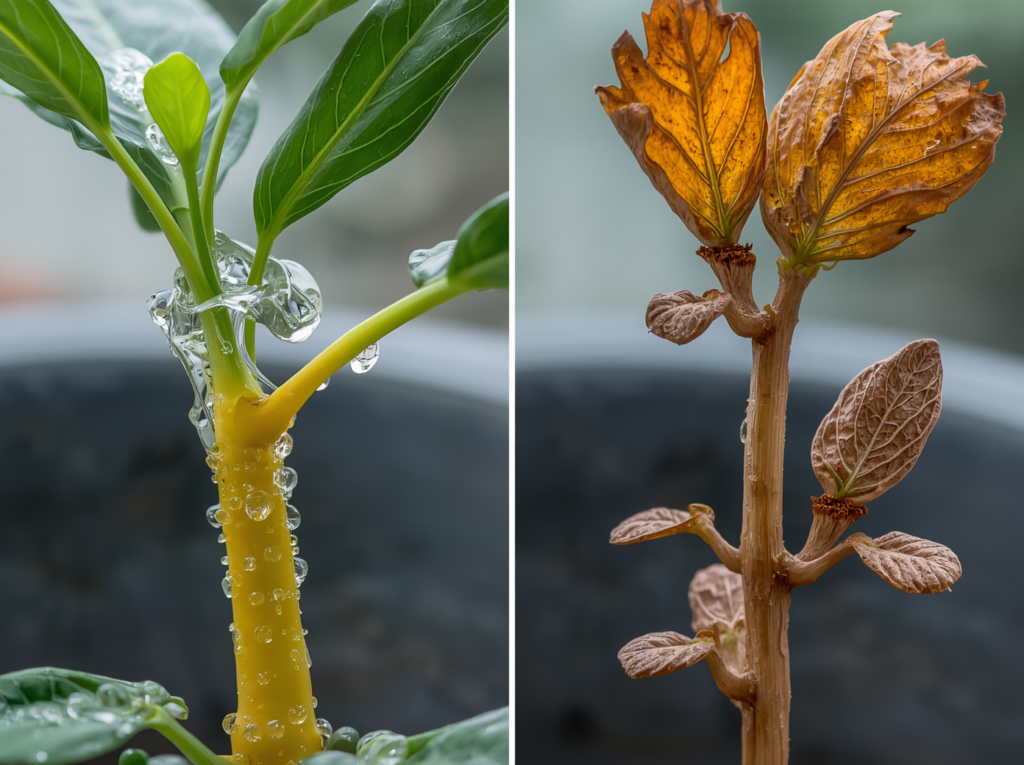
Signs of Overwatering:
- Yellowing leaves, especially lower leaves turning uniformly yellow
- Soft, mushy stems or base, indicating tissue breakdown from root rot
- Leaves dropping while still green and healthy-looking
- Mold or algae on soil surface
- Fungus gnats flying around the pot, which love wet soil for laying eggs
- Roots are brown and mushy when checked; healthy roots are white and firm
- Soil smells sour or unpleasant
Signs of Underwatering:
- Wilting, where leaves and stems lose turgor and droop
- Dry, crispy leaf edges and tips, especially in low-humidity environments
- Leaves curl inward as a water conservation response
- Soil pulls away from pot edges as it shrinks when dry
- Pot feels very light when lifted
- Leaves turn yellow but feel dry and papery, unlike soft overwatering yellowing
The Crucial Distinction:
Both overwatering and underwatering can cause wilting, which confuses many beginners. The key test: check the soil. If the soil is wet and the plant is wilting, it is overwatered because root rot prevents water absorption. If the soil is bone dry, it is underwatered. This simple check prevents the deadly mistake of watering an already overwatered, rotting plant.
The 5 Best Methods to Check Soil Moisture
1. The Finger Test
Push your index finger one to two inches into the soil. If it feels moist, do not water. If it is dry at that depth, water. This is reliable for most medium to large pots and the method most experienced gardeners use instinctively.
2. The Lift Test
Lift the pot. A watered pot is significantly heavier than a dry one. With practice, you will instinctively know whether a pot needs water just by its weight. This is the fastest method once you have developed the feel for it.
3. The Wooden Skewer Test
Insert a wooden chopstick or bamboo skewer into the center of the soil and leave for 60 seconds. Pull out and check: if soil particles stick to it and it feels cool and damp, there is adequate moisture. If it comes out clean and warm, the soil is dry.
4. Moisture Meters
Inexpensive soil moisture meters measure soil moisture on a scale of one to ten. They remove all guesswork and are particularly useful for beginners building intuition. Most plants need watering when the meter reads three to four.
5. Visual Inspection of Soil Color
Moist soil is visibly darker than dry soil. Look at the soil surface and through the drainage hole. Light-colored, pale soil is dry; darker soil retains moisture. This works better for some soil types than others.The Best Watering Techniques
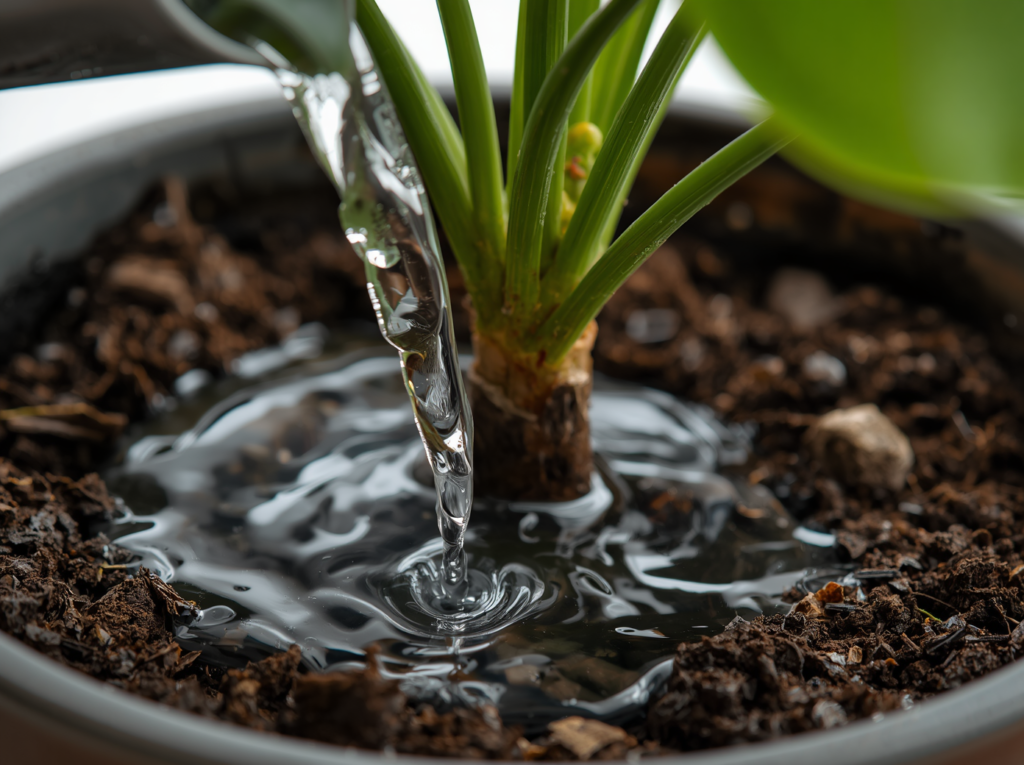
Top Watering (Standard Method)
Pour water slowly and evenly over the soil surface, moving the watering can around to wet the soil uniformly. Water until it flows freely from the drainage hole, confirming the entire root zone has been moistened. Wait 30 minutes then empty the saucer.
Key point: water slowly. Pouring too fast causes channeling where water finds the path of least resistance through cracks in the soil rather than soaking through uniformly, leaving dry pockets in the root zone.
Bottom Watering (Best for Sensitive Plants)
Place the pot in a tray or sink with one to two inches of water. Leave for 20 to 30 minutes as capillary action draws water up through the drainage holes and into the soil from below. Excellent for plants sensitive to wet foliage such as African violets and succulents, and for ensuring thorough watering of root-bound plants where top water runs off quickly.
Water Quality: Does It Matter?
Tap Water Considerations
Most tap water is safe for plants. However, high chlorine content can cause leaf tip browning in sensitive plants like peace lily, spider plant, and pothos. The simple fix: fill your watering can the night before and let it sit uncovered. Chlorine dissipates within 24 hours.
Fluoride Sensitivity
Some plants including dracaenas, spider plants, and peace lilies are fluoride-sensitive. Fluoride accumulates in leaf tips, causing brown tip die-back over time. Use filtered water or rainwater if this is a persistent problem.
Rainwater: The Gold Standard
Rainwater is naturally soft, slightly acidic, and free of chlorine, fluoride, and dissolved minerals. If you can collect it, rainwater is ideal for all houseplants, especially acid-loving plants like gardenias, azaleas, and ferns.
Temperature Matters
Always use room-temperature water. Cold water, especially from the tap in winter, can shock tropical plants, causing root stress and temporary wilting. Fill cans in advance and allow water to reach room temperature.
Watering by Plant Type: Quick Reference Guide
Tropical Foliage Plants (Pothos, Philodendron, Peace Lily):
Water when the top one to two inches of soil are dry. These plants evolved in rainforests with periods of rainfall followed by drying. They need moisture but hate waterlogged soil. Typically weekly in summer and every ten to fourteen days in winter.
Succulents and Cacti:
Water thoroughly, then allow soil to dry completely all the way through the pot. In summer: every seven to fourteen days. In winter: once a month or even less. The soak-and-dry method is essential for these desert plants.
Ferns (Boston, Maidenhair, Bird’s Nest):
Keep consistently moist but never waterlogged. Ferns evolved in perpetually humid environments and cannot tolerate drying out. Bottom watering works well. Check daily in summer.
Orchids (Phalaenopsis):
Water weekly by submerging the nursery pot in room-temperature water for 15 to 20 minutes, then allowing to drain completely. Roots should have a chance to dry before the next watering. Clear pots allow you to monitor root color: green means moist, silver-gray means dry and ready to water.
Seasonal Watering Adjustments
Spring and Summer (Growing Season):
Plants are photosynthesizing and transpiring at maximum rates. Water needs are highest. Check soil frequently. Some plants may need water every three to four days in hot weather. Increase feeding to support active growth.
Fall (Transition):
Gradually reduce watering frequency as days shorten and temperatures cool. Plants slow their metabolism and need less water to sustain reduced growth. Watch for the shift carefully as overwatering in fall leads to winter root rot.
Winter (Dormant Season):
Most houseplants need significantly less water in winter, often half their summer frequency. The exception is winter-blooming plants like cyclamen, Christmas cactus, and amaryllis, which may need increased water during their bloom period.
Common Watering Mistakes and How to Fix Them
Mistake 1: Watering on a Fixed Schedule
Watering every Sunday is the most common watering mistake. Plants do not know what day it is. Water based on soil moisture, not the calendar. A plant in a south-facing window in August may need water twice a week; the same plant in a north-facing room in January may need water every three weeks.
Mistake 2: Shallow Watering
Giving plants just a splash of water moistens the top inch of soil but leaves the root zone completely dry. Always water thoroughly until it drains from the bottom, ensuring the entire root ball is moistened.
Mistake 3: Using Cold Water in Winter
Pouring cold tap water onto tropical plants in winter can cause root shock, leaf spotting, and temporary wilting. Allow water to reach room temperature before use.
Mistake 4: Ignoring Drainage
Water sitting in saucers for more than 30 minutes is reabsorbed by the soil, leading to overwatering. Always empty saucers after watering and allow pots to drain completely before replacing them.