
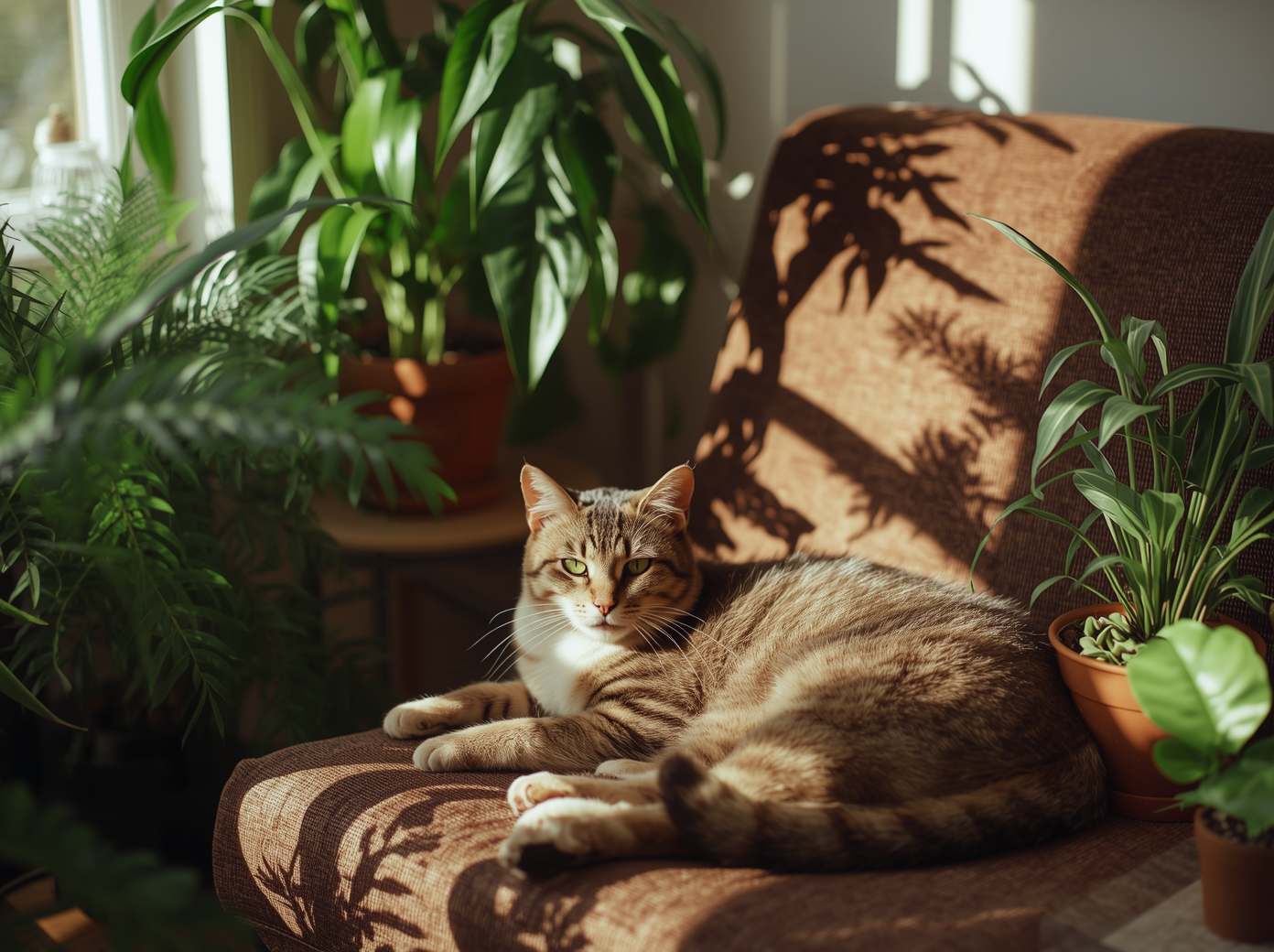
For plant lovers who share their homes with cats and dogs, the intersection of beautiful indoor jungles and pet safety requires careful navigation. Many popular houseplants including pothos, peace lilies, snake plants, and sago palms are toxic to pets, causing symptoms ranging from mild irritation to life-threatening organ failure.
The good news: there is a vast selection of gorgeous, interesting plants that pose no risk to curious cats and dogs. This complete guide lists 25 verified pet-safe plants with care requirements, so you never have to choose between your plants and your pets.
Understanding Plant Toxicity Ratings
Plant toxicity information is maintained by the ASPCA (American Society for the Prevention of Cruelty to Animals), which maintains a comprehensive online database of toxic and non-toxic plants for pets. When we say non-toxic, we mean the plant is listed by the ASPCA as non-toxic to dogs, cats, and horses.
Non-toxic does not mean a pet can eat unlimited quantities without consequence. Any plant material consumed in large amounts may cause digestive upset. It means the plant does not contain compounds specifically toxic to pets that could cause systemic poisoning.
Pet-Safe Tropical Foliage Plants
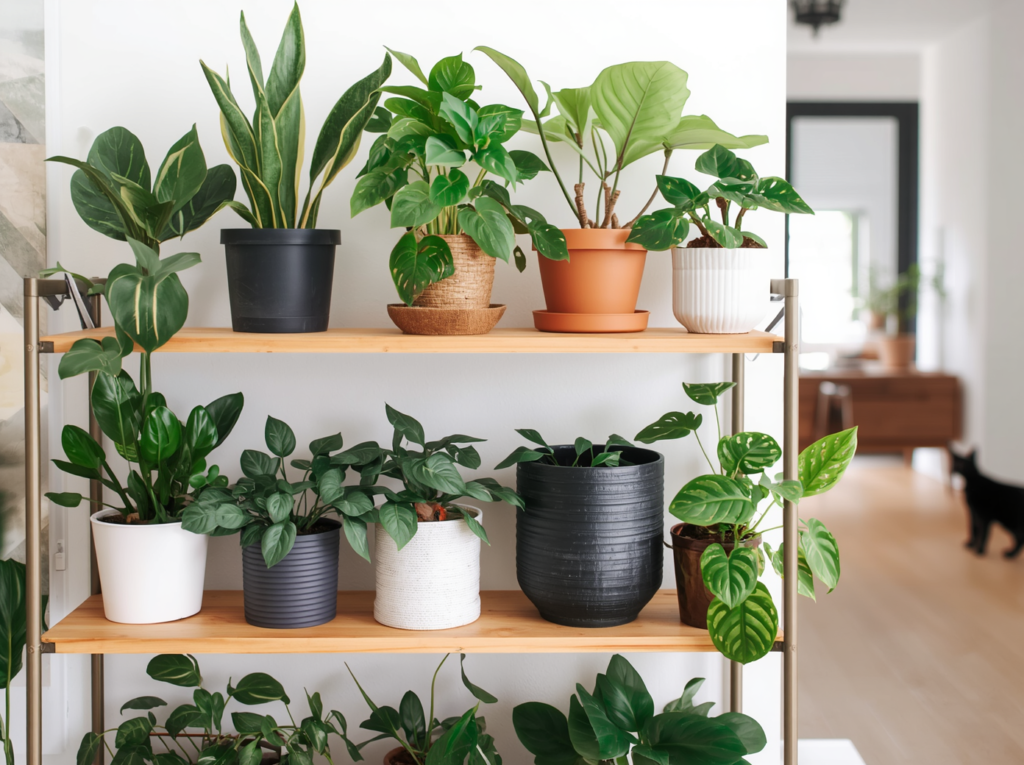
1. Spider Plant (Chlorophytum comosum)
One of the most popular and resilient houseplants, and completely safe for cats and dogs. Spider plants are also one of the most effective air purifiers studied by NASA, making them a double win for pet-friendly homes. Their trailing spiderettes make propagation effortless.
- Light: Bright to medium indirect light
- Water: Weekly in summer; every two weeks in winter
- Bonus: Non-toxic AND an excellent air purifier
2. Boston Fern (Nephrolepis exaltata)
Boston ferns are lush, beautiful, and completely non-toxic to cats and dogs. They are ideal for hanging baskets out of reach of pets, though they are safe regardless. They need higher humidity than most houseplants, so a bathroom or kitchen location suits them well.
- Light: Bright indirect light; tolerates medium light
- Water: Keep consistently moist; mist regularly
3. Calathea (Prayer Plant Family)
Calatheas are among the most beautiful foliage plants available, with dramatic patterns, colors, and the remarkable habit of folding their leaves upward at night, inspiring the prayer plant name. They are completely non-toxic and make safe choices for pet households. They do require higher humidity and indirect light.
- Light: Medium to low indirect light; no direct sun
- Water: Keep lightly moist; sensitive to fluoride, so use filtered water
- Popular varieties: Calathea orbifolia, C. medallion, C. rattlesnake
4. Peperomia (All Species)
Peperomias are wonderfully diverse with over 1,000 species showing varied leaf shapes, textures, and colors. All are non-toxic to cats and dogs, making them ideal for pet-friendly collections. They are also very low maintenance, tolerating irregular watering and lower light.
- Light: Bright to medium indirect light
- Water: Allow top inch to dry; drought-tolerant
- Great varieties: Watermelon peperomia, ripple peperomia, baby rubber plant peperomia
5. Haworthia
Haworthias are small, architectural succulents with fascinating striped or windowed leaves that grow happily in lower light than most succulents, making them ideal desk plants. They are completely safe for cats and dogs, unlike aloe vera which is toxic to pets.
- Light: Bright indirect to medium light; no harsh direct sun
- Water: Every two to three weeks; drought-tolerant
6. Parlor Palm (Chamaedorea elegans)
The parlor palm is one of the few palm species rated non-toxic to both cats and dogs, making it a rare and valuable find in the palm world. It is also one of the most shade-tolerant palms available, thriving in interior conditions with minimal direct sun.
- Light: Low to medium indirect light
- Water: When top inch is dry; do not overwater
7. Areca Palm (Dypsis lutescens)
The areca palm, also called the golden cane palm or butterfly palm, is a graceful multi-stemmed palm rated non-toxic to cats and dogs. It is also one of NASA’s top-rated air purifying plants. It grows to impressive size indoors, creating a genuine tropical statement.
8. African Violet (Saintpaulia)
African violets are classic flowering houseplants producing abundant small flowers in purple, pink, white, and bicolor throughout the year. They are completely safe for cats and dogs and are one of the most rewarding flowering plants for indoor growing. They need bottom watering because top watering causes leaf spotting.
9. Orchid (Phalaenopsis)
Moth orchids, the most common orchid houseplant, are non-toxic to cats and dogs. Their elegant arching sprays of flowers last three to four months, and the plant reblooms reliably with proper care. This is a rare combination of beauty, longevity, and pet safety.
10. Bromeliad
Bromeliads are exotic-looking tropical plants with strap-like leaves forming a central cup and producing spectacular, long-lasting flower bracts in red, orange, yellow, and pink. They are non-toxic to pets and thrive in indoor conditions with bright indirect light.
Pet-Safe Succulents
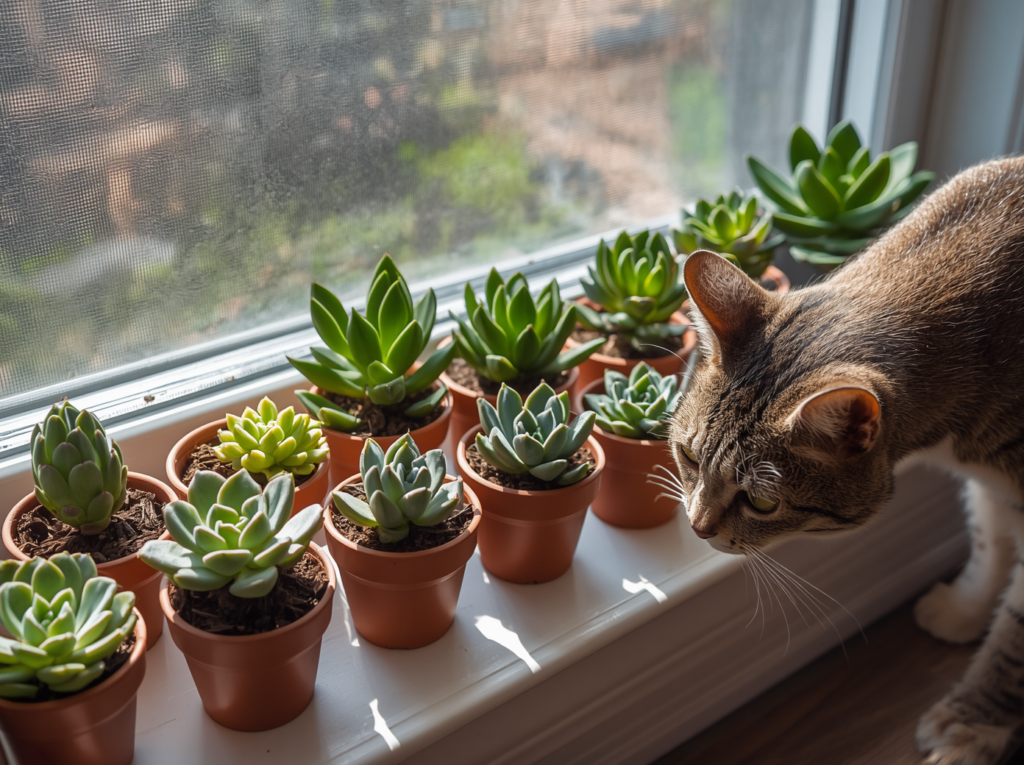
11. Echeveria
Echeverias are rosette-forming succulents in shades of green, blue, pink, and purple, among the most beautiful succulents available. They are completely safe for pets and extremely low-maintenance, needing full sun and infrequent watering.
12. Burro’s Tail (Sedum morganianum)
Burro’s tail is a trailing succulent with plump, bead-like blue-green leaves cascading from hanging baskets. It is stunning, non-toxic, and extremely drought-tolerant. The leaves detach easily, but each detached leaf can be propagated into a new plant.
13. Christmas Cactus (Schlumbergera)
Christmas cacti produce spectacular flowers in red, pink, white, and orange during the winter holiday season. They are non-toxic to pets and easier to care for than they appear, blooming reliably with the right light and temperature cues.
Pet-Safe Herbs
14. Basil
Basil is non-toxic to cats and dogs, though most cats dislike the scent. Growing basil as a kitchen herb gives you culinary usefulness and pet safety simultaneously. Keep it in full sun on the kitchen windowsill.
15. Rosemary
Rosemary is safe for pets and has the added benefit that its strong scent acts as a mild deterrent because many cats dislike the intense aroma. It needs full sun and excellent drainage.
16. Thyme
Thyme is completely safe for cats and dogs and is one of the easiest herbs to grow indoors. Cats may occasionally nibble it, which is harmless and the plant recovers quickly.
More Pet-Safe Favorites
17. Polka Dot Plant (Hypoestes phyllostachya)
The polka dot plant has charming pink, red, or white spotted leaves that add color and fun to plant collections. It is non-toxic to pets and grows happily in medium indirect light.
18. Friendship Plant (Pilea involucrata)
Pileas offer beautiful textured, patterned foliage in rich green and bronze. They are non-toxic, easy to propagate, and thrive in moderate indoor light.
19. Baby Tears (Soleirolia soleirolii)
Baby tears forms a lush, mossy carpet of tiny round leaves perfect for terrariums or as a ground cover in larger containers. It is non-toxic and loves consistent moisture and indirect light.
20. Air Plants (Tillandsia)
Air plants are among the safest plants for pet households because there is no soil, meaning no risk of pets digging or ingesting soil-borne materials. They are non-toxic to cats and dogs and require only misting or weekly soaking plus bright indirect light.
21. Money Tree (Pachira aquatica)
The money tree is a popular feng shui plant with braided trunks and palmate leaves, and it is non-toxic to cats and dogs. It grows happily in indirect light with moderate watering.
22. Lipstick Plant (Aeschynanthus radicans)
The lipstick plant produces striking tubular red flowers that emerge from dark purple buds. It is a trailing plant perfect for hanging baskets, non-toxic to pets, and blooms with bright indirect light.
23. Calathea Orbifolia
One of the most stunning calathea varieties with large, silver-striped leaves on long petioles. It is completely pet-safe, non-toxic, and creates an immediate impression in any room with sufficient humidity.
24. Hens and Chicks (Sempervivum)
These cold-hardy outdoor succulents are non-toxic to pets and children. The rosette-forming plants multiply freely, each mother hen producing dozens of chick offsets around it. They are virtually indestructible and completely safe.
25. Swedish Ivy (Plectranthus australis)
Swedish ivy is a trailing plant with rounded, glossy leaves and occasional white or lavender flowers. It is non-toxic to cats and dogs and is very easy to grow and propagate.
Plants to Absolutely Avoid in Pet Households
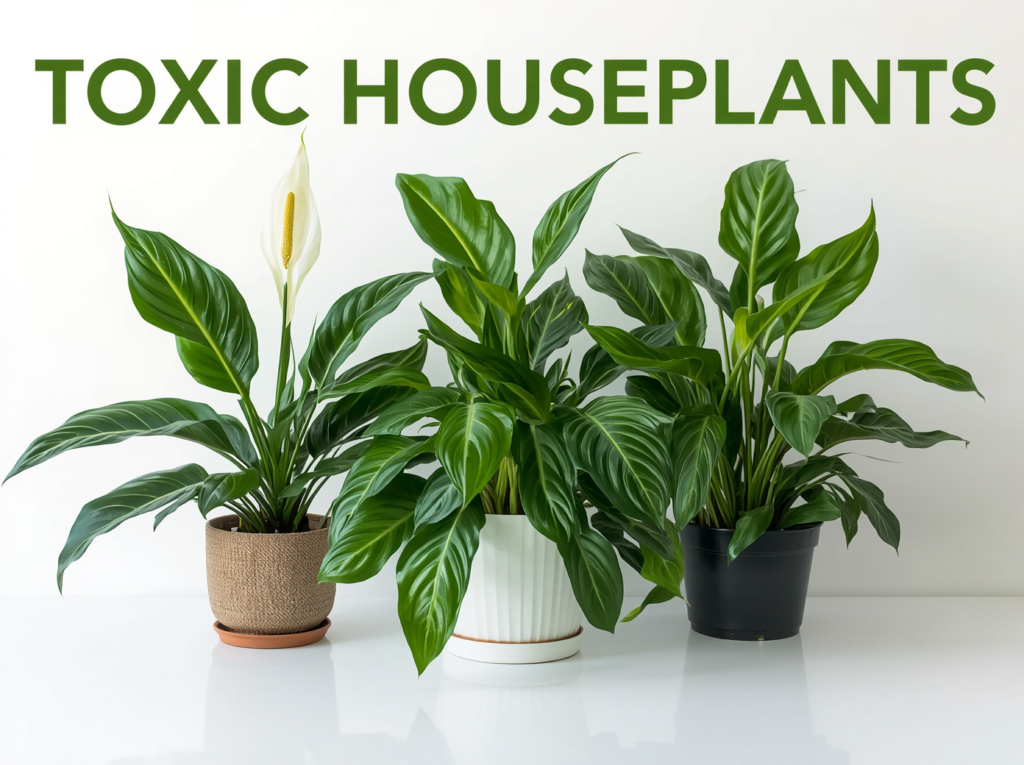
The following popular plants are toxic to cats and/or dogs and should be avoided or placed in locations completely inaccessible to pets:
- Pothos (Epipremnum aureum): toxic to cats and dogs; causes oral irritation and vomiting
- Peace Lily (Spathiphyllum): toxic; causes intense oral burning and vomiting
- Snake Plant (Sansevieria): toxic to cats and dogs; causes nausea and vomiting
- Aloe Vera: toxic to cats and dogs; causes vomiting and lethargy
- ZZ Plant (Zamioculcas): toxic; can cause vomiting and diarrhea
- Sago Palm: extremely toxic; can cause liver failure and is potentially fatal
- Lily species (Lilium, Hemerocallis): extremely toxic to cats; can cause acute kidney failure
- Philodendron: toxic; causes oral burning and gastrointestinal distress
- Monstera Deliciosa: toxic; causes oral irritation and digestive issues
If you believe your pet has ingested a toxic plant, contact the ASPCA Animal Poison Control Center at 888-426-4435 or your veterinarian immediately.